Pittosporaceae
Kohuhu: Low Water Needs
Pittosporum tenuifolium
Grow kohuhu in full sun to light shade with well-draining soil. Water regularly while establishing, then only during extended dry spells, as mature plants are quite drought tolerant. Trim after flowering to maintain shape and density.
Every 14 days
Bright indirect
-9° - 32°C
40% - 70%
Categories
What is Kohuhu?
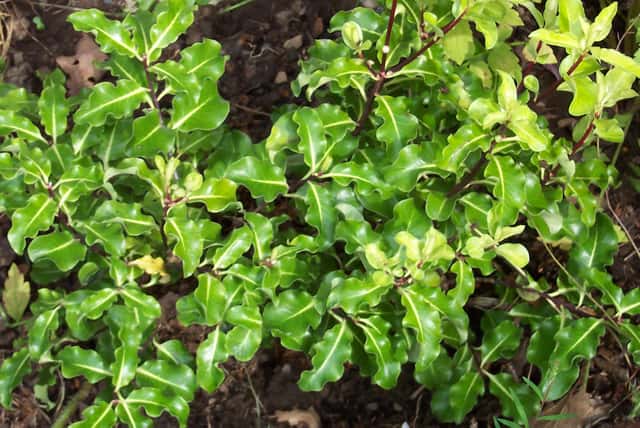
Kohuhu (Pittosporum tenuifolium) is a easy-care plant from the Pittosporaceae family. Kohuhu is a fast-growing evergreen shrub or small tree native to New Zealand, prized for its wavy-edged, glossy green leaves and near-black young stems. In late spring to early summer it bears small, honey-scented, deep purple flowers that release their fragrance most strongly in the evening. Natura...
Kohuhu grows up to 8.0m, spread of 400cm, watering every 14 days, -9°C – 32°C, 40–70% humidity. It is not suitable for indoor environments and safe for pets.
Unlike many tropical plants, Kohuhu tolerates watering mistakes. Best for beginners. Unlike many popular species, Kohuhu is safe to keep around pets.
How to Care for Kohuhu?
TLDR: Kohuhu needs Bright indirect, watering every 14 days, and temperatures between -9-32°C with 40-70% humidity.
How Often Should You Water Kohuhu?
Water deeply but infrequently, letting the soil dry out between waterings; established plants tolerate drought far better than soggy roots.
How Much Light Does Kohuhu Need?
Give kohuhu full sun for the densest growth and best leaf colour, though it tolerates light or part shade, especially in hot climates.
What Is the Best Soil for Kohuhu?
Plant in any well-draining soil, from sandy to clay-based, and avoid waterlogged spots that encourage root rot.
What Pot Should You Use for Kohuhu?
If container-grown, use a large, sturdy pot with ample drainage holes and a free-draining, peat-based potting mix.
Care Schedule
Fertilize
Every 90 days
What Is Kohuhu and Where Does It Come From?
Kohuhu is a fast-growing evergreen shrub or small tree native to New Zealand, prized for its wavy-edged, glossy green leaves and near-black young stems. In late spring to early summer it bears small, honey-scented, deep purple flowers that release their fragrance most strongly in the evening. Naturally forming a dense, upright habit, it is widely planted as a windbreak, hedge, or specimen shrub in coastal and temperate gardens.
How to Propagate Kohuhu?
Semi-ripe stem cuttings
- Take cuttings from healthy, non-flowering side shoots in mid to late summer.
- Use a rooting hormone to speed up root development.
- 1 Select shoots
Choose semi-ripe, non-flowering shoots about 10-15cm long.
- 2 Prepare cutting
Trim just below a node and remove the lower leaves.
- 3 Plant
Dip the cut end in rooting hormone and insert into free-draining cutting compost.
- 4 Aftercare
Keep in a humid, sheltered spot out of direct sun until roots form.
Materials needed:
How Big Does Kohuhu Grow?
TLDR: Kohuhu can reach up to 8.0m tall with Fast growth rate.
Max height
8.0m
Spread
4.0m
Growth rate
Fast
Foliage
Evergreen
Plant Uses
Ornamental
Great for decoration
Is your plant showing symptoms?
Click on the symptom to discover possible causes:
What Diseases Commonly Affect Kohuhu?
TLDR: Kohuhu is susceptible to 5 known diseases. Monitor regularly for early detection.
Powdery Mildew
Powdery mildew is a common fungal disease caused by various fungi species including Erysiphe, Podosphaera, Oïdium, and Leveillula. It affects over 10,000 plant species worldwide. The disease thrives in warm, dry climates with high humidity and appears as a distinctive white powdery coating on plant surfaces.
Aphids
Aphids are small, soft-bodied, pear-shaped insects (1/16 to 1/8 inch long) that feed by sucking nutrient-rich sap from plants. They reproduce rapidly and can quickly weaken plants, causing distorted growth and transmitting plant viruses. Aphids come in various colors including green, black, red, yellow, brown, and gray. They secrete honeydew, a sticky substance that attracts ants and encourages sooty mold growth.
Leaf Spot
Leaf spot is a common fungal disease caused by various pathogens including Alternaria, Ascochyta, Colletotrichum, Septoria, and Venturia. It primarily affects leaves, causing discolored spots that can lead to premature leaf drop if left untreated.
Spider Mites
Spider mites are tiny arachnids (less than 1/20 inch long) related to spiders and ticks that feed on plant sap. They thrive in hot, dry conditions and can cause significant damage to ornamental and vegetable plants. During severe infestations, crop losses can reach 14% or higher as these pests disrupt vital plant processes including photosynthesis, carbon dioxide absorption, and transpiration.
Meaning & Symbolism
In its native New Zealand, kohuhu is associated with shelter and protection, long used as a windbreak that shields more delicate plants and homes from coastal gales.
Compare with similar plants
| Attribute | Difficulty | Light | Watering | Pet Safe |
|---|---|---|---|---|
| Field Maple | Easy | Bright indirect | 14d | ✓ |
| Silver Birch | Easy | Direct sun | 14d | ✓ |
| Cushion Bush | Easy | Direct sun | 14d | ✓ |
| Peruvian peppertree | Easy | Direct sun | 14d | ⚠️ |





