Asteraceae
Knapweed / Cornflower: Edible Plant
Centaurea
Easy to grow in full sun and well-drained soil. Drought-tolerant once established. Deadhead spent flowers regularly to extend blooming. Cut back perennial clumps to ground level in autumn to prevent powdery mildew and encourage fresh growth the following season.
Every 10 days
Bright indirect
-20° - 35°C
30% - 60%
Categories
What is Knapweed / Cornflower?
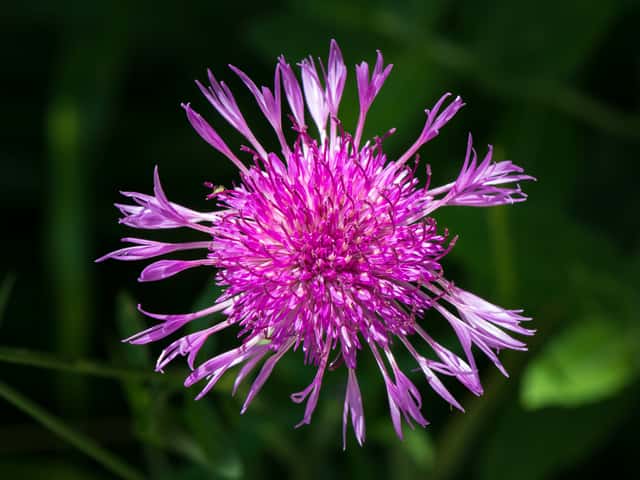
Knapweed / Cornflower (Centaurea) is a easy-care plant from the Asteraceae family. Centaurea is a large and diverse genus of over 700 herbaceous flowering plants in the family Asteraceae, native primarily to the Mediterranean basin, the Middle East, and broader Eurasia. The genus spans annuals, biennials, and perennials — from the beloved annual cornflower (C. cyanus) with its ico...
Knapweed / Cornflower grows up to 1.2m, spread of 60cm, watering every 10 days, -20°C – 35°C, 30–60% humidity. It is not suitable for indoor environments and safe for pets.
Unlike many tropical plants, Knapweed / Cornflower tolerates watering mistakes. Best for beginners. Unlike many popular species, Knapweed / Cornflower is safe to keep around pets.
How to Care for Knapweed / Cornflower?
TLDR: Knapweed / Cornflower needs Bright indirect, watering every 10 days, and temperatures between -20-35°C with 30-60% humidity.
How Often Should You Water Knapweed / Cornflower?
Water young plants regularly until established. Mature plants are drought-tolerant and need watering only during prolonged dry spells (every 10-14 days). Avoid waterlogging — they are susceptible to root rot in poorly drained soils.
How Much Light Does Knapweed / Cornflower Need?
Full sun preferred (minimum 6 hours of direct sunlight daily). Will tolerate light partial shade but flowering will be less prolific. Avoid deep shade.
What Is the Best Soil for Knapweed / Cornflower?
Well-drained, moderately fertile to poor soil with a pH of 5.5–7.5. Tolerates chalk, clay, and sandy soils provided drainage is adequate. Does not require enriched or heavy soils.
What Pot Should You Use for Knapweed / Cornflower?
For container growing, use terracotta or ceramic pots with good drainage holes. A 25–30 cm diameter pot suits most species. Use a gritty, free-draining compost mix. Repotting is rarely necessary for perennials in the ground.
Care Schedule
Fertilize
Every 60 days
What Is Knapweed / Cornflower and Where Does It Come From?
Centaurea is a large and diverse genus of over 700 herbaceous flowering plants in the family Asteraceae, native primarily to the Mediterranean basin, the Middle East, and broader Eurasia. The genus spans annuals, biennials, and perennials — from the beloved annual cornflower (C. cyanus) with its iconic blue blooms to robust perennial knapweeds that thrive in meadows and prairies. Flowers are characterized by a distinctive frilly outer ring of ray florets surrounding a dense central disc, appearing in shades of blue, purple, pink, white, yellow, and red. They are celebrated as excellent pollinator plants, attracting bees, butterflies, and hoverflies. Hardy, drought-tolerant, and low-maintenance, Centaurea species are widely grown in cottage gardens, wildflower meadows, and herbaceous borders.
How Big Does Knapweed / Cornflower Grow?
TLDR: Knapweed / Cornflower can reach up to 1.2m tall with Medium growth rate.
Max height
1.2m
Spread
60cm
Growth rate
Medium
Foliage
Deciduous
Plant Uses
Ornamental
Great for decoration
Medicinal
Medicinal properties
Edible
Can be consumed
Medicinal Uses
- Traditional treatment for eye inflammation, particularly C. cyanus flower water
- Anti-inflammatory, diuretic, and astringent properties used in herbal medicine
- Used historically for fever, congestion, and water retention
- Tonic and stimulant properties recognized in modern herbalism
- Laboratory research on arctiin (from C. imperialis) shows potential anticancer activity
Culinary Uses
- Flowers are edible with a mildly sweet to spicy, clove-like flavour
- Used as decorative garnishes in salads, desserts, and gourmet dishes
- Young plant whorls of some species are consumed boiled in southern Italy and Crete
- Flowers used to add blue tint in specialty vodkas (Russia)
Is your plant showing symptoms?
Click on the symptom to discover possible causes:
What Diseases Commonly Affect Knapweed / Cornflower?
TLDR: Knapweed / Cornflower is susceptible to 9 known diseases. Monitor regularly for early detection.
Powdery Mildew
Powdery mildew is a common fungal disease caused by various fungi species including Erysiphe, Podosphaera, Oïdium, and Leveillula. It affects over 10,000 plant species worldwide. The disease thrives in warm, dry climates with high humidity and appears as a distinctive white powdery coating on plant surfaces.
Downy Mildew
Downy mildew is a fungal-like disease caused by oomycetes (water molds) that thrives in cool, wet conditions. It affects a wide range of plants, causing yellowing leaves with fuzzy white-gray growth underneath, leading to defoliation and reduced yields if left untreated.
Aphids
Aphids are small, soft-bodied, pear-shaped insects (1/16 to 1/8 inch long) that feed by sucking nutrient-rich sap from plants. They reproduce rapidly and can quickly weaken plants, causing distorted growth and transmitting plant viruses. Aphids come in various colors including green, black, red, yellow, brown, and gray. They secrete honeydew, a sticky substance that attracts ants and encourages sooty mold growth.
Rust
Rust is a common fungal disease caused by fungi in the order Pucciniales that affects a wide variety of plants. The disease gets its name from the characteristic orange, yellow, or reddish-brown pustules that appear on leaves, resembling metal rust. This obligate fungal parasite requires living plants to survive and can cause significant economic losses in agricultural crops.
Meaning & Symbolism
Centaurea symbolizes hope, remembrance, devotion, and fidelity. In European folklore, cornflowers were associated with love and romance. Germany adopted the cornflower as a symbol of national unity. The flower featured in Tutankhamun's tomb as a symbol of life and fertility. In Christian iconography, it was associated with the Virgin Mary. It is the national flower of Estonia.
Compare with similar plants
| Attribute | Difficulty | Light | Watering | Pet Safe |
|---|---|---|---|---|
| Field Maple | Easy | Bright indirect | 14d | ✓ |
| Silver Birch | Easy | Direct sun | 14d | ✓ |
| Cushion Bush | Easy | Direct sun | 14d | ✓ |
| Wild Lettuce | Medium | Direct sun | 7d | ⚠️ |





