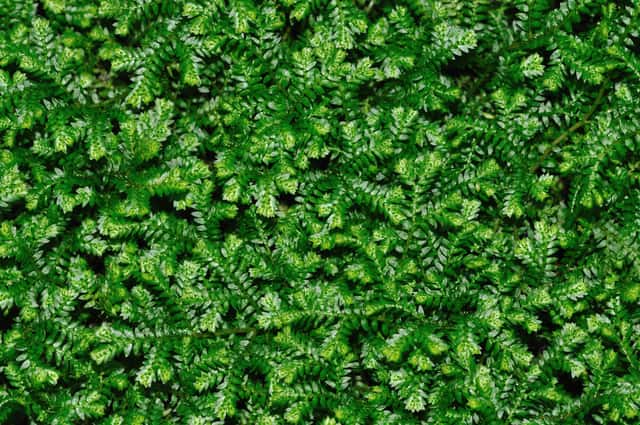
Selaginellaceae
Krauss's Spikemoss: Ground Cover Plant
Selaginella kraussiana
Requires constantly moist soil, high ambient humidity, and indirect light. Never allow the substrate to dry out completely.
Every 2 days
Low light
5° - 24°C
50% - 80%
Categories
What is Krauss's Spikemoss?
Krauss's Spikemoss (Selaginella kraussiana) is a medium-care plant from the Selaginellaceae family. Selaginella kraussiana, commonly known as Krauss's Spikemoss or African Clubmoss, is a primitive vascular plant that resembles a delicate moss. Native to Africa, it forms a dense, creeping mat of vibrant green, branching foliage. It is a popular choice for terrariums, indoor gardens, and as a ground...
Krauss's Spikemoss grows up to 5cm, spread of 120cm, watering every 2 days, 5°C – 24°C, 50–80% humidity. It is suitable for indoor environments and safe for pets.
Unlike many popular species, Krauss's Spikemoss is safe to keep around pets. Without adequate drainage, root rot can develop within 7 days.
How to Care for Krauss's Spikemoss?
TLDR: Krauss's Spikemoss needs Low light, watering every 2 days, and temperatures between 5-24°C with 50-80% humidity.
How Often Should You Water Krauss's Spikemoss?
Water frequently to keep the soil feeling like a wrung-out sponge. Using distilled water or rainwater is preferred to avoid salt buildup.
How Much Light Does Krauss's Spikemoss Need?
Avoid direct sun at all costs, as it burns the delicate leaves within minutes. Prefer locations with filtered light or bright shade.
What Is the Best Soil for Krauss's Spikemoss?
Use a mixture of peat moss, sphagnum moss, and perlite to ensure water retention without compaction.
What Pot Should You Use for Krauss's Spikemoss?
Wide, shallow pots or closed terrariums that help retain air humidity.
Care Schedule
Fertilize
Every 30 days
Misting
Every 4 days
Repot
Every 730 days
What Is Krauss's Spikemoss and Where Does It Come From?
Selaginella kraussiana, commonly known as Krauss's Spikemoss or African Clubmoss, is a primitive vascular plant that resembles a delicate moss. Native to Africa, it forms a dense, creeping mat of vibrant green, branching foliage. It is a popular choice for terrariums, indoor gardens, and as a groundcover in shady, damp areas where other plants might struggle to thrive.
How to Propagate Krauss's Spikemoss?
Clump Division
- Keep the new divisions in a very humid environment until they show new growth.
- 1 Removal
Carefully remove the plant from the pot to avoid damaging the fine roots.
- 2 Division
Gently separate the clumps of stems and roots into smaller sections by hand.
- 3 Repotting
Plant each section in a new pot with substrate rich in organic matter and water immediately.
Materials needed:
Stem Cuttings
- Selaginella roots easily from any node that comes into contact with moist soil.
- 1 Cutting
Cut a healthy stem piece about 2-4 inches (5-10 cm) long.
- 2 Planting
Press the stem horizontally onto the moist substrate, ensuring the nodes touch the soil.
- 3 Humidity
Cover with clear plastic or place in a terrarium to maintain very high humidity.
Materials needed:
How Big Does Krauss's Spikemoss Grow?
TLDR: Krauss's Spikemoss can reach up to 5cm tall with Fast growth rate.
Max height
5cm
Spread
1.2m
Growth rate
Fast
Foliage
Evergreen
Plant Uses
Ornamental
Great for decoration
Ground Cover
Soil coverage
Is your plant showing symptoms?
Click on the symptom to discover possible causes:
What Diseases Commonly Affect Krauss's Spikemoss?
TLDR: Krauss's Spikemoss is susceptible to 9 known diseases. Monitor regularly for early detection.
Root Rot
Root rot is a serious fungal disease that affects the root system of plants, causing them to decay and die. It is primarily caused by overwatering, poor drainage, or soil-borne fungi such as Pythium, Phytophthora, Rhizoctonia, and Fusarium. The disease thrives in waterlogged conditions where roots are deprived of oxygen, making them susceptible to fungal infection.
Crown Rot
Crown rot is a serious fungal disease that attacks the crown (base) of the plant where the stem meets the soil. It is caused by various fungal pathogens including Phytophthora, Fusarium, and Rhizoctonia. The disease thrives in waterlogged conditions and can quickly spread to kill the entire plant if not addressed promptly.
Overwatering
Overwatering occurs when plants receive too much water, depriving roots of oxygen and causing root rot. This environmental stress is one of the most common causes of houseplant death, as waterlogged soil prevents roots from breathing and functioning properly.
Fungus Gnats
Fungus gnats are small, gray-to-black mosquito-like insects (1/8 to 1/10 inches long) commonly found in indoor plants. Adult gnats are mostly a nuisance, but their larvae feed on plant roots and organic matter in soil, potentially causing serious damage to young or vulnerable plants. The larvae are translucent white with distinctive black heads and can leave slime trails on the soil surface in heavy infestations.
Meaning & Symbolism
Represents immortality, resilience, and the ability to adapt to shaded environments.
Compare with similar plants
| Attribute | Difficulty | Light | Watering | Pet Safe |
|---|---|---|---|---|
| Dark Fieldcap | Medium | Low light | 2d | ⚠️ |
| Azalea | Medium | Partial shade | 3d | ⚠️ |
| Bougainvillea | Medium | Direct sun | 7d | ⚠️ |
| Wild Lettuce | Medium | Direct sun | 7d | ⚠️ |



