Paeoniaceae
Tree Peony (Paeonia suffruticosa): Complete Care Guide
Paeonia suffruticosa
Plant in a sunny location with afternoon shade. Water moderately every 7 days, allowing the soil to dry between waterings. Prefers well-draining, slightly alkaline soil. Does not tolerate waterlogging. Prune only dead branches. A hardy plant that does not require intensive care.
Every 7 days
Bright indirect
-29° - 30°C
40% - 60%
Categories
What is Tree Peony?
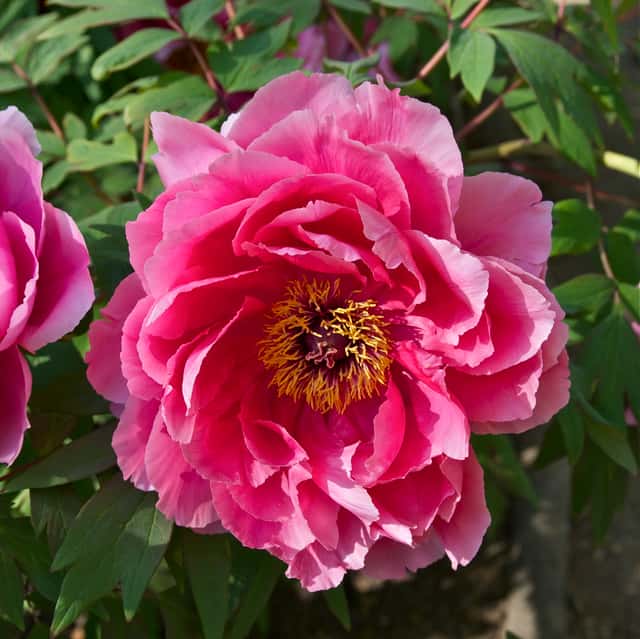
Tree Peony (Paeonia suffruticosa) is a medium-care plant from the Paeoniaceae family. Paeonia suffruticosa, commonly known as the Tree Peony or Mudan, is a majestic woody shrub native to China that can live for over a century. It produces spectacular flowers up to 20 cm in diameter in shades of white, pink, red, purple, and yellow, blooming in spring. Revered as the "King of Flowers"...
Tree Peony grows up to 2.1m, spread of 152cm, watering every 7 days, -29°C – 30°C, 40–60% humidity. It is not suitable for indoor environments and not safe for pets.
Without precautions, ingestion can cause irritation in pets. Keep out of reach of cats and dogs.
How to Care for Tree Peony?
TLDR: Tree Peony needs Bright indirect, watering every 7 days, and temperatures between -29-30°C with 40-60% humidity.
How Often Should You Water Tree Peony?
Water deeply every 7 days, allowing the top 4 inches of soil to dry between waterings. Avoid wetting the foliage. Reduce watering in winter. Overwatering is the leading cause of tree peony death — when in doubt, water less.
How Much Light Does Tree Peony Need?
Prefers full sun with light afternoon shade to protect blooms. In hot climates, plant where it receives morning sun and shade during the hottest hours. Avoid constant exposure to harsh summer sun, which can cause leaf scorch and shorten flower lifespan.
What Is the Best Soil for Tree Peony?
Use fertile, well-draining soil with slightly alkaline pH (6.5–7.5). Amend with organic compost at planting. Never plant in waterlogged or heavy clay soil. Raised beds are an excellent solution in poorly drained areas.
What Pot Should You Use for Tree Peony?
Large terracotta pot (minimum 50 cm / 20 inches diameter) with ample drainage holes. Glazed ceramic also works well. Avoid plastic pots that retain excess moisture.
Care Schedule
Fertilize
Every 30 days
What Is Tree Peony and Where Does It Come From?
Paeonia suffruticosa, commonly known as the Tree Peony or Mudan, is a majestic woody shrub native to China that can live for over a century. It produces spectacular flowers up to 20 cm in diameter in shades of white, pink, red, purple, and yellow, blooming in spring. Revered as the "King of Flowers" (花王) in Eastern culture, it is one of the most celebrated ornamental plants in the world.
How to Propagate Tree Peony?
Grafting
Grafting is the most reliable method for commercial propagation. Plant the graft union 4-6 inches below the soil surface to encourage the scion to develop its own roots over time.
- 1 Select a healthy herbaceous peony rootstock
- 2 Prepare a scion with a healthy bud from the tree peony
- 3 Join scion and rootstock with grafting tape
- 4 Keep in a humid, shaded environment until union forms
Materials needed:
Hardwood cutting
Rooting success rate is low. Use high-concentration rooting hormone and maintain consistent moisture without waterlogging.
- 1 Take semi-hardwood cuttings in August–October with 1-2 terminal buds
- 2 Treat the base with rooting hormone
- 3 Plant in well-draining medium and keep moist
- 4 Protect from frost during winter
Materials needed:
How Big Does Tree Peony Grow?
TLDR: Tree Peony can reach up to 2.1m tall with Slow growth rate.
Max height
2.1m
Spread
1.5m
Growth rate
Slow
Foliage
Deciduous
Warning: Toxic Plant
This plant can be toxic if ingested. Keep out of reach of:
Plant Uses
Ornamental
Great for decoration
Medicinal
Medicinal properties
Medicinal Uses
- Moutan Radicis Cortex (root bark) used in Traditional Chinese Medicine as anti-inflammatory, for improving blood circulation, and treating fever
- Root extract studied for antioxidant and antimicrobial properties in modern research
Is your plant showing symptoms?
Click on the symptom to discover possible causes:
What Diseases Commonly Affect Tree Peony?
TLDR: Tree Peony is susceptible to 13 known diseases. Monitor regularly for early detection.
Gray Mold (Botrytis Blight)
Gray mold, caused by the fungus Botrytis cinerea, is one of the most common fungal diseases in plants. It affects over 200 plant species, including ornamentals, vegetables, fruits, and houseplants. The disease thrives in cool, humid conditions with poor air circulation, causing grayish spots and soft rot on infected tissues.
Gray Mold (Botrytis Blight)
Gray mold, caused by the fungus Botrytis cinerea, is a widespread necrotrophic pathogen affecting over 1,400 plant species. It thrives in cool, humid conditions and attacks weakened or aging plant tissues, causing soft rot and characteristic gray fuzzy growth.
Root Rot
Root rot is a serious fungal disease that affects the root system of plants, causing them to decay and die. It is primarily caused by overwatering, poor drainage, or soil-borne fungi such as Pythium, Phytophthora, Rhizoctonia, and Fusarium. The disease thrives in waterlogged conditions where roots are deprived of oxygen, making them susceptible to fungal infection.
Crown Rot
Crown rot is a serious fungal disease that attacks the crown (base) of the plant where the stem meets the soil. It is caused by various fungal pathogens including Phytophthora, Fusarium, and Rhizoctonia. The disease thrives in waterlogged conditions and can quickly spread to kill the entire plant if not addressed promptly.
Meaning & Symbolism
In Eastern cultures, the tree peony symbolizes prosperity, nobility, and good fortune. Called the "King of Flowers" in China and Japan, it represents wealth, honor, and feminine beauty. A beloved motif in Chinese art, poetry, and imperial gardens for over 1,500 years.
Fun Facts
A tree peony can live for more than 100 years, becoming a true heirloom garden plant
In Imperial China, the Mudan flower was so prized that emperors built entire gardens dedicated to its cultivation
Tree peonies can take up to 4 years to bloom after planting, but the spectacular flowers are worth the wait
It is considered the unofficial floral emblem of China and was the imperial flower of the Tang Dynasty
Frequently asked questions
How often should I water a tree peony?
Is the tree peony toxic to pets?
Why is my tree peony not blooming?
Can I grow a tree peony in a pot?
Should I cut back a tree peony in winter?
Compare with similar plants
| Attribute | Difficulty | Light | Watering | Pet Safe |
|---|---|---|---|---|
| Dark Fieldcap | Medium | Low light | 2d | ⚠️ |
| Azalea | Medium | Partial shade | 3d | ⚠️ |
| Bougainvillea | Medium | Direct sun | 7d | ⚠️ |
| Wild Lettuce | Medium | Direct sun | 7d | ⚠️ |



