Orchidaceae
Rosy Tinted Laelia – Laelia rubescens Orchid Care
Laelia rubescens
A moderately challenging orchid that requires bright indirect light, good air circulation, and a fast-draining bark-based substrate. Reduce watering during the rest period and resume when new growth emerges in spring.
Every 7 days
Bright indirect
9° - 32°C
63% - 79%
Categories
What is Rosy Tinted Laelia?
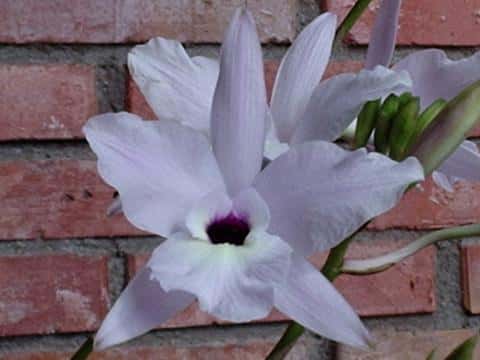
Rosy Tinted Laelia (Laelia rubescens) is a medium-care plant from the Orchidaceae family. Laelia rubescens is an epiphytic or lithophytic orchid native to Mexico and Central America, found in seasonally dry deciduous forests at elevations between 100 and 1700 meters. It produces compact pseudobulbs and delicate flowers in shades of white, pink, and lavender with a red-brown blotch on the...
Rosy Tinted Laelia grows up to 28cm, spread of 20cm, watering every 7 days, 9°C – 32°C, 63–79% humidity. It is suitable for indoor environments and safe for pets.
Unlike many popular species, Rosy Tinted Laelia is safe to keep around pets. Without adequate drainage, root rot can develop within 14 days.
How to Care for Rosy Tinted Laelia?
TLDR: Rosy Tinted Laelia needs Bright indirect, watering every 7 days, and temperatures between 9-32°C with 63-79% humidity.
How Often Should You Water Rosy Tinted Laelia?
Water thoroughly during active growth, allowing the substrate to dry between waterings. Reduce frequency significantly in autumn and winter during dormancy. Never allow roots to sit in standing water as root rot is a common issue.
How Much Light Does Rosy Tinted Laelia Need?
Provide bright light between 36,000 and 48,000 lux. Tolerates morning and late afternoon direct sun but requires protection from harsh midday rays. A minimum of 10 hours of daily light is essential to trigger flowering.
What Is the Best Soil for Rosy Tinted Laelia?
Use a coarse, well-draining orchid bark mix with charcoal and sphagnum moss (10-15%). Can also be mounted on cork bark or tree fern slabs with a thin moss layer to mimic natural growing conditions.
What Pot Should You Use for Rosy Tinted Laelia?
Terracotta or plastic orchid pots with ample drainage holes, or cork bark mounts for epiphytic cultivation. Ensure roots have access to air circulation.
Care Schedule
Fertilize
Every 14 days
Misting
Every 3 days
Rotate
Every 7 days
Repot
Every 365 days
What Is Rosy Tinted Laelia and Where Does It Come From?
Laelia rubescens is an epiphytic or lithophytic orchid native to Mexico and Central America, found in seasonally dry deciduous forests at elevations between 100 and 1700 meters. It produces compact pseudobulbs and delicate flowers in shades of white, pink, and lavender with a red-brown blotch on the lip, blooming primarily in autumn and winter.
How Big Does Rosy Tinted Laelia Grow?
TLDR: Rosy Tinted Laelia can reach up to 28cm tall with Slow growth rate.
Max height
28cm
Spread
20cm
Growth rate
Slow
Foliage
Evergreen
Plant Uses
Ornamental
Great for decoration
Is your plant showing symptoms?
Click on the symptom to discover possible causes:
What Diseases Commonly Affect Rosy Tinted Laelia?
TLDR: Rosy Tinted Laelia is susceptible to 6 known diseases. Monitor regularly for early detection.
Root Rot
Root rot is a serious fungal disease that affects the root system of plants, causing them to decay and die. It is primarily caused by overwatering, poor drainage, or soil-borne fungi such as Pythium, Phytophthora, Rhizoctonia, and Fusarium. The disease thrives in waterlogged conditions where roots are deprived of oxygen, making them susceptible to fungal infection.
Overwatering
Overwatering occurs when plants receive too much water, depriving roots of oxygen and causing root rot. This environmental stress is one of the most common causes of houseplant death, as waterlogged soil prevents roots from breathing and functioning properly.
Scale Insects
Scale insects are small sap-sucking pests that appear as brown, shell-like bumps on plant stems and leaves. There are over 25 species, divided into armored (hard) and unarmored (soft) scales. They feed by piercing plant tissue and extracting sap, which weakens the plant and can lead to yellowing, stunted growth, and even death if left untreated. They also excrete honeydew, which attracts ants and promotes sooty mold growth.
Botrytis
Meaning & Symbolism
Elegance, beauty, and rare grace; associated with refinement and admiration in orchid culture.
Fun Facts
Laelia rubescens can grow directly on rocks (lithophyte) or on trees (epiphyte), making it remarkably adaptable to different habitats.
Its flowers emit a subtle and peculiar fragrance that makes them particularly prized among orchid collectors.
Native to Mexico, Belize, Honduras, and Panama, it thrives in dry forests at elevations between 100 and 1,700 meters above sea level.
Frequently asked questions
How often should I water Laelia rubescens?
Does Laelia rubescens bloom indoors?
Compare with similar plants
| Attribute | Difficulty | Light | Watering | Pet Safe |
|---|---|---|---|---|
| Azalea | Medium | Partial shade | 3d | ⚠️ |
| Wild Lettuce | Medium | Direct sun | 7d | ⚠️ |
| Cape Primrose | Medium | Partial shade | 7d | ✓ |
| Honey Locust | Medium | Direct sun | 14d | ✓ |