Lamiaceae
Spanish Lavender: Complete Care Guide
Lavandula stoechas
Grow in full sun with well-draining, slightly alkaline soil. Water moderately, letting the soil dry between waterings, and shear lightly after flowering to keep it compact.
Every 10 days
Direct sun
-5° - 35°C
30% - 50%
Categories
What is Spanish Lavender?
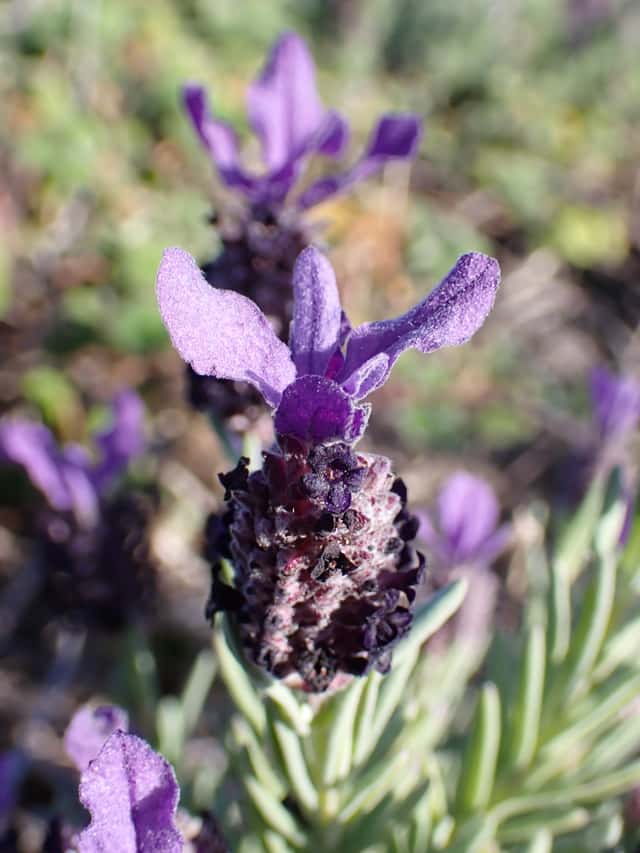
Spanish Lavender (Lavandula stoechas) is a easy-care plant from the Lamiaceae family. Spanish Lavender (Lavandula stoechas) is a compact Mediterranean shrub known for its distinctive purple bracts resembling rabbit ears atop each flower spike. Its silvery, fragrant foliage resembles rosemary. Highly drought-tolerant once established, it thrives in full sun gardens and containers.
Spanish Lavender grows up to 60cm, spread of 90cm, watering every 10 days, -5°C – 35°C, 30–50% humidity. It is not suitable for indoor environments and not safe for pets.
Unlike many tropical plants, Spanish Lavender tolerates watering mistakes. Best for beginners. Without precautions, ingestion can cause irritation in pets. Keep out of reach of cats and dogs.
How to Care for Spanish Lavender?
TLDR: Spanish Lavender needs Direct sun, watering every 10 days, and temperatures between -5-35°C with 30-50% humidity.
How Often Should You Water Spanish Lavender?
Water only when the top inch of soil is dry; avoid overwatering as this species is prone to root rot in soggy soil.
How Much Light Does Spanish Lavender Need?
Needs full sun, at least 6-8 hours of direct sunlight daily for best flowering.
What Is the Best Soil for Spanish Lavender?
Prefers sandy or rocky, well-draining soil with a neutral to alkaline pH (7.0-8.0).
What Pot Should You Use for Spanish Lavender?
Terracotta pot with drainage holes, helps soil dry out between waterings
Care Schedule
Fertilize
Every 30 days
What Is Spanish Lavender and Where Does It Come From?
Spanish Lavender (Lavandula stoechas) is a compact Mediterranean shrub known for its distinctive purple bracts resembling rabbit ears atop each flower spike. Its silvery, fragrant foliage resembles rosemary. Highly drought-tolerant once established, it thrives in full sun gardens and containers.
How to Propagate Spanish Lavender?
Stem cutting
Use clean, sharp tools and avoid waterlogging the mix to prevent cutting rot.
- 1 Cut a healthy non-flowering stem about 4 inches long
- 2 Strip leaves from the lower half
- 3 Dip the cut end in rooting hormone
- 4 Plant in well-draining sandy mix and keep lightly moist
Materials needed:
Seed sowing
Germination is slow and erratic, so be patient.
- 1 Sow seeds in light soil mix at around 65F (18C)
- 2 Keep moist with indirect light until germination
- 3 Transplant seedlings once true leaves appear
Materials needed:
How Big Does Spanish Lavender Grow?
TLDR: Spanish Lavender can reach up to 60cm tall with Medium growth rate.
Max height
60cm
Spread
90cm
Growth rate
Medium
Foliage
Evergreen
Warning: Toxic Plant
This plant can be toxic if ingested. Keep out of reach of:
Plant Uses
Ornamental
Great for decoration
Aromatic
Pleasant fragrance
Medicinal
Medicinal properties
Medicinal Uses
- Traditional use in calming infusions (use cautiously, avoid high doses)
Is your plant showing symptoms?
Click on the symptom to discover possible causes:
What Diseases Commonly Affect Spanish Lavender?
TLDR: Spanish Lavender is susceptible to 8 known diseases. Monitor regularly for early detection.
Root Rot
Root rot is a serious fungal disease that affects the root system of plants, causing them to decay and die. It is primarily caused by overwatering, poor drainage, or soil-borne fungi such as Pythium, Phytophthora, Rhizoctonia, and Fusarium. The disease thrives in waterlogged conditions where roots are deprived of oxygen, making them susceptible to fungal infection.
Phytophthora Root Rot
Disease caused by fungus-like organisms (oomycetes) that live in soil and can survive for years. It affects roots, stem, and crown of plants, being especially severe in waterlogged or poorly drained soils. It is the second most common cause of root rot in trees and shrubs.
Septoria Leaf Spot
Septoria leaf spot is a destructive fungal disease caused by Septoria lycopersici, particularly devastating during seasons of moderate temperature and abundant rainfall. The disease starts on lower leaves and progresses upward, causing small circular spots with tan to gray centers and dark brown margins. If left untreated, it can dramatically reduce plant yields and cause complete leaf blight.
Powdery Mildew
Powdery mildew is a common fungal disease caused by various fungi species including Erysiphe, Podosphaera, Oïdium, and Leveillula. It affects over 10,000 plant species worldwide. The disease thrives in warm, dry climates with high humidity and appears as a distinctive white powdery coating on plant surfaces.
Meaning & Symbolism
Symbolizes silence, devotion, and calm, long associated with Mediterranean aromatic garden traditions.
Fun Facts
The purple bracts atop each flower spike look like rabbit ears, giving it several playful nicknames
It is one of the earliest lavenders to bloom, often flowering in its first spring after planting
Frequently asked questions
Is Spanish Lavender toxic to cats and dogs?
How often should I water Spanish Lavender?
Does Spanish Lavender need pruning?
Compare with similar plants
| Attribute | Difficulty | Light | Watering | Pet Safe |
|---|---|---|---|---|
| Field Maple | Easy | Bright indirect | 14d | ✓ |
| Silver Birch | Easy | Direct sun | 14d | ✓ |
| Cushion Bush | Easy | Direct sun | 14d | ✓ |
| Peruvian peppertree | Easy | Direct sun | 14d | ⚠️ |
Choose & Compare
Sources & References
- NC State Extension Gardener Plant Toolbox - Lavandula stoechas
- How to Grow and Care for Spanish Lavender - Garden Design
- Complete guide to French lavender care - Patch
- Spanish Lavender - Lavandula stoechas Care & Growing Guide - Planet Desert
- Topped Lavender (Lavandula Stoechas) Plant Care - Plantiary