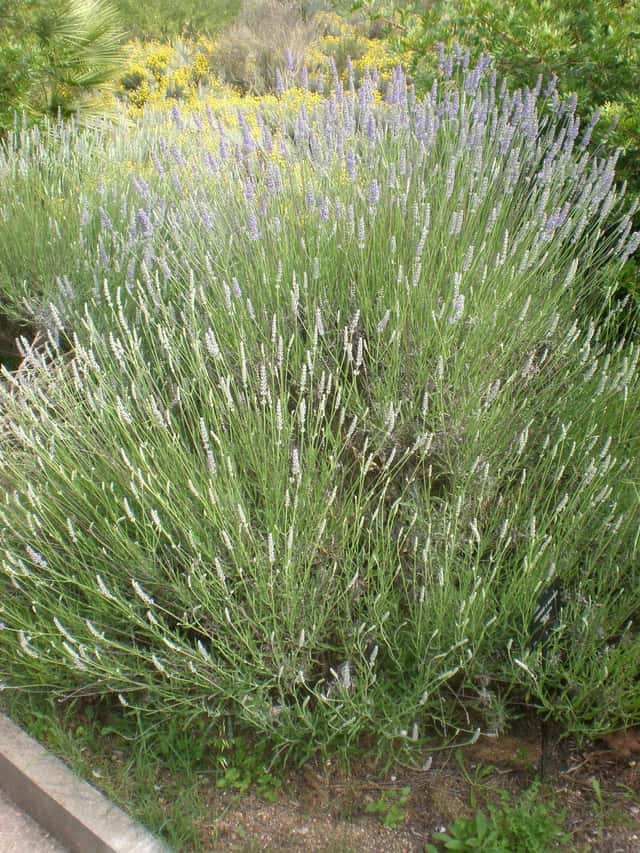
Lamiaceae
Lavandin: Aromatic Plant
Lavandula x intermedia
Grow in full sun with well-drained, neutral-to-alkaline soil. Water only once the soil has dried out, avoid waterlogging, and prune lightly in spring to keep a compact shape.
Every 10 days
Bright indirect
5° - 35°C
30% - 50%
Categories
What is Lavandin?
Lavandin (Lavandula x intermedia) is a easy-care plant from the Lamiaceae family. Lavandin (Lavandula x intermedia) is a sterile hybrid between English lavender (L. angustifolia) and spike lavender (L. latifolia), widely grown across Provence for essential oil production and as a garden ornamental. It forms an aromatic, gray-green shrub with tall purple flower spikes from midsumm...
Lavandin grows up to 90cm, spread of 90cm, watering every 10 days, 5°C – 35°C, 30–50% humidity. It is not suitable for indoor environments and not safe for pets.
Unlike many tropical plants, Lavandin tolerates watering mistakes. Best for beginners. Without precautions, ingestion can cause irritation in pets. Keep out of reach of cats and dogs.
How to Care for Lavandin?
TLDR: Lavandin needs Bright indirect, watering every 10 days, and temperatures between 5-35°C with 30-50% humidity.
How Often Should You Water Lavandin?
Let the soil dry out completely between waterings; the plant tolerates drought well but cannot handle soggy roots.
How Much Light Does Lavandin Need?
Needs full sun, at least 6 hours of direct light daily; it will not thrive in shade.
What Is the Best Soil for Lavandin?
Choose sandy or chalky, well-drained, slightly alkaline soil (pH 6.5-8); avoid heavy, waterlogged ground.
What Pot Should You Use for Lavandin?
Unglazed terracotta pot with several drainage holes
Care Schedule
Fertilize
Every 90 days
Repot
Every 730 days
What Is Lavandin and Where Does It Come From?
Lavandin (Lavandula x intermedia) is a sterile hybrid between English lavender (L. angustifolia) and spike lavender (L. latifolia), widely grown across Provence for essential oil production and as a garden ornamental. It forms an aromatic, gray-green shrub with tall purple flower spikes from midsummer to early fall, attracting bees and butterflies.
How to Propagate Lavandin?
Semi-hardwood cuttings
- Take cuttings in summer after flowering
- Use non-flowering semi-ripe shoots
- Avoid excess moisture to prevent rot
- 1 Select the shoot
Choose a healthy, non-flowering semi-hardwood shoot about 10 cm long.
- 2 Prepare the cutting
Strip leaves from the lower half and make a clean cut just below a node.
- 3 Plant it
Insert the cutting into free-draining sandy compost and keep lightly moist.
- 4 Root it
Keep in bright, sheltered conditions until rooted, usually 4-6 weeks.
Materials needed:
How Big Does Lavandin Grow?
TLDR: Lavandin can reach up to 90cm tall with Slow growth rate.
Max height
90cm
Spread
90cm
Growth rate
Slow
Foliage
Semi-evergreen
Warning: Toxic Plant
This plant can be toxic if ingested. Keep out of reach of:
Plant Uses
Ornamental
Great for decoration
Aromatic
Pleasant fragrance
Medicinal
Medicinal properties
Medicinal Uses
- Calming, relaxing essential oil
- Traditional use for stress and tension relief
Culinary Uses
- Occasional flavoring in infusions, used sparingly due to its higher camphor content than true lavender
Is your plant showing symptoms?
Click on the symptom to discover possible causes:
What Diseases Commonly Affect Lavandin?
TLDR: Lavandin is susceptible to 3 known diseases. Monitor regularly for early detection.
Root Rot
Root rot is a serious fungal disease that affects the root system of plants, causing them to decay and die. It is primarily caused by overwatering, poor drainage, or soil-borne fungi such as Pythium, Phytophthora, Rhizoctonia, and Fusarium. The disease thrives in waterlogged conditions where roots are deprived of oxygen, making them susceptible to fungal infection.
Botrytis
Leaf Spot
Leaf spot is a common fungal disease caused by various pathogens including Alternaria, Ascochyta, Colletotrichum, Septoria, and Venturia. It primarily affects leaves, causing discolored spots that can lead to premature leaf drop if left untreated.
Meaning & Symbolism
Represents devotion, purity, and calm; long linked to cleanliness and tranquility.
Compare with similar plants
| Attribute | Difficulty | Light | Watering | Pet Safe |
|---|---|---|---|---|
| Field Maple | Easy | Bright indirect | 14d | ✓ |
| Silver Birch | Easy | Direct sun | 14d | ✓ |
| Cushion Bush | Easy | Direct sun | 14d | ✓ |
| Peruvian peppertree | Easy | Direct sun | 14d | ⚠️ |





