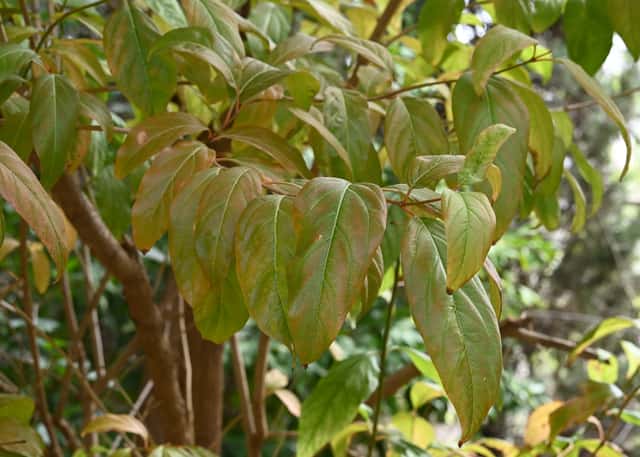
Verbenaceae
Fiddlewood: Aromatic Plant
Citharexylum spinosum
Thrives in full sun or partial shade in USDA zones 9b-11. Once established, it is drought-tolerant, requiring watering approximately every 14 days; overwatering and root rot are the main risks. It adapts to sandy, clay, or loamy soils with a pH of 5-8, preferring well-drained, humus-rich soil. Fertilize with a balanced fertilizer every 4-6 weeks during the growing season. Perform light pruning for shaping. Few pests affect it, with mealybugs and mites being the most common. It is not toxic to humans or animals.
Every 14 days
Bright indirect
5° - 38°C
40% - 80%
Categories
What is Fiddlewood?
Fiddlewood (Citharexylum spinosum) is a easy-care plant from the Verbenaceae family. Citharexylum spinosum, known as fiddlewood, is a fast-growing evergreen to semi-deciduous shrub or small tree, native to South Florida, the Caribbean islands, and from northern South America to Central America. It colonizes dry coastal strands, dunes, and subtropical maritime forests. It can reach 1...
Fiddlewood grows up to 16.0m, spread of 750cm, watering every 14 days, 5°C – 38°C, 40–80% humidity. It is not suitable for indoor environments and safe for pets.
Unlike many tropical plants, Fiddlewood tolerates watering mistakes. Best for beginners. Unlike many popular species, Fiddlewood is safe to keep around pets.
How to Care for Fiddlewood?
TLDR: Fiddlewood needs Bright indirect, watering every 14 days, and temperatures between 5-38°C with 40-80% humidity.
How Often Should You Water Fiddlewood?
Allow the top few inches of soil to dry out between waterings. Established plants are drought-tolerant and should be watered deeply every 10-14 days in warm weather; reduce to once every 3-4 weeks during cooler periods. Overwatering is the primary cause of decline, so always ensure good drainage.
How Much Light Does Fiddlewood Need?
Position in full sun (more than 6 hours of direct sunlight) for a dense, floriferous canopy. It tolerates partial shade, but shade results in a sparser canopy and fewer flowers. Indoors, keep it within 1 m (3 ft) of the brightest window.
What Is the Best Soil for Fiddlewood?
It is remarkably adaptable to soil, doing well in sandy, loamy, or clay substrates. The ideal is a well-drained, loamy soil rich in organic matter. In pots, use a well-draining mix with about 30 percent perlite or coarse sand. A pH between 5.5 and 7.5 is ideal, although it tolerates a range of 5 to 8.
What Pot Should You Use for Fiddlewood?
Use a terracotta or unglazed ceramic pot with large drainage holes to prevent root rot. Choose a container at least 40-50 cm (16-20 inches) in diameter for a young tree; its vigorous root system will require repotting every 2-3 years. Outdoors, prefer a heavy pot to resist wind.
Care Schedule
Fertilize
Every 35 days
Repot
Every 730 days
What Is Fiddlewood and Where Does It Come From?
Citharexylum spinosum, known as fiddlewood, is a fast-growing evergreen to semi-deciduous shrub or small tree, native to South Florida, the Caribbean islands, and from northern South America to Central America. It colonizes dry coastal strands, dunes, and subtropical maritime forests. It can reach 10-16 m (33-52 ft) in height, although in gardens it typically forms multi-stemmed specimens of 4-10 m (13-33 ft). It is notable for its dark green, glossy, spatulate leaves with characteristic arched venation, and for its fragrant, tubular white flowers gathered in terminal racemes, which bloom year-round, peaking in spring. It is dioecious: female trees produce fleshy drupes that ripen from orange to almost black, highly favored by birds. Its hard, reddish wood was once used in the manufacture of musical instruments, which is the origin of its popular name, fiddlewood.
How to Propagate Fiddlewood?
Seed Sowing
Sow fresh seeds for better germination.
- 1 Harvest ripe fruits (reddish-brown to black) in summer or fall
- 2 Clean the pulp and sow fresh seeds in well-drained substrate at 25°C (77°F)
- 3 Transplant seedlings to root trainers when they reach 5 cm (2 inches)
- 4 Grow in partial shade until about 40 cm (16 inches), then plant in full sun
Materials needed:
Semi-hardwood Cuttings
Maintain 70-80 percent humidity until rooted.
- 1 Cut semi-hardwood cuttings 10-15 cm (4-6 inches) long in late spring
- 2 Remove lower leaves and apply rooting hormone
- 3 Insert into moist, well-drained substrate
- 4 Maintain high humidity and indirect light at 24-28°C (75-82°F)
Materials needed:
How Big Does Fiddlewood Grow?
TLDR: Fiddlewood can reach up to 16.0m tall with Medium growth rate.
Max height
16.0m
Spread
7.5m
Growth rate
Medium
Foliage
Semi-evergreen
Plant Uses
Ornamental
Great for decoration
Medicinal
Medicinal properties
Edible
Can be consumed
Aromatic
Pleasant fragrance
Medicinal Uses
- Decoction of young branches traditionally used against thrush (candidiasis) in children
- Decoction of the bark used as a remedy for colds and respiratory complaints in Caribbean folk medicine
Culinary Uses
- Ripe drupes are edible raw, with a sweet taste, although rarely consumed by humans; they primarily serve as food for wildlife
Is your plant showing symptoms?
Click on the symptom to discover possible causes:
What Diseases Commonly Affect Fiddlewood?
TLDR: Fiddlewood is susceptible to 5 known diseases. Monitor regularly for early detection.
Root Rot
Root rot is a serious fungal disease that affects the root system of plants, causing them to decay and die. It is primarily caused by overwatering, poor drainage, or soil-borne fungi such as Pythium, Phytophthora, Rhizoctonia, and Fusarium. The disease thrives in waterlogged conditions where roots are deprived of oxygen, making them susceptible to fungal infection.
Scale Insects
Scale insects are small sap-sucking pests that appear as brown, shell-like bumps on plant stems and leaves. There are over 25 species, divided into armored (hard) and unarmored (soft) scales. They feed by piercing plant tissue and extracting sap, which weakens the plant and can lead to yellowing, stunted growth, and even death if left untreated. They also excrete honeydew, which attracts ants and promotes sooty mold growth.
Spider Mites
Spider mites are tiny arachnids (less than 1/20 inch long) related to spiders and ticks that feed on plant sap. They thrive in hot, dry conditions and can cause significant damage to ornamental and vegetable plants. During severe infestations, crop losses can reach 14% or higher as these pests disrupt vital plant processes including photosynthesis, carbon dioxide absorption, and transpiration.
Mealybugs
Mealybugs are small, soft-bodied insects covered with a white, waxy, cottony material. They are common pests of houseplants and outdoor plants in mild climates. These sap-sucking insects feed on plant tissue, causing damage, stunted growth, and can lead to plant death if left untreated. They produce sticky honeydew which attracts sooty mold.
Meaning & Symbolism
In Caribbean and Florida traditions, fiddlewood is associated with craftsmanship and music, as its hard, resonant wood was used to make musical instruments. In some communities, it represents resilience, a coastal tree that stabilizes limestone slopes and shelters wildlife during dry seasons.
Compare with similar plants
| Attribute | Difficulty | Light | Watering | Pet Safe |
|---|---|---|---|---|
| Field Maple | Easy | Bright indirect | 14d | ✓ |
| Silver Birch | Easy | Direct sun | 14d | ✓ |
| Cushion Bush | Easy | Direct sun | 14d | ✓ |
| Peruvian peppertree | Easy | Direct sun | 14d | ⚠️ |





