Adoxaceae
Viburnum tinus (Laurustinus)
Viburnum tinus
Plant in full sun to partial shade with well-draining soil. Water regularly while young; once established it tolerates short dry spells. Prune lightly after flowering to keep a neat shape and remove any winter-damaged growth.
Every 10 days
Bright indirect
-10° - 35°C
40% - 60%
Categories
What is Laurustinus?
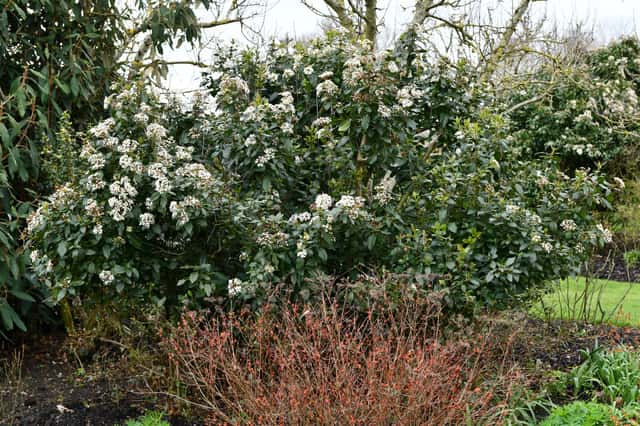
Laurustinus (Viburnum tinus) is a easy-care plant from the Adoxaceae family. Laurustinus is a dense, evergreen Mediterranean shrub prized for its leathery dark-green leaves and clusters of pink-budded white flowers that open through the winter months. Following the blooms, it produces small, metallic blue-black berries that add extra seasonal interest and attract birds. Hard...
Laurustinus grows up to 3.0m, spread of 300cm, watering every 10 days, -10°C – 35°C, 40–60% humidity. It is not suitable for indoor environments and not safe for pets.
Unlike many tropical plants, Laurustinus tolerates watering mistakes. Best for beginners. Without precautions, ingestion can cause irritation in pets. Keep out of reach of cats and dogs.
How to Care for Laurustinus?
TLDR: Laurustinus needs Bright indirect, watering every 10 days, and temperatures between -10-35°C with 40-60% humidity.
How Often Should You Water Laurustinus?
Water deeply once every 7-10 days during the first two growing seasons. Mature plants only need supplemental water during prolonged summer drought.
How Much Light Does Laurustinus Need?
Thrives in full sun to partial shade; at least 4 hours of direct sun encourages the best flowering and berry production.
What Is the Best Soil for Laurustinus?
Prefers well-draining, humus-rich soil; sandy loam is ideal. Tolerates mildly acidic to mildly alkaline pH.
What Pot Should You Use for Laurustinus?
A large, weighted terracotta or ceramic pot with generous drainage holes suits container-grown specimens, since mature plants can become top-heavy.
Care Schedule
Fertilize
Every 365 days
What Is Laurustinus and Where Does It Come From?
Laurustinus is a dense, evergreen Mediterranean shrub prized for its leathery dark-green leaves and clusters of pink-budded white flowers that open through the winter months. Following the blooms, it produces small, metallic blue-black berries that add extra seasonal interest and attract birds. Hardy and low-maintenance, it is widely used as a hedge, screen or specimen shrub in mild-winter gardens.
How to Propagate Laurustinus?
Semi-hardwood cuttings
Cover with a clear plastic bag or propagator lid to maintain humidity, and mist regularly until roots establish.
- 1 Take a 10-15 cm semi-ripe cutting from a healthy side shoot in late summer.
- 2 Remove the lower leaves and any flowers, leaving 2-3 leaves at the top.
- 3 Dip the cut end in rooting hormone powder.
- 4 Insert into a pot filled with a moist mix of equal parts peat moss and perlite.
- 5 Keep in a warm, humid, indirectly lit spot until roots form.
Materials needed:
Seed propagation
Germination is slow and unreliable, so cuttings are the preferred propagation method for gardeners.
- 1 Collect ripe blue-black berries in autumn and clean off the pulp.
- 2 Give seeds about 120 days of warm stratification followed by roughly 90 days of cold stratification.
- 3 Sow the stratified seed in a well-draining seed mix.
- 4 Keep consistently moist until germination, which can be slow and uneven.
Materials needed:
How Big Does Laurustinus Grow?
TLDR: Laurustinus can reach up to 3.0m tall with Medium growth rate.
Max height
3.0m
Spread
3.0m
Growth rate
Medium
Foliage
Evergreen
Warning: Toxic Plant
This plant can be toxic if ingested. Keep out of reach of:
Plant Uses
Ornamental
Great for decoration
Is your plant showing symptoms?
Click on the symptom to discover possible causes:
What Diseases Commonly Affect Laurustinus?
TLDR: Laurustinus is susceptible to 7 known diseases. Monitor regularly for early detection.
Leaf Spot
Leaf spot is a common fungal disease caused by various pathogens including Alternaria, Ascochyta, Colletotrichum, Septoria, and Venturia. It primarily affects leaves, causing discolored spots that can lead to premature leaf drop if left untreated.
Root Rot
Root rot is a serious fungal disease that affects the root system of plants, causing them to decay and die. It is primarily caused by overwatering, poor drainage, or soil-borne fungi such as Pythium, Phytophthora, Rhizoctonia, and Fusarium. The disease thrives in waterlogged conditions where roots are deprived of oxygen, making them susceptible to fungal infection.
Botrytis
Powdery Mildew
Powdery mildew is a common fungal disease caused by various fungi species including Erysiphe, Podosphaera, Oïdium, and Leveillula. It affects over 10,000 plant species worldwide. The disease thrives in warm, dry climates with high humidity and appears as a distinctive white powdery coating on plant surfaces.
Meaning & Symbolism
In floriography, Laurustinus represents protection and quiet endurance, echoing its habit of blooming through the cold winter months.
Fun Facts
Its blue-black berries were historically used to make ink and dye.
The flower buds are pink but open to reveal white flowers, giving the shrub a two-tone look in winter.
It has been cultivated in European gardens since at least the 16th century for year-round interest.
Frequently asked questions
Is Laurustinus toxic to pets?
How much sun does Viburnum tinus need?
When does Laurustinus flower?
How do I propagate Viburnum tinus?
Does Laurustinus need regular pruning?
Compare with similar plants
| Attribute | Difficulty | Light | Watering | Pet Safe |
|---|---|---|---|---|
| Field Maple | Easy | Bright indirect | 14d | ✓ |
| Silver Birch | Easy | Direct sun | 14d | ✓ |
| Cushion Bush | Easy | Direct sun | 14d | ✓ |
| Peruvian peppertree | Easy | Direct sun | 14d | ⚠️ |





