Fabaceae
Honey Locust (Gleditsia triacanthos)
Gleditsia triacanthos
The Honey Locust is a low-maintenance, drought-tolerant tree once established. Water deeply every 1–2 weeks during the first growing season; mature trees rarely need supplemental watering. Place in full sun and well-draining, loamy soil. Fertilize lightly in early spring and prune in late winter to remove dead or crossing branches.
Every 14 days
Direct sun
-35° - 35°C
30% - 70%
Categories
What is Honey Locust?
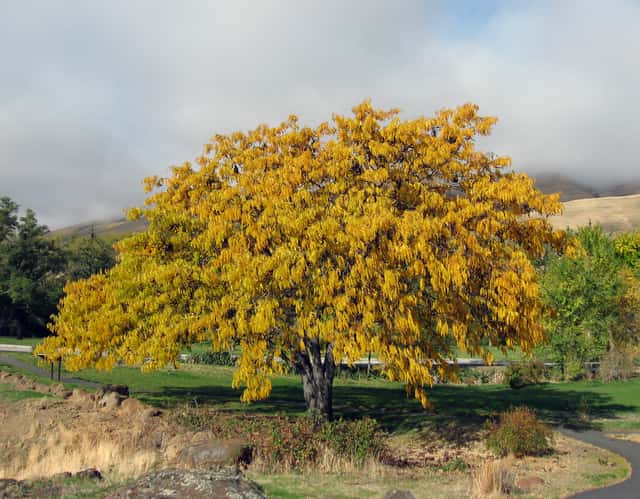
Honey Locust (Gleditsia triacanthos) is a medium-care plant from the Fabaceae family. Gleditsia triacanthos, commonly known as the Honey Locust, is a fast-growing deciduous tree native to North America. It is celebrated for its feathery, compound foliage, fragrant spring flowers, and remarkable adaptability to urban conditions, drought, salt, and pollution. The tree can reach 18–24 m...
Honey Locust grows up to 24.0m, with spread of 1800cm, watering every 14 days, -35°C – 35°C, 30–70% humidity. It is not suitable for indoor environments and safe for pets.
Unlike many popular species, Honey Locust is safe to keep around pets.
How to Care for Honey Locust?
TLDR: Honey Locust needs Direct sun, watering every 14 days, and temperatures between -35-35°C with 30-70% humidity.
How Often Should You Water Honey Locust?
Water newly planted trees deeply once or twice a week for the first year. Once established, Honey Locusts are highly drought-tolerant and usually require watering only during prolonged dry spells. Avoid overwatering — soggy soil can cause root rot.
How Much Light Does Honey Locust Need?
Plant in full sun (minimum 6 hours of direct sunlight per day). The Honey Locust thrives in open, sunny locations and does not perform well in full shade. Too little light leads to sparse foliage and reduced growth.
What Is the Best Soil for Honey Locust?
Adaptable to a wide range of soils including clay, loam, and sandy soils. Prefers slightly acidic to neutral pH (6.0–7.5). Ensure good drainage to prevent root rot. Tolerates poor, compacted soils and even saline conditions.
What Pot Should You Use for Honey Locust?
Not applicable for indoor pot culture. Outdoors, young trees can be grown in large containers (60–90 cm deep) temporarily, but should be transplanted into the ground as soon as possible.
Care Schedule
Fertilize
Every 365 days
What Is Honey Locust and Where Does It Come From?
Gleditsia triacanthos, commonly known as the Honey Locust, is a fast-growing deciduous tree native to North America. It is celebrated for its feathery, compound foliage, fragrant spring flowers, and remarkable adaptability to urban conditions, drought, salt, and pollution. The tree can reach 18–24 m tall and features distinctive branched thorns along its trunk and branches, though thornless cultivars are widely available.
How to Propagate Honey Locust?
Seed Sowing
Scarification is essential for good germination rates. Start seeds indoors 6–8 weeks before the last expected frost.
- 1 Scarify seeds by soaking in hot water for 24 hours or nicking the seed coat with sandpaper to break dormancy.
- 2 Sow seeds 2–3 cm deep in well-draining seed compost.
- 3 Keep moist at 20–25°C until germination occurs (2–4 weeks).
- 4 Transplant seedlings outdoors after the last frost when 15–20 cm tall.
Materials needed:
Hardwood Cutting
Hardwood cuttings are challenging; seed propagation is more reliable for this species.
- 1 Take 20–30 cm hardwood cuttings from healthy, dormant stems in late winter.
- 2 Dip the cut end in rooting hormone powder.
- 3 Insert cuttings into a mix of sand and perlite and keep in a cool, frost-free location.
- 4 Keep the substrate slightly moist until roots form (6–12 weeks).
Materials needed:
How Big Does Honey Locust Grow?
TLDR: Honey Locust can reach up to 24.0m tall with Fast growth rate.
Max height
24.0m
Spread
18.0m
Growth rate
Fast
Foliage
Deciduous
Plant Uses
Ornamental
Great for decoration
Medicinal
Medicinal properties
Medicinal Uses
- Historically, bark extracts were used by Native Americans to treat various ailments including fever and toothache.
Culinary Uses
- The sweet pulp inside the seed pods is edible and was used by Native Americans as a food source and sweetener.
Is your plant showing symptoms?
Click on the symptom to discover possible causes:
What Diseases Commonly Affect Honey Locust?
TLDR: Honey Locust is susceptible to 12 known diseases. Monitor regularly for early detection.
Powdery Mildew
Powdery mildew is a common fungal disease caused by various fungi species including Erysiphe, Podosphaera, Oïdium, and Leveillula. It affects over 10,000 plant species worldwide. The disease thrives in warm, dry climates with high humidity and appears as a distinctive white powdery coating on plant surfaces.
Root Rot
Root rot is a serious fungal disease that affects the root system of plants, causing them to decay and die. It is primarily caused by overwatering, poor drainage, or soil-borne fungi such as Pythium, Phytophthora, Rhizoctonia, and Fusarium. The disease thrives in waterlogged conditions where roots are deprived of oxygen, making them susceptible to fungal infection.
Leaf Spot
Leaf spot is a common fungal disease caused by various pathogens including Alternaria, Ascochyta, Colletotrichum, Septoria, and Venturia. It primarily affects leaves, causing discolored spots that can lead to premature leaf drop if left untreated.
Canker
Canker is a disease caused by various fungi and bacteria that create necrotic, sunken areas on bark of branches, stems, and trunks. Pathogens enter through wounds and natural openings, especially when plants are stressed. Canker can gradually weaken or kill branches by disrupting water and nutrient flow.
Meaning & Symbolism
Symbol of beauty, protection, and tolerance. Its thorns historically represented defence and resilience, while its sweet seed pods symbolised abundance.
Fun Facts
The Honey Locust is one of the most salt-tolerant trees available, making it a popular choice for roadsides in cold climates where road salt is used.
Native Americans used the hard, rot-resistant wood of the Honey Locust to make bows and fence posts, and the sweet pod pulp as a food source.
The branched thorns on wild Honey Locust trees can be up to 8 cm long and are thought to have evolved to deter large herbivores such as mammoths and giant ground sloths.
Honey Locust pods contain a sweet, edible pulp that attracts white-tailed deer, squirrels, and many other wildlife species.
Frequently asked questions
How often should I water a Honey Locust tree?
Is the Honey Locust toxic to pets?
How fast does a Honey Locust grow?
What are the most common problems with Honey Locusts?
Can I grow a Honey Locust in a small garden?
Compare with similar plants
| Attribute | Difficulty | Light | Watering | Pet Safe |
|---|---|---|---|---|
| Azalea | Medium | Partial shade | 3d | ⚠️ |
| Wild Lettuce | Medium | Direct sun | 7d | ⚠️ |
| Cape Primrose | Medium | Partial shade | 7d | ✓ |
| Lawson's Cypress | Medium | Bright indirect | 10d | ✓ |