Ericaceae
Fetterbush: Ground Cover Plant
Leucothoe fontanesiana
Grows best in partial to full shade in consistently moist, acidic, well-drained soil rich in organic matter. It is slow-growing and does not tolerate drought or prolonged direct sun.
Every 4 days
Low light
10° - 26°C
50% - 70%
Categories
What is Fetterbush?
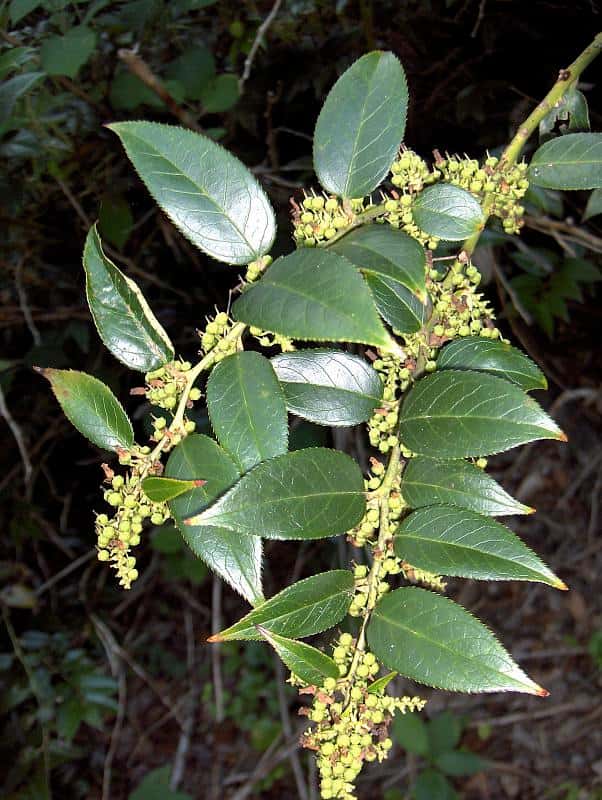
Fetterbush (Leucothoe fontanesiana) is a easy-care plant from the Ericaceae family. Fetterbush is a graceful, arching evergreen shrub native to the Appalachian Mountains of the southeastern United States. Its glossy, lance-shaped dark green leaves take on bronze and burgundy tints through winter, while in spring dangling clusters of small white, bell-shaped flowers line the droopin...
Fetterbush grows up to 1.8m, spread of 244cm, watering every 4 days, 10°C – 26°C, 50–70% humidity. It is not suitable for indoor environments and not safe for pets.
Unlike many tropical plants, Fetterbush tolerates watering mistakes. Best for beginners. Without precautions, ingestion can cause irritation in pets. Keep out of reach of cats and dogs.
How to Care for Fetterbush?
TLDR: Fetterbush needs Low light, watering every 4 days, and temperatures between 10-26°C with 50-70% humidity.
How Often Should You Water Fetterbush?
Keep the soil evenly moist at all times, watering as soon as the top layer begins to dry; avoid both waterlogging and letting the root zone dry out.
How Much Light Does Fetterbush Need?
Thrives in dappled to deep shade; too much direct sun scorches and bleaches the foliage.
What Is the Best Soil for Fetterbush?
Use acidic soil (pH 4.5-6.0) enriched with peat or compost, moisture-retentive yet well-draining.
What Pot Should You Use for Fetterbush?
Wide, shallow container with good drainage and an acidic, ericaceous potting mix
Care Schedule
Fertilize
Every 365 days
What Is Fetterbush and Where Does It Come From?
Fetterbush is a graceful, arching evergreen shrub native to the Appalachian Mountains of the southeastern United States. Its glossy, lance-shaped dark green leaves take on bronze and burgundy tints through winter, while in spring dangling clusters of small white, bell-shaped flowers line the drooping branches, echoing its cousins the andromedas and pieris. Long a staple of woodland and shade gardens, it forms dense thickets so tangling that Appalachian hunters nicknamed it "dog-hobble" for how it snagged their hounds. Today it is prized as a shade-loving specimen, hedge, or groundcover alongside rhododendrons and azaleas, sharing their taste for moist, acidic soil.
How to Propagate Fetterbush?
Semi-hardwood cuttings
- Take cuttings from current-season growth in late summer
- Use rooting hormone for better success
- Keep in moist, shaded medium until rooted
- 1 Take the cutting
Cut a 4-6 in (10-15 cm) semi-hardwood stem, stripping leaves from the bottom half.
- 2 Plant it
Insert into a light, acidic rooting mix and keep consistently moist in shade.
- 3 Wait for roots
Rooting typically takes several weeks to a couple of months.
Materials needed:
Clump division
- Divide established clumps in early spring
- Keep enough roots attached to each division
- 1 Lift the clump
Carefully dig up the shrub, preserving as much root mass as possible.
- 2 Divide
Split into smaller sections, each with roots and shoots.
- 3 Replant
Replant immediately into moist, acidic soil and water thoroughly.
Materials needed:
How Big Does Fetterbush Grow?
TLDR: Fetterbush can reach up to 1.8m tall with Slow growth rate.
Max height
1.8m
Spread
2.4m
Growth rate
Slow
Foliage
Evergreen
Warning: Toxic Plant
This plant can be toxic if ingested. Keep out of reach of:
Plant Uses
Ornamental
Great for decoration
Ground Cover
Soil coverage
Is your plant showing symptoms?
Click on the symptom to discover possible causes:
What Diseases Commonly Affect Fetterbush?
TLDR: Fetterbush is susceptible to 5 known diseases. Monitor regularly for early detection.
Anthracnose
Anthracnose is a fungal disease caused by fungi in the genus Colletotrichum that affects many plants, including vegetables, fruits, and trees. The disease thrives in cool, wet conditions, causing dark, sunken lesions on leaves, stems, flowers, and fruits.
Leaf Spot
Leaf spot is a common fungal disease caused by various pathogens including Alternaria, Ascochyta, Colletotrichum, Septoria, and Venturia. It primarily affects leaves, causing discolored spots that can lead to premature leaf drop if left untreated.
Aphids
Aphids are small, soft-bodied, pear-shaped insects (1/16 to 1/8 inch long) that feed by sucking nutrient-rich sap from plants. They reproduce rapidly and can quickly weaken plants, causing distorted growth and transmitting plant viruses. Aphids come in various colors including green, black, red, yellow, brown, and gray. They secrete honeydew, a sticky substance that attracts ants and encourages sooty mold growth.
Scale Insects
Scale insects are small sap-sucking pests that appear as brown, shell-like bumps on plant stems and leaves. There are over 25 species, divided into armored (hard) and unarmored (soft) scales. They feed by piercing plant tissue and extracting sap, which weakens the plant and can lead to yellowing, stunted growth, and even death if left untreated. They also excrete honeydew, which attracts ants and promotes sooty mold growth.
Meaning & Symbolism
Nicknamed "dog-hobble" in Appalachian folklore because its tangled, arching thickets famously snagged hunting dogs; it symbolizes dense, quiet woodland shelter and resilience in the shade.
Compare with similar plants
| Attribute | Difficulty | Light | Watering | Pet Safe |
|---|---|---|---|---|
| Azalea | Medium | Partial shade | 3d | ⚠️ |
| Field Maple | Easy | Bright indirect | 14d | ✓ |
| Silver Birch | Easy | Direct sun | 14d | ✓ |
| Cushion Bush | Easy | Direct sun | 14d | ✓ |





