Montiaceae
Siskiyou Lewisia: Pet-Safe Plant
Lewisia cotyledon
A medium-difficulty plant that demands excellent drainage above all else. Its greatest threat is overwatering, which causes fatal crown rot and root rot — especially during wet winters. Hardy to USDA zones 3a–8b and nearly pest-free when grown with proper drainage. A must-have for rock gardens and alpine troughs.
Every 10 days
Bright indirect
-7° - 32°C
30% - 50%
Categories
What is Siskiyou Lewisia?
Siskiyou Lewisia (Lewisia cotyledon) is a medium-care plant from the Montiaceae family. Lewisia cotyledon, commonly known as Siskiyou Lewisia or Cliff Maids, is an evergreen succulent perennial native to the rocky subalpine mountains of southern Oregon and northern California. It forms compact basal rosettes of thick, fleshy leaves and produces stunning multi-petaled flowers in shades...
Siskiyou Lewisia grows up to 45cm, spread of 30cm, watering every 10 days, -7°C – 32°C, 30–50% humidity. It is suitable for indoor environments and safe for pets.
Unlike many popular species, Siskiyou Lewisia is safe to keep around pets. Without adequate drainage, root rot can develop within 20 days.
How to Care for Siskiyou Lewisia?
TLDR: Siskiyou Lewisia needs Bright indirect, watering every 10 days, and temperatures between -7-32°C with 30-50% humidity.
How Often Should You Water Siskiyou Lewisia?
Water every 7–10 days during the growing season, allowing the soil to dry out completely between waterings. In winter, reduce to once every 3–4 weeks. Never allow moisture to sit at the crown — this plant is highly prone to crown rot and root rot. Always water at the base, never overhead, and use morning watering to allow any surface moisture to evaporate.
How Much Light Does Siskiyou Lewisia Need?
Prefers full sun to light partial shade with a minimum of 4–6 hours of direct sunlight daily. In hot climates, protect from intense midday sun to prevent leaf scorch. Indoors, place near an east or west-facing window for bright indirect light.
What Is the Best Soil for Siskiyou Lewisia?
Requires sharply draining, gritty soil — ideally a cactus/succulent mix with added perlite and coarse sand. Soil pH between 6.0 and 7.0. Never use heavy, moisture-retentive soil. In nature, this plant grows on near-vertical rocky cliff faces with minimal soil.
What Pot Should You Use for Siskiyou Lewisia?
Terracotta pots with drainage holes are strongly recommended. They allow the substrate to dry faster and prevent the moisture buildup that can quickly kill this plant. Avoid plastic or metal containers.
Care Schedule
Fertilize
Every 30 days
Repot
Every 730 days
What Is Siskiyou Lewisia and Where Does It Come From?
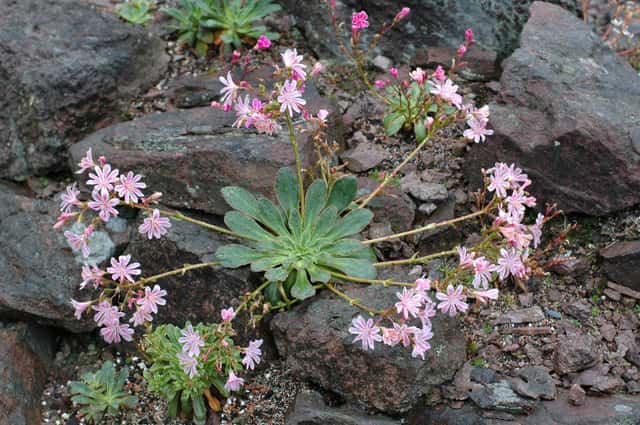
Lewisia cotyledon, commonly known as Siskiyou Lewisia or Cliff Maids, is an evergreen succulent perennial native to the rocky subalpine mountains of southern Oregon and northern California. It forms compact basal rosettes of thick, fleshy leaves and produces stunning multi-petaled flowers in shades of pink, orange, white, yellow, and red from spring into early summer. A tough yet delicate-looking alpine gem, it thrives in rocky, well-drained soils and is highly prized in rock gardens and alpine containers.
How Big Does Siskiyou Lewisia Grow?
TLDR: Siskiyou Lewisia can reach up to 45cm tall with Slow growth rate.
Max height
45cm
Spread
30cm
Growth rate
Slow
Foliage
Evergreen
Plant Uses
Ornamental
Great for decoration
Is your plant showing symptoms?
Click on the symptom to discover possible causes:
What Diseases Commonly Affect Siskiyou Lewisia?
TLDR: Siskiyou Lewisia is susceptible to 8 known diseases. Monitor regularly for early detection.
Root Rot
Root rot is a serious fungal disease that affects the root system of plants, causing them to decay and die. It is primarily caused by overwatering, poor drainage, or soil-borne fungi such as Pythium, Phytophthora, Rhizoctonia, and Fusarium. The disease thrives in waterlogged conditions where roots are deprived of oxygen, making them susceptible to fungal infection.
Crown Rot
Crown rot is a serious fungal disease that attacks the crown (base) of the plant where the stem meets the soil. It is caused by various fungal pathogens including Phytophthora, Fusarium, and Rhizoctonia. The disease thrives in waterlogged conditions and can quickly spread to kill the entire plant if not addressed promptly.
Overwatering
Overwatering occurs when plants receive too much water, depriving roots of oxygen and causing root rot. This environmental stress is one of the most common causes of houseplant death, as waterlogged soil prevents roots from breathing and functioning properly.
Powdery Mildew
Powdery mildew is a common fungal disease caused by various fungi species including Erysiphe, Podosphaera, Oïdium, and Leveillula. It affects over 10,000 plant species worldwide. The disease thrives in warm, dry climates with high humidity and appears as a distinctive white powdery coating on plant surfaces.
Meaning & Symbolism
Represents resilience and beauty in adversity. Growing naturally from bare rocky cliffs with almost no soil, Lewisia symbolizes strength, perseverance, and the ability to flourish in harsh conditions.
Fun Facts
Lewisia cotyledon can produce up to 50 flowers per stem, creating a breathtaking floral display that lasts weeks in spring.
The genus Lewisia was named in honor of Meriwether Lewis of the Lewis and Clark Expedition, who collected specimens of the related Lewisia rediviva in 1806.
In nature, Cliff Maids grow on nearly vertical rocky cliff faces with minimal soil — one of the most extreme growing environments of any ornamental plant.
Frequently asked questions
Why is my Lewisia cotyledon wilting?
Can I grow Siskiyou Lewisia indoors?
Is Lewisia cotyledon toxic to pets?
Compare with similar plants
| Attribute | Difficulty | Light | Watering | Pet Safe |
|---|---|---|---|---|
| Dark Fieldcap | Medium | Low light | 2d | ⚠️ |
| Azalea | Medium | Partial shade | 3d | ⚠️ |
| Bougainvillea | Medium | Direct sun | 7d | ⚠️ |
| Wild Lettuce | Medium | Direct sun | 7d | ⚠️ |



