Bignoniaceae
Pyrostegia - Flame Vine
Pyrostegia
A fast-growing climber that thrives in full sun and well-draining soil. Water moderately, avoiding waterlogging, and fertilize every 2-3 weeks during the growing season to encourage its spectacular winter bloom.
Every 3 days
Direct sun
14° - 26°C
% - %
Categories
What is Golden Shower Vine?
Golden Shower Vine (Pyrostegia) is a medium-care plant from the Bignoniaceae family. Pyrostegia is a vigorous evergreen to semi-deciduous climbing vine in the Bignoniaceae family, native to southern Brazil, Bolivia, Paraguay, and northeastern Argentina. The genus is effectively monotypic in cultivation, dominated by Pyrostegia venusta, commonly called the flame vine or golden shower...
Golden Shower Vine grows up to 5.0m, watering every 3 days, 14°C – 26°C. It is not suitable for indoor environments and safe for pets.
Unlike many popular species, Golden Shower Vine is safe to keep around pets.
How to Care for Golden Shower Vine?
TLDR: Golden Shower Vine needs Direct sun, watering every 3 days, and temperatures between 14-26°C with 40-70% humidity.
How Often Should You Water Golden Shower Vine?
Water when the top couple of centimeters of soil feel dry, typically every 2-3 days in warm weather; avoid soggy soil since the plant is prone to root rot.
How Much Light Does Golden Shower Vine Need?
Give it full, direct sun for best flowering; it tolerates light partial shade in very hot climates but blooms less.
What Is the Best Soil for Golden Shower Vine?
Use fertile, well-draining soil; avoid heavy clay soils that hold excess moisture, or amend them generously with coarse sand.
What Pot Should You Use for Golden Shower Vine?
Choose a large, sturdy container with excellent drainage, or plant directly in the ground next to a trellis, fence, or other support structure.
Care Schedule
Fertilize
Every 21 days
What Is Golden Shower Vine and Where Does It Come From?
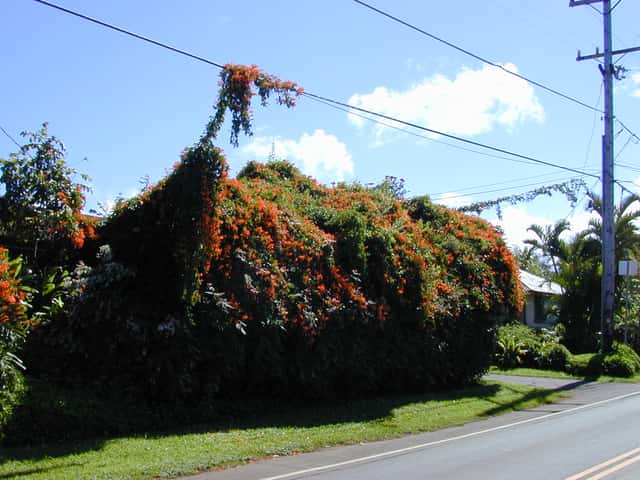
Pyrostegia is a vigorous evergreen to semi-deciduous climbing vine in the Bignoniaceae family, native to southern Brazil, Bolivia, Paraguay, and northeastern Argentina. The genus is effectively monotypic in cultivation, dominated by Pyrostegia venusta, commonly called the flame vine or golden shower vine for its abundant clusters of tubular orange flowers that blanket the plant in winter and early spring. Its branched tendrils cling readily to fences, walls, and pergolas, making it a popular choice for covering large vertical spaces quickly.
How to Propagate Golden Shower Vine?
Semi-hardwood stem cutting
Use clean, sharp tools; take cuttings in summer, autumn, or winter while avoiding hard frost; keep the substrate moist but never waterlogged.
- 1 Cut a healthy semi-hardwood stem about 15-20 cm long with 2-3 nodes
- 2 Strip the leaves from the lower half of the cutting
- 3 Dip the cut end in rooting hormone
- 4 Plant in a light, well-draining potting mix and keep it lightly moist
- 5 Keep in a shaded, sheltered spot until roots form
Materials needed:
How Big Does Golden Shower Vine Grow?
TLDR: Golden Shower Vine can reach up to 5.0m tall with Fast growth rate.
Max height
5.0m
Growth rate
Fast
Foliage
Evergreen
Plant Uses
Ornamental
Great for decoration
Is your plant showing symptoms?
Click on the symptom to discover possible causes:
What Diseases Commonly Affect Golden Shower Vine?
TLDR: Golden Shower Vine is susceptible to 8 known diseases. Monitor regularly for early detection.
Root Rot
Root rot is a serious fungal disease that affects the root system of plants, causing them to decay and die. It is primarily caused by overwatering, poor drainage, or soil-borne fungi such as Pythium, Phytophthora, Rhizoctonia, and Fusarium. The disease thrives in waterlogged conditions where roots are deprived of oxygen, making them susceptible to fungal infection.
Powdery Mildew
Powdery mildew is a common fungal disease caused by various fungi species including Erysiphe, Podosphaera, Oïdium, and Leveillula. It affects over 10,000 plant species worldwide. The disease thrives in warm, dry climates with high humidity and appears as a distinctive white powdery coating on plant surfaces.
Mealybugs
Mealybugs are small, soft-bodied insects covered with a white, waxy, cottony material. They are common pests of houseplants and outdoor plants in mild climates. These sap-sucking insects feed on plant tissue, causing damage, stunted growth, and can lead to plant death if left untreated. They produce sticky honeydew which attracts sooty mold.
Spider Mites
Spider mites are tiny arachnids (less than 1/20 inch long) related to spiders and ticks that feed on plant sap. They thrive in hot, dry conditions and can cause significant damage to ornamental and vegetable plants. During severe infestations, crop losses can reach 14% or higher as these pests disrupt vital plant processes including photosynthesis, carbon dioxide absorption, and transpiration.
Meaning & Symbolism
In its native Brazil the plant is called flor-de-são-joão because it blooms heavily around the June Festa Junina celebrations, linking it culturally to midwinter folk festivities.
Fun Facts
The common name flame vine refers to the fiery orange clusters of flowers that blanket the plant in bloom.
Its branched tendrils grip rough surfaces without needing to be tied down.
It tolerates salty coastal soils, making it popular in seaside gardens.
It belongs to the Bignoniaceae family, the same family as the ornamental trumpet trees (Handroanthus/Tabebuia).
Frequently asked questions
When does the flame vine bloom?
Is Pyrostegia toxic to pets?
How do you propagate flame vine?
Does flame vine need support?
Compare with similar plants
| Attribute | Difficulty | Light | Watering | Pet Safe |
|---|---|---|---|---|
| Dark Fieldcap | Medium | Low light | 2d | ⚠️ |
| Azalea | Medium | Partial shade | 3d | ⚠️ |
| Bougainvillea | Medium | Direct sun | 7d | ⚠️ |
| Wild Lettuce | Medium | Direct sun | 7d | ⚠️ |
Choose & Compare
Sources & References
- Pyrostegia venusta - Wikipedia
- Flame Vine Plant Care & Growing Basics | PlantIn
- Pyrostegia venusta (Flame vine) | Top Tropicals Plant Encyclopedia
- Complete care guide for Pyrostegia venusta or winter Bignonia
- Flame vine (Pyrostegia venusta) - Botanical Realm
- Flame Vine Plant Care: Water, Light, Nutrients | Greg App



