Sapindaceae
Lychee (Litchi chinensis): Complete Growing Guide
Litchi chinensis
Lychee needs full direct sunlight, warm and humid subtropical climate, and well-draining slightly acidic soil. Water regularly keeping soil evenly moist but never waterlogged. Fertilize every 30 days during the growing season. Prune after harvest to encourage new fruiting wood.
Every 5 days
Direct sun
15° - 38°C
60% - 80%
Categories
What is Lychee?
Lychee (Litchi chinensis) is a medium-care plant from the Sapindaceae family. Lychee (Litchi chinensis) is a subtropical fruit tree native to southern China (Guangdong and Fujian provinces), belonging to the Sapindaceae family. Renowned for its delicious rose-colored fruits with juicy, translucent white flesh and a floral fragrance, it is cultivated across tropical and subtro...
Lychee grows up to 12.0m, spread of 900cm, watering every 5 days, 15°C – 38°C, 60–80% humidity. It is not suitable for indoor environments and safe for pets.
Unlike many popular species, Lychee is safe to keep around pets.
How to Care for Lychee?
TLDR: Lychee needs Direct sun, watering every 5 days, and temperatures between 15-38°C with 60-80% humidity.
How Often Should You Water Lychee?
Water lychee every 5 days on average, keeping the soil consistently moist without waterlogging. Increase frequency during dry spells in the growing season. Reduce watering in winter to stimulate flowering. Avoid overwatering, which can lead to root rot.
How Much Light Does Lychee Need?
Lychee requires full sun — at least 6 to 8 hours of direct sunlight daily. In subtropical and tropical climates, it thrives outdoors. Insufficient light significantly reduces fruit production and overall vigor.
What Is the Best Soil for Lychee?
Prefers well-draining, slightly acidic soil (pH 5.5–7.0) rich in organic matter. Avoid compacted or poorly drained soils. Incorporating compost improves soil structure and fertility for better fruit production.
What Pot Should You Use for Lychee?
Large clay or wooden containers with excellent drainage. For container growing, choose pots at least 60 cm in diameter. Clay pots are preferred as they allow root transpiration and help regulate soil moisture.
Care Schedule
Fertilize
Every 30 days
What Is Lychee and Where Does It Come From?
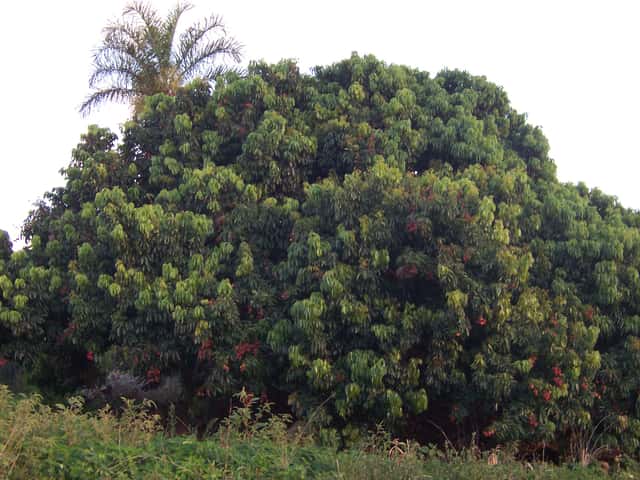
Lychee (Litchi chinensis) is a subtropical fruit tree native to southern China (Guangdong and Fujian provinces), belonging to the Sapindaceae family. Renowned for its delicious rose-colored fruits with juicy, translucent white flesh and a floral fragrance, it is cultivated across tropical and subtropical regions worldwide. The evergreen tree grows slowly, reaching up to 12 meters in height under ideal conditions. Small white flowers emerge in spring, developing into the characteristic clusters of rough-skinned fruits.
How to Propagate Lychee?
Seed germination
Seeds lose viability rapidly; sow within 5 days of extraction. Maintain temperatures above 20°C for best germination.
- 1 Remove seed from ripe fruit and wash thoroughly
- 2 Sow in moist well-draining medium immediately after extraction
- 3 Cover lightly and keep in a warm, humid location
- 4 Transplant seedling when it reaches 15-20 cm in height
Materials needed:
Air layering
Prefer current-season branches. Keep moss consistently moist throughout the process.
- 1 Select a healthy branch 1-2 cm in diameter
- 2 Remove a 3-4 cm ring of bark from the branch
- 3 Apply moist sphagnum moss and wrap with plastic film
- 4 Wait for roots to form, then cut below the rooted section
Materials needed:
How Big Does Lychee Grow?
TLDR: Lychee can reach up to 12.0m tall with Slow growth rate.
Max height
12.0m
Spread
9.0m
Growth rate
Slow
Foliage
Evergreen
Plant Uses
Edible
Can be consumed
Ornamental
Great for decoration
Medicinal Uses
- Bark used in traditional Chinese medicine for digestive issues
- Seeds used in infusions for stomach pain relief
Culinary Uses
- Fresh fruit eaten raw or in fruit salads
- Used in desserts, ice creams, jams, and cocktails
- Very popular in syrups and tropical beverages
- Featured in Asian cuisine, including the Cantonese dish lychee chicken
Is your plant showing symptoms?
Click on the symptom to discover possible causes:
What Diseases Commonly Affect Lychee?
TLDR: Lychee is susceptible to 8 known diseases. Monitor regularly for early detection.
Anthracnose
Anthracnose is a fungal disease caused by fungi in the genus Colletotrichum that affects many plants, including vegetables, fruits, and trees. The disease thrives in cool, wet conditions, causing dark, sunken lesions on leaves, stems, flowers, and fruits.
Root Rot
Root rot is a serious fungal disease that affects the root system of plants, causing them to decay and die. It is primarily caused by overwatering, poor drainage, or soil-borne fungi such as Pythium, Phytophthora, Rhizoctonia, and Fusarium. The disease thrives in waterlogged conditions where roots are deprived of oxygen, making them susceptible to fungal infection.
Sooty Mold
Sooty mold is a fungal disease that develops on surfaces coated with honeydew, a sticky sweet substance secreted by sap-sucking insects like aphids, scale insects, and whiteflies. While it does not directly infect plant tissue, it reduces photosynthetic capacity by blocking sunlight and diminishes the plant's aesthetic appearance.
Scale Insects
Scale insects are small sap-sucking pests that appear as brown, shell-like bumps on plant stems and leaves. There are over 25 species, divided into armored (hard) and unarmored (soft) scales. They feed by piercing plant tissue and extracting sap, which weakens the plant and can lead to yellowing, stunted growth, and even death if left untreated. They also excrete honeydew, which attracts ants and promotes sooty mold growth.
Meaning & Symbolism
In Chinese culture, lychee symbolizes good luck, love, and abundance. It was the favorite fruit of imperial courts during the Tang Dynasty and is associated with romance and prosperity.
Fun Facts
Lychee was reputedly the favorite fruit of Yang Guifei, the famous Tang Dynasty imperial consort (8th century), with fresh fruits allegedly couriered on horseback from distant provinces.
The scientific name "Litchi" derives from the Mandarin "lìzhī" (荔枝), in use for over 2,000 years in China.
A single ripe lychee fruit provides approximately 100% of the recommended daily intake of vitamin C.
Lychee is the national fruit of Bangladesh and is widely consumed across tropical Asia.
Frequently asked questions
Can lychee be grown in a pot?
How long does a lychee tree take to bear fruit?
What is the ideal temperature for lychee?
How often should I fertilize lychee?
Is lychee frost hardy?
Compare with similar plants
| Attribute | Difficulty | Light | Watering | Pet Safe |
|---|---|---|---|---|
| Dark Fieldcap | Medium | Low light | 2d | ⚠️ |
| Azalea | Medium | Partial shade | 3d | ⚠️ |
| Field Maple | Easy | Bright indirect | 14d | ✓ |
| Bougainvillea | Medium | Direct sun | 7d | ⚠️ |




