Oleaceae
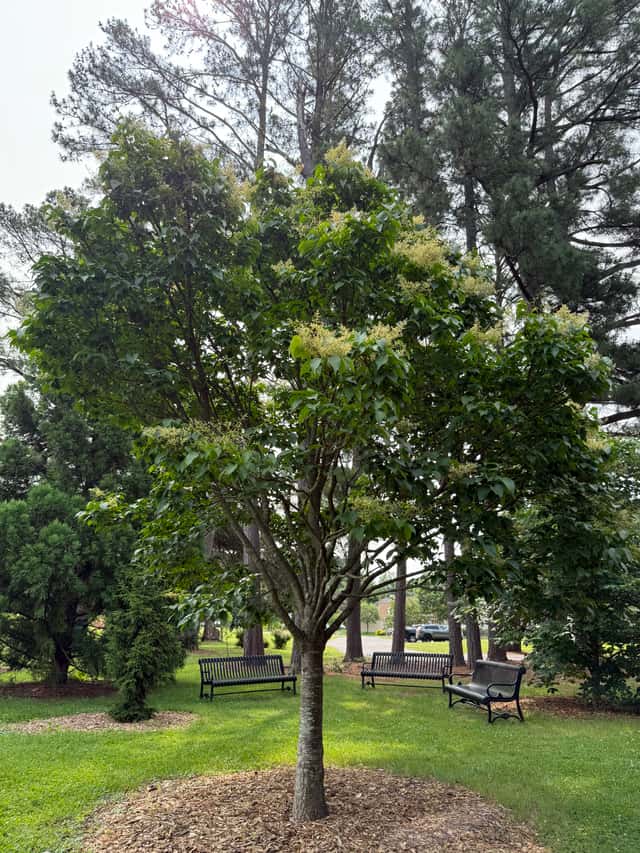
Japanese Tree Lilac (Syringa reticulata)
Syringa reticulata
Plant in full sun for best flowering. Water regularly during establishment; mature trees are drought tolerant. Prefers well-drained soil but tolerates clay and alkaline conditions. Prune annually after flowering. Has virtually no serious pests or diseases.
Every 10 days
Direct sun
-40° - 35°C
40% - 70%
Categories
What is Japanese Tree Lilac?
Japanese Tree Lilac (Syringa reticulata) is a easy-care plant from the Oleaceae family. Japanese Tree Lilac (Syringa reticulata) is a small to medium-sized ornamental tree native to Japan and northeastern Asia. It stands out for its enormous creamy-white fragrant flower panicles that appear in early summer, blooming up to six weeks after most other lilacs have finished. With cherry-lik...
Japanese Tree Lilac grows up to 9.0m, spread of 610cm, watering every 10 days, -40°C – 35°C, 40–70% humidity. It is not suitable for indoor environments and safe for pets.
Unlike many tropical plants, Japanese Tree Lilac tolerates watering mistakes. Best for beginners. Unlike many popular species, Japanese Tree Lilac is safe to keep around pets.
How to Care for Japanese Tree Lilac?
TLDR: Japanese Tree Lilac needs Direct sun, watering every 10 days, and temperatures between -40-35°C with 40-70% humidity.
How Often Should You Water Japanese Tree Lilac?
Water regularly for the first 1-2 seasons after planting. Once established, trees are drought tolerant and generally do not need supplemental watering except during severe drought. Avoid waterlogged sites to prevent root rot.
How Much Light Does Japanese Tree Lilac Need?
Plant in full sun (minimum 6 hours daily). In partial shade, flowering is significantly reduced. Full sun also promotes good air circulation, reducing the risk of fungal diseases.
What Is the Best Soil for Japanese Tree Lilac?
Prefers fertile, well-drained soil with a slightly acidic to neutral pH (6.0–8.0). Tolerates clay soils and urban conditions. Amend with organic matter at planting to improve drainage and fertility.
What Pot Should You Use for Japanese Tree Lilac?
Large garden bed or in-ground planting. Due to its size as a medium ornamental tree, it is not suitable for small containers — ground planting or very large planters are recommended.
What Is Japanese Tree Lilac and Where Does It Come From?
Japanese Tree Lilac (Syringa reticulata) is a small to medium-sized ornamental tree native to Japan and northeastern Asia. It stands out for its enormous creamy-white fragrant flower panicles that appear in early summer, blooming up to six weeks after most other lilacs have finished. With cherry-like bark and exceptional urban tolerance, it is one of the most versatile and low-maintenance ornamental trees for gardens and streetscaping.
How to Propagate Japanese Tree Lilac?
Seed Propagation
Seed propagation produces variable results; for cultivar characteristics, use cuttings or grafting instead.
- 1 Collect mature seeds in fall and store in a cool, dry place
- 2 Cold stratify seeds for 60-90 days before planting
- 3 Sow in well-draining medium and keep moist
- 4 Transplant seedlings when 10-15 cm tall
Materials needed:
Stem Cutting
Keep cuttings in a humid environment under a plastic tent. Avoid direct full sun during rooting.
- 1 Take semi-hardwood cuttings of 10-15 cm in early summer
- 2 Remove lower leaves and apply rooting hormone to the cut end
- 3 Plant in moist, well-draining medium and keep in a shaded location
- 4 Maintain moisture and wait for rooting
Materials needed:
How Big Does Japanese Tree Lilac Grow?
TLDR: Japanese Tree Lilac can reach up to 9.0m tall with Medium growth rate.
Max height
9.0m
Spread
6.1m
Growth rate
Medium
Foliage
Deciduous
Plant Uses
Ornamental
Great for decoration
Is your plant showing symptoms?
Click on the symptom to discover possible causes:
What Diseases Commonly Affect Japanese Tree Lilac?
TLDR: Japanese Tree Lilac is susceptible to 9 known diseases. Monitor regularly for early detection.
Leaf Spot
Leaf spot is a common fungal disease caused by various pathogens including Alternaria, Ascochyta, Colletotrichum, Septoria, and Venturia. It primarily affects leaves, causing discolored spots that can lead to premature leaf drop if left untreated.
Pseudocercospora
Verticillium Wilt
Verticillium wilt is a soil-borne fungal disease caused primarily by the fungi Verticillium dahliae and V. albo-atrum. These pathogens infect plant roots and grow within the vascular tissues, blocking water and nutrient transport, resulting in wilting and eventual plant death. The disease affects over 350 plant species including vegetables, fruits, ornamental flowers, and trees. The fungi can survive in soil for more than 10 years as resistant structures called microsclerotia.
Root Rot
Root rot is a serious fungal disease that affects the root system of plants, causing them to decay and die. It is primarily caused by overwatering, poor drainage, or soil-borne fungi such as Pythium, Phytophthora, Rhizoctonia, and Fusarium. The disease thrives in waterlogged conditions where roots are deprived of oxygen, making them susceptible to fungal infection.
Meaning & Symbolism
Japanese Tree Lilac symbolizes innocence, purity, and the beauty of early summer. Its fragrant blossoms are associated with youthful joy and renewal.
Fun Facts
Despite being called a lilac, Syringa reticulata is technically a tree, capable of reaching 9 meters tall
It blooms in early summer, up to 6 weeks after most common lilacs
Its grayish-purple bark with horizontal lenticels resembles Japanese cherry tree bark
It is one of the most resilient ornamental trees, tolerating urban pollution, wind, and poor soils
Frequently asked questions
When does Japanese Tree Lilac bloom?
Is Japanese Tree Lilac toxic to pets?
How often should I water Japanese Tree Lilac?
When and how should I prune Japanese Tree Lilac?
Compare with similar plants
| Attribute | Difficulty | Light | Watering | Pet Safe |
|---|---|---|---|---|
| Field Maple | Easy | Bright indirect | 14d | ✓ |
| Silver Birch | Easy | Direct sun | 14d | ✓ |
| Cushion Bush | Easy | Direct sun | 14d | ✓ |
| Peruvian peppertree | Easy | Direct sun | 14d | ⚠️ |





