Linaceae
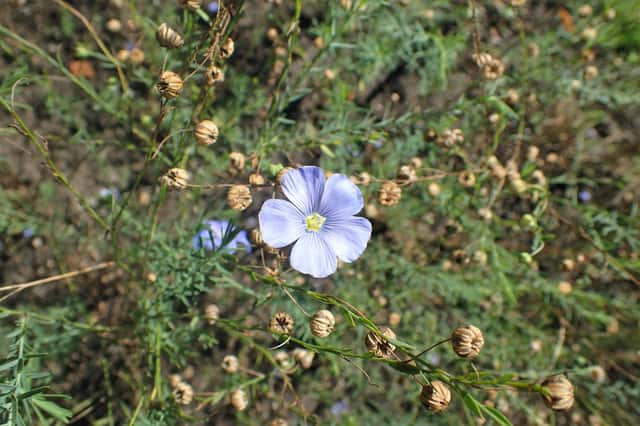
Lewis Flax (Linum lewisii): The Sky-Blue Prairie Wildflower
Linum lewisii
Low-maintenance and drought-tolerant once established. Plant in full sun with well-drained, sandy soil. Avoid overwatering — it is highly susceptible to root rot in wet conditions. Self-seeds readily, naturalizing across open areas year after year.
Every 14 days
Direct sun
-30° - 35°C
30% - 60%
Categories
What is Lewis Flax?
Lewis Flax (Linum lewisii) is a easy-care plant from the Linaceae family. Lewis Flax (Linum lewisii) is a native wildflower of western North America, celebrated for its sky-blue petals that bloom each morning and fall by midday. A hardy herbaceous perennial in the Linaceae family, it thrives in dry, open landscapes and is a staple of wildflower gardens, meadows, and xeris...
Lewis Flax grows up to 90cm, spread of 60cm, watering every 14 days, -30°C – 35°C, 30–60% humidity. It is not suitable for indoor environments and safe for pets.
Unlike many tropical plants, Lewis Flax tolerates watering mistakes. Best for beginners. Unlike many popular species, Lewis Flax is safe to keep around pets.
How to Care for Lewis Flax?
TLDR: Lewis Flax needs Direct sun, watering every 14 days, and temperatures between -30-35°C with 30-60% humidity.
How Often Should You Water Lewis Flax?
Water deeply every 14 days or less once established. Allow soil to dry completely between waterings. During the first growing season, water more frequently to support root development. Avoid waterlogged soil.
How Much Light Does Lewis Flax Need?
Requires full sun — at least 6 hours of direct sunlight daily. Performs best in open, unshaded locations typical of western prairies and meadows.
What Is the Best Soil for Lewis Flax?
Prefers sandy or loamy well-drained soil. Tolerates poor, rocky, and shallow soils. Ideal pH range is 6.0–8.0. Avoid heavy clay soils that retain moisture.
What Pot Should You Use for Lewis Flax?
Not suitable for container growing — best planted directly in garden soil.
Care Schedule
Fertilize
Every 90 days
What Is Lewis Flax and Where Does It Come From?
Lewis Flax (Linum lewisii) is a native wildflower of western North America, celebrated for its sky-blue petals that bloom each morning and fall by midday. A hardy herbaceous perennial in the Linaceae family, it thrives in dry, open landscapes and is a staple of wildflower gardens, meadows, and xeriscape designs.
How to Propagate Lewis Flax?
Direct Seeding
Fall sowing produces the best spring blooms. Lightly scarify seeds to improve germination rate. Avoid transplanting — roots are delicate and do not tolerate disturbance.
- 1 Prepare sandy, well-drained soil by raking lightly
- 2 Scatter seeds on the surface and press gently — do not cover, seeds need light to germinate
- 3 Water gently and keep lightly moist until germination
- 4 Thin seedlings to 20-30 cm apart once established
Materials needed:
Crown Division
Division rejuvenates older plants. Perform only in spring to minimize stress.
- 1 Divide clumps in early spring when new growth appears
- 2 Carefully separate sections preserving roots
- 3 Replant immediately in a sunny, well-drained location
- 4 Water moderately until re-established
Materials needed:
How Big Does Lewis Flax Grow?
TLDR: Lewis Flax can reach up to 90cm tall with Medium growth rate.
Max height
90cm
Spread
60cm
Growth rate
Medium
Foliage
Deciduous
Warning: Toxic Plant
This plant can be toxic if ingested. Keep out of reach of:
Plant Uses
Ornamental
Great for decoration
Medicinal
Medicinal properties
Edible
Can be consumed
Medicinal Uses
- Traditional use by Native American peoples for medicinal poultices; consult a specialist before use
Culinary Uses
- Seeds are edible only when cooked — never consume raw due to cyanogenic glycosides
Is your plant showing symptoms?
Click on the symptom to discover possible causes:
What Diseases Commonly Affect Lewis Flax?
TLDR: Lewis Flax is susceptible to 5 known diseases. Monitor regularly for early detection.
Root Rot
Root rot is a serious fungal disease that affects the root system of plants, causing them to decay and die. It is primarily caused by overwatering, poor drainage, or soil-borne fungi such as Pythium, Phytophthora, Rhizoctonia, and Fusarium. The disease thrives in waterlogged conditions where roots are deprived of oxygen, making them susceptible to fungal infection.
Powdery Mildew
Powdery mildew is a common fungal disease caused by various fungi species including Erysiphe, Podosphaera, Oïdium, and Leveillula. It affects over 10,000 plant species worldwide. The disease thrives in warm, dry climates with high humidity and appears as a distinctive white powdery coating on plant surfaces.
Gray Mold (Botrytis Blight)
Gray mold, caused by the fungus Botrytis cinerea, is a widespread necrotrophic pathogen affecting over 1,400 plant species. It thrives in cool, humid conditions and attacks weakened or aging plant tissues, causing soft rot and characteristic gray fuzzy growth.
Rust
Rust is a common fungal disease caused by fungi in the order Pucciniales that affects a wide variety of plants. The disease gets its name from the characteristic orange, yellow, or reddish-brown pustules that appear on leaves, resembling metal rust. This obligate fungal parasite requires living plants to survive and can cause significant economic losses in agricultural crops.
Meaning & Symbolism
Symbolizes fidelity, resilience, and fleeting beauty — each flower lasts only a single morning.
Fun Facts
Each flower opens at sunrise and drops by noon — blooming for just a few hours
Named after explorer Meriwether Lewis of the Lewis & Clark Expedition (1804–1806)
Native American peoples used stem fibers to weave rope and fabric
Self-seeds prolifically, forming natural carpets of blue in open meadows
Frequently asked questions
How often should I water Lewis Flax?
Is Lewis Flax toxic?
Can Lewis Flax grow in containers?
When does Lewis Flax bloom?
Does Lewis Flax need fertilizer?
Compare with similar plants
| Attribute | Difficulty | Light | Watering | Pet Safe |
|---|---|---|---|---|
| Field Maple | Easy | Bright indirect | 14d | ✓ |
| Silver Birch | Easy | Direct sun | 14d | ✓ |
| Cushion Bush | Easy | Direct sun | 14d | ✓ |
| Peruvian peppertree | Easy | Direct sun | 14d | ⚠️ |





