Liliaceae
Easter Lily: Complete Care Guide
Lilium longiflorum
Requires bright light, well-draining soil, and regular watering during growth. After flowering, the plant enters dormancy and requires less water.
Every 9 days
Bright indirect
12° - 24°C
40% - 60%
Categories
What is Easter Lily?
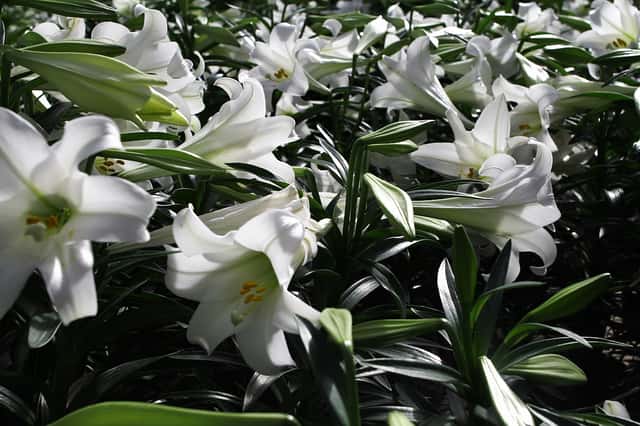
Easter Lily (Lilium longiflorum) is a medium-care plant from the Liliaceae family. Lilium longiflorum, popularly known as the Easter Lily, is a perennial bulbous plant native to the Ryukyu Islands of Japan. It is widely admired for its large, white, trumpet-shaped flowers that emit a sweet and intense fragrance. Its stems are erect and covered with glossy green, lanceolate leaves....
Easter Lily grows up to 90cm, spread of 60cm, watering every 9 days, 12°C – 24°C, 40–60% humidity. It is suitable for indoor environments and not safe for pets.
Without precautions, ingestion can cause irritation in pets. Keep out of reach of cats and dogs. Without adequate drainage, root rot can develop within 18 days.
How to Care for Easter Lily?
TLDR: Easter Lily needs Bright indirect, watering every 9 days, and temperatures between 12-24°C with 40-60% humidity.
How Often Should You Water Easter Lily?
Water whenever the top of the soil feels dry to the touch. Avoid wetting the flowers and foliage to prevent fungal diseases.
How Much Light Does Easter Lily Need?
Prefers direct morning sunlight or very bright indirect light. Avoid strong midday sun, which can cause the flowers to wilt quickly.
What Is the Best Soil for Easter Lily?
Use a mixture rich in organic matter, such as peat moss and perlite, ensuring excellent drainage to protect the bulb.
What Pot Should You Use for Easter Lily?
Ceramic or terracotta pots with drainage holes, deep enough to accommodate the bulb and the vigorous root system.
Care Schedule
Fertilize
Every 30 days
Rotate
Every 30 days
Repot
Every 365 days
What Is Easter Lily and Where Does It Come From?
Lilium longiflorum, popularly known as the Easter Lily, is a perennial bulbous plant native to the Ryukyu Islands of Japan. It is widely admired for its large, white, trumpet-shaped flowers that emit a sweet and intense fragrance. Its stems are erect and covered with glossy green, lanceolate leaves. While it is a garden plant in temperate climates, it is frequently grown in pots for seasonal decorations.
How to Propagate Easter Lily?
Bulblet Division
- Keep the soil slightly moist but never waterlogged to prevent rot.
- Wear gloves, as contact with the bulb can cause irritation on sensitive skin.
- 1 Extraction
Wait for the foliage to yellow and dry completely in the fall before digging up the bulbs.
- 2 Separation
Carefully detach the small bulbs (bulblets) that have formed around the main bulb.
- 3 Planting
Plant the bulblets in individual pots with light substrate, at a depth of about 2 to 3 inches (5 to 8 cm).
Materials needed:
How Big Does Easter Lily Grow?
TLDR: Easter Lily can reach up to 90cm tall with Medium growth rate.
Max height
90cm
Spread
60cm
Growth rate
Medium
Foliage
Deciduous
Warning: Toxic Plant
This plant can be toxic if ingested. Keep out of reach of:
Plant Uses
Ornamental
Great for decoration
Is your plant showing symptoms?
Click on the symptom to discover possible causes:
What Diseases Commonly Affect Easter Lily?
TLDR: Easter Lily is susceptible to 10 known diseases. Monitor regularly for early detection.
Gray Mold (Botrytis Blight)
Gray mold, caused by the fungus Botrytis cinerea, is one of the most common fungal diseases in plants. It affects over 200 plant species, including ornamentals, vegetables, fruits, and houseplants. The disease thrives in cool, humid conditions with poor air circulation, causing grayish spots and soft rot on infected tissues.
Gray Mold (Botrytis Blight)
Gray mold, caused by the fungus Botrytis cinerea, is a widespread necrotrophic pathogen affecting over 1,400 plant species. It thrives in cool, humid conditions and attacks weakened or aging plant tissues, causing soft rot and characteristic gray fuzzy growth.
Fusarium Wilt
Fusarium wilt is a serious fungal disease caused by the soil-borne fungus Fusarium oxysporum. The fungus invades roots and blocks the water-conducting vessels (xylem) of the plant, causing progressive wilting and eventual death. Host-specific forms of the pathogen exist that attack different plant species.
Pythium Root Rot
Pythium root rot is a serious fungal disease caused by various Pythium species including P. aphanidermatum, P. ultimum, and P. irregulare. These water molds are present in practically all cultivated soils and attack plant roots under wet conditions, causing rapid wet rot that can extend into the stem. The disease is favored by poor drainage, overwatering, and specific temperatures depending on the species.
Meaning & Symbolism
Symbolizes purity, virtue, hope, and spiritual rebirth.
Compare with similar plants
| Attribute | Difficulty | Light | Watering | Pet Safe |
|---|---|---|---|---|
| Dark Fieldcap | Medium | Low light | 2d | ⚠️ |
| Azalea | Medium | Partial shade | 3d | ⚠️ |
| Bougainvillea | Medium | Direct sun | 7d | ⚠️ |
| Wild Lettuce | Medium | Direct sun | 7d | ⚠️ |



