Campanulaceae
Lobelia: Medicinal Uses & Care Tips
Lobelia
Give Lobelia bright light, consistently moist (never soggy) rich soil, and cool-to-moderate temperatures. Deadhead spent flowers and trim back leggy stems to encourage repeat blooming through the season.
Every 4 days
Bright indirect
10° - 24°C
40% - 60%
Categories
What is Lobelia?
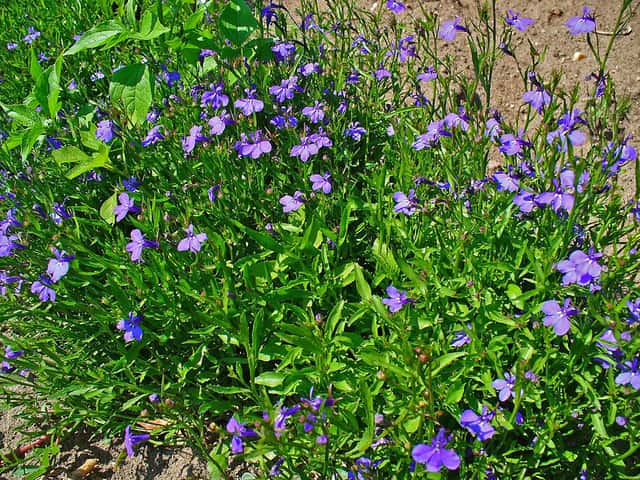
Lobelia (Lobelia) is a medium-care plant from the Campanulaceae family. Lobelia is a large genus of roughly 400 flowering plant species in the bellflower family (Campanulaceae), ranging from low-growing bedding annuals like Lobelia erinus to the herbaceous Lobelia inflata (Indian tobacco), historically used in traditional medicine. Most garden lobelias form compact moun...
Lobelia grows up to 1.0m, spread of 45cm, watering every 4 days, 10°C – 24°C, 40–60% humidity. It is not suitable for indoor environments and not safe for pets.
Without precautions, ingestion can cause irritation in pets. Keep out of reach of cats and dogs.
How to Care for Lobelia?
TLDR: Lobelia needs Bright indirect, watering every 4 days, and temperatures between 10-24°C with 40-60% humidity.
How Often Should You Water Lobelia?
Keep the soil evenly moist, watering whenever the top inch begins to dry out; both drought and waterlogging quickly stress the shallow roots.
How Much Light Does Lobelia Need?
Provide at least 4-6 hours of direct sun to partial shade daily; in hot climates, afternoon shade prevents heat stress and reduces blooming decline.
What Is the Best Soil for Lobelia?
Plant in rich, well-draining soil amended with compost or peat moss; a mix with perlite or vermiculite improves aeration and prevents root rot.
What Pot Should You Use for Lobelia?
Use a wide, shallow container or hanging basket with ample drainage holes, especially for trailing varieties.
Care Schedule
Fertilize
Every 21 days
What Is Lobelia and Where Does It Come From?
Lobelia is a large genus of roughly 400 flowering plant species in the bellflower family (Campanulaceae), ranging from low-growing bedding annuals like Lobelia erinus to the herbaceous Lobelia inflata (Indian tobacco), historically used in traditional medicine. Most garden lobelias form compact mounds or trailing mats covered in small two-lipped flowers in shades of blue, purple, pink, white, and red, blooming from spring through fall. All parts of the plant contain the alkaloid lobeline and are toxic if ingested by humans and pets.
How to Propagate Lobelia?
Seed sowing
Seeds are dust-like; mix with fine sand for even sowing and keep the mix consistently moist but not wet.
- 1 Sow tiny seeds on the surface of moist seed-starting mix without covering them
- 2 Keep at 18-21C under bright light or a grow light
- 3 Thin seedlings once true leaves appear and transplant after the last frost
Materials needed:
Clump division
Best for perennial species like Lobelia siphilitica and Lobelia cardinalis; keep divisions consistently moist until established.
- 1 Dig up an established perennial clump in early spring
- 2 Separate the root ball into sections with several shoots each
- 3 Replant divisions immediately at the same depth and water well
Materials needed:
How Big Does Lobelia Grow?
TLDR: Lobelia can reach up to 1.0m tall with Medium growth rate.
Max height
1.0m
Spread
45cm
Growth rate
Medium
Foliage
Deciduous
Warning: Toxic Plant
This plant can be toxic if ingested. Keep out of reach of:
Plant Uses
Ornamental
Great for decoration
Medicinal
Medicinal properties
Medicinal Uses
- Historically smoked or taken as a tea to relieve asthma, bronchitis, and cough (Lobelia inflata)
- Used in 19th-century American herbal medicine as an emetic and respiratory stimulant
- Source of lobeline, studied for potential use in smoking-cessation aids
Is your plant showing symptoms?
Click on the symptom to discover possible causes:
What Diseases Commonly Affect Lobelia?
TLDR: Lobelia is susceptible to 8 known diseases. Monitor regularly for early detection.
Root Rot
Root rot is a serious fungal disease that affects the root system of plants, causing them to decay and die. It is primarily caused by overwatering, poor drainage, or soil-borne fungi such as Pythium, Phytophthora, Rhizoctonia, and Fusarium. The disease thrives in waterlogged conditions where roots are deprived of oxygen, making them susceptible to fungal infection.
Powdery Mildew
Powdery mildew is a common fungal disease caused by various fungi species including Erysiphe, Podosphaera, Oïdium, and Leveillula. It affects over 10,000 plant species worldwide. The disease thrives in warm, dry climates with high humidity and appears as a distinctive white powdery coating on plant surfaces.
Rust
Rust is a common fungal disease caused by fungi in the order Pucciniales that affects a wide variety of plants. The disease gets its name from the characteristic orange, yellow, or reddish-brown pustules that appear on leaves, resembling metal rust. This obligate fungal parasite requires living plants to survive and can cause significant economic losses in agricultural crops.
Aphids
Aphids are small, soft-bodied, pear-shaped insects (1/16 to 1/8 inch long) that feed by sucking nutrient-rich sap from plants. They reproduce rapidly and can quickly weaken plants, causing distorted growth and transmitting plant viruses. Aphids come in various colors including green, black, red, yellow, brown, and gray. They secrete honeydew, a sticky substance that attracts ants and encourages sooty mold growth.
Meaning & Symbolism
In Victorian flower language, Lobelia symbolized malevolence and ill will, though its vivid blue varieties are also associated with distinction and clarity of thought.
Compare with similar plants
| Attribute | Difficulty | Light | Watering | Pet Safe |
|---|---|---|---|---|
| Dark Fieldcap | Medium | Low light | 2d | ⚠️ |
| Azalea | Medium | Partial shade | 3d | ⚠️ |
| Bougainvillea | Medium | Direct sun | 7d | ⚠️ |
| Wild Lettuce | Medium | Direct sun | 7d | ⚠️ |
Choose & Compare
Sources & References
- Lobelia erinus - NC State Extension Gardener Plant Toolbox
- Lobelia siphilitica (Great Blue Lobelia) - Gardenia.net
- How to Plant and Grow Garden Lobelia - Gardener's Path
- Lobelia - CT Agricultural Experiment Station Plant Pest Handbook
- Lobelia inflata - Wikipedia
- Lobeline for smoking cessation - PMC NIH
- Lobelia: Benefits, Dosage, and Side Effects - Healthline



