Caprifoliaceae
Italian Honeysuckle (Lonicera caprifolium): Complete Care Guide
Lonicera caprifolium
A tough and rewarding climber that thrives with moderate care. Water regularly but avoid waterlogging, provide a sunny position with good support for climbing, and prune after flowering to keep tidy and encourage fresh growth. Tolerates a wide range of soils as long as drainage is good.
Every 4 days
Bright indirect
-15° - 30°C
40% - 70%
Categories
What is Italian Honeysuckle?
Italian Honeysuckle (Lonicera caprifolium) is a easy-care plant from the Caprifoliaceae family. Lonicera caprifolium, commonly known as Italian honeysuckle or goat-leaf honeysuckle, is a vigorous deciduous climbing vine native to Europe, from Norway south to Spain and east into the Caucasus. It is celebrated for its exceptionally fragrant tubular flowers in shades of cream, white, and pink, wh...
Italian Honeysuckle grows up to 6.0m, spread of 300cm, watering every 4 days, -15°C – 30°C, 40–70% humidity. It is not suitable for indoor environments and not safe for pets.
Unlike many tropical plants, Italian Honeysuckle tolerates watering mistakes. Best for beginners. Without precautions, ingestion can cause irritation in pets. Keep out of reach of cats and dogs.
How to Care for Italian Honeysuckle?
TLDR: Italian Honeysuckle needs Bright indirect, watering every 4 days, and temperatures between -15-30°C with 40-70% humidity.
How Often Should You Water Italian Honeysuckle?
Water every 3-4 days during the growing season, allowing the top inch of soil to dry between waterings. Reduce watering in autumn and winter. Italian honeysuckle is sensitive to root rot in waterlogged soil, so always ensure good drainage.
How Much Light Does Italian Honeysuckle Need?
Grows best in full sun to partial shade, requiring at least 4-6 hours of direct sunlight daily. Ideally, the roots should be kept cool and shaded while the climbing stems reach up into the light. Avoid intense afternoon sun in hot climates.
What Is the Best Soil for Italian Honeysuckle?
Prefers fertile, moist, well-drained soil rich in organic matter. Adapts to sandy, loamy, and clay soils with a pH between 6.5 and 7.5. Amend planting holes with compost or well-rotted manure before planting.
What Pot Should You Use for Italian Honeysuckle?
Large container with trellis or obelisk support; best planted directly in the ground against a wall, fence, or pergola.
Care Schedule
Fertilize
Every 30 days
Misting
Every 3 days
Rotate
Every 7 days
Repot
Every 365 days
What Is Italian Honeysuckle and Where Does It Come From?
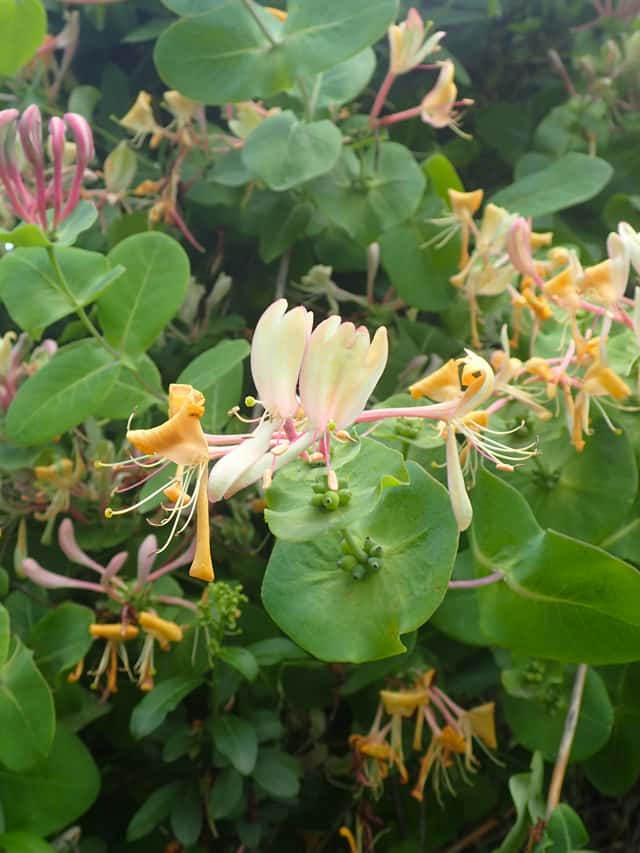
Lonicera caprifolium, commonly known as Italian honeysuckle or goat-leaf honeysuckle, is a vigorous deciduous climbing vine native to Europe, from Norway south to Spain and east into the Caucasus. It is celebrated for its exceptionally fragrant tubular flowers in shades of cream, white, and pink, which are especially intoxicating at dusk and dawn. A classic cottage garden plant, it twines readily over pergolas, fences, and trellises, attracting bees, butterflies, and hummingbirds.
How Big Does Italian Honeysuckle Grow?
TLDR: Italian Honeysuckle can reach up to 6.0m tall with Medium growth rate.
Max height
6.0m
Spread
3.0m
Growth rate
Medium
Foliage
Deciduous
Warning: Toxic Plant
This plant can be toxic if ingested. Keep out of reach of:
Plant Uses
Ornamental
Great for decoration
Medicinal
Medicinal properties
Aromatic
Pleasant fragrance
Medicinal Uses
- Leaves and flowers used in traditional European herbal medicine as an expectorant and antispasmodic
- Recent research suggests anti-inflammatory properties; flowers used as tea substitute
Is your plant showing symptoms?
Click on the symptom to discover possible causes:
What Diseases Commonly Affect Italian Honeysuckle?
TLDR: Italian Honeysuckle is susceptible to 6 known diseases. Monitor regularly for early detection.
Powdery Mildew
Powdery mildew is a common fungal disease caused by various fungi species including Erysiphe, Podosphaera, Oïdium, and Leveillula. It affects over 10,000 plant species worldwide. The disease thrives in warm, dry climates with high humidity and appears as a distinctive white powdery coating on plant surfaces.
Leaf Spot
Leaf spot is a common fungal disease caused by various pathogens including Alternaria, Ascochyta, Colletotrichum, Septoria, and Venturia. It primarily affects leaves, causing discolored spots that can lead to premature leaf drop if left untreated.
Rust
Rust is a common fungal disease caused by fungi in the order Pucciniales that affects a wide variety of plants. The disease gets its name from the characteristic orange, yellow, or reddish-brown pustules that appear on leaves, resembling metal rust. This obligate fungal parasite requires living plants to survive and can cause significant economic losses in agricultural crops.
Aphids
Aphids are small, soft-bodied, pear-shaped insects (1/16 to 1/8 inch long) that feed by sucking nutrient-rich sap from plants. They reproduce rapidly and can quickly weaken plants, causing distorted growth and transmitting plant viruses. Aphids come in various colors including green, black, red, yellow, brown, and gray. They secrete honeydew, a sticky substance that attracts ants and encourages sooty mold growth.
Meaning & Symbolism
In European folklore, honeysuckle symbolizes enduring love, devotion, and the sweet bonds of affection. Its entwining stems are a metaphor for fidelity, and the fragrance evokes nostalgia and happiness.
Fun Facts
Italian honeysuckle is so fragrant that its scent can be detected from several meters away, especially at dusk
The flowers change color as they age, shifting from creamy white to yellow
The leaves near the flowers are fused at the base, creating a perfoliate effect where the stem appears to pass through the leaf
Compare with similar plants
| Attribute | Difficulty | Light | Watering | Pet Safe |
|---|---|---|---|---|
| Field Maple | Easy | Bright indirect | 14d | ✓ |
| Silver Birch | Easy | Direct sun | 14d | ✓ |
| Cushion Bush | Easy | Direct sun | 14d | ✓ |
| Peruvian peppertree | Easy | Direct sun | 14d | ⚠️ |
Choose & Compare
Sources & References
- Perfoliate Honeysuckle (Lonicera caprifolium) Care Guide — Keep It Thriving All Year
- Lonicera caprifolium Italian Honeysuckle — PFAF Plant Database
- Identify & Treat Italian Honeysuckle Vine Diseases — Cultivating Flora
- Perfoliate Honeysuckle (Lonicera caprifolium) — Botanical Realm
- Growing Italian Honeysuckle: Learn Lonicera Caprifolium Care — Plant Care Today





