Rosaceae
Loquat: Edible Plant
Rhaphiolepis bibas
A robust, low-maintenance tree that thrives in full sun in well-drained soil. Once established, it tolerates drought and light frosts well. It requires occasional shaping pruning and semi-annual fertilization to maintain good fruit production. It is resistant to most pests and diseases, although fire blight can be problematic in humid areas.
Every 10 days
Direct sun
-12° - 35°C
40% - 80%
Categories
What is Loquat?
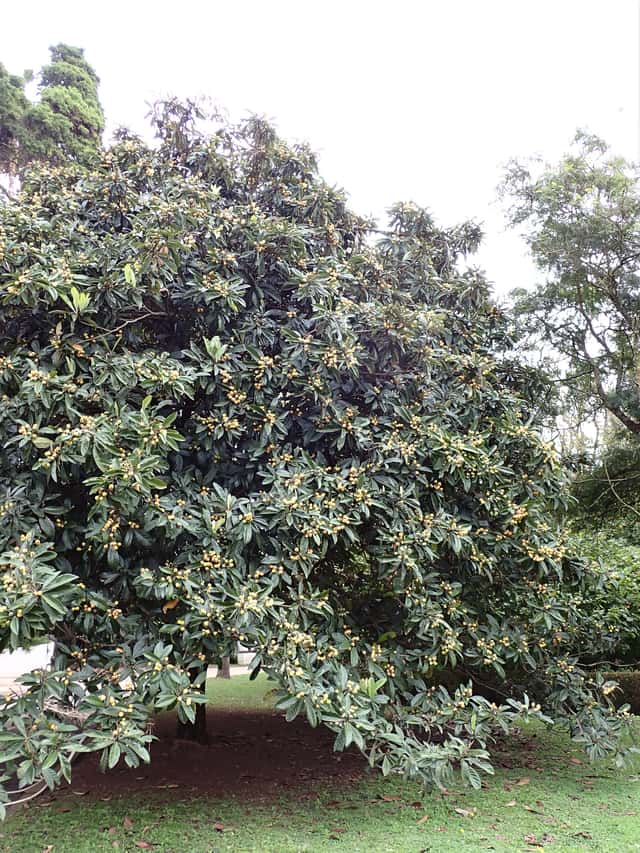
Loquat (Rhaphiolepis bibas) is a easy-care plant from the Rosaceae family. The loquat (Rhaphiolepis bibas, formerly Eriobotrya japonica) is an evergreen fruit tree native to Southeast China, widely cultivated in subtropical and Mediterranean regions worldwide. It reaches a height of 3 to 8 meters and is distinguished by its large, leathery, dark green leaves, its white, fr...
Loquat grows up to 7.6m, spread of 760cm, watering every 10 days, -12°C – 35°C, 40–80% humidity. It is not suitable for indoor environments and safe for pets.
Unlike many tropical plants, Loquat tolerates watering mistakes. Best for beginners. Unlike many popular species, Loquat is safe to keep around pets.
How to Care for Loquat?
TLDR: Loquat needs Direct sun, watering every 10 days, and temperatures between -12-35°C with 40-80% humidity.
How Often Should You Water Loquat?
Water regularly during the first two years to encourage root establishment. Once established, the tree tolerates short periods of drought. During extreme heat, water deeply every 10-14 days. Avoid waterlogging, as root rot is its main threat in poorly drained soils.
How Much Light Does Loquat Need?
It needs full sun (minimum 6-8 hours of direct sunlight daily) to flower and fruit abundantly. In partial shade, the tree will grow, but fruit production will be significantly reduced. Ideal for south or southeast orientation in the northern hemisphere.
What Is the Best Soil for Loquat?
It prefers fertile, deep, and well-drained soils, with a pH between 5.5 and 7.5. It tolerates clayey or sandy soils as long as drainage is adequate. Amend with organic matter when planting. Apply a layer of mulch to retain moisture and regulate soil temperature.
What Pot Should You Use for Loquat?
Not suitable for long-term pot cultivation due to its tree-like habit. It can be kept in large containers (minimum 100 liters) during its first few years, using well-drained substrate with perlite. In the long term, it prefers to be planted directly in the ground.
Care Schedule
Fertilize
Every 180 days
What Is Loquat and Where Does It Come From?
The loquat (Rhaphiolepis bibas, formerly Eriobotrya japonica) is an evergreen fruit tree native to Southeast China, widely cultivated in subtropical and Mediterranean regions worldwide. It reaches a height of 3 to 8 meters and is distinguished by its large, leathery, dark green leaves, its white, fragrant flowers that appear in autumn-winter, and its orange or yellow fruits that ripen in spring. It is one of the few fruit trees that blooms in winter, providing shelter and food for pollinators and birds during the cold months.
How to Propagate Loquat?
Seeds
- 1 Extract seeds from ripe fruits and sow them immediately, as they quickly lose viability when dried.
- 2 Sow 2-3 cm deep in moist, well-drained substrate.
- 3 Maintain temperature between 18-25 °C; germination in 3-6 weeks.
- 4 Transplant when the seedling reaches 10-15 cm. Note: trees grown from seed take 6-8 years to produce fruit.
Semi-hardwood Cuttings
- 1 Take 15-20 cm semi-hardwood cuttings in summer.
- 2 Remove lower leaves and apply rooting hormone to the base.
- 3 Plant in a substrate of equal parts perlite and peat, maintaining high humidity.
- 4 Roots in 6-10 weeks under humid conditions; moderate success rate.
Grafting
- 1 Use loquat or quince rootstock for grafting.
- 2 Perform bud grafting or whip-and-tongue grafting in spring.
- 3 Grafted trees produce fruit in 3-4 years and maintain varietal characteristics.
- 4 Preferred method for commercial fruit production.
How Big Does Loquat Grow?
TLDR: Loquat can reach up to 7.6m tall with Fast growth rate.
Max height
7.6m
Spread
7.6m
Growth rate
Fast
Foliage
Evergreen
Plant Uses
Ornamental
Great for decoration
Edible
Can be consumed
Medicinal
Medicinal properties
Medicinal Uses
- Dried leaves are used in traditional Chinese medicine to prepare infusions that relieve coughs and throat irritation.
- Leaf extracts have scientifically studied anti-inflammatory and antioxidant properties.
- Dried flowers are used in herbal medicine as a mild expectorant.
Culinary Uses
- The fruits are eaten fresh, in compotes, jams, jellies, and tarts.
- Liqueurs and juices are made from the pulp.
- The leaves are used to flavor drinks and infusions in Asian cuisine.
- Toasted seeds are used as a coffee substitute in some regions.
Is your plant showing symptoms?
Click on the symptom to discover possible causes:
What Diseases Commonly Affect Loquat?
TLDR: Loquat is susceptible to 8 known diseases. Monitor regularly for early detection.
Fire Blight
Fire blight is a highly destructive and contagious bacterial disease caused by Erwinia amylovora. It primarily affects plants in the Rosaceae family, including apple, pear, quince trees, and various ornamental plants. The disease can destroy an entire orchard in a single growing season under ideal conditions, with the bacterium moving approximately 11 inches per week in new growth.
Root Rot
Root rot is a serious fungal disease that affects the root system of plants, causing them to decay and die. It is primarily caused by overwatering, poor drainage, or soil-borne fungi such as Pythium, Phytophthora, Rhizoctonia, and Fusarium. The disease thrives in waterlogged conditions where roots are deprived of oxygen, making them susceptible to fungal infection.
Leaf Spot
Leaf spot is a common fungal disease caused by various pathogens including Alternaria, Ascochyta, Colletotrichum, Septoria, and Venturia. It primarily affects leaves, causing discolored spots that can lead to premature leaf drop if left untreated.
Canker
Canker is a disease caused by various fungi and bacteria that create necrotic, sunken areas on bark of branches, stems, and trunks. Pathogens enter through wounds and natural openings, especially when plants are stressed. Canker can gradually weaken or kill branches by disrupting water and nutrient flow.
Compare with similar plants
| Attribute | Difficulty | Light | Watering | Pet Safe |
|---|---|---|---|---|
| Field Maple | Easy | Bright indirect | 14d | ✓ |
| Silver Birch | Easy | Direct sun | 14d | ✓ |
| Cushion Bush | Easy | Direct sun | 14d | ✓ |
| Peruvian peppertree | Easy | Direct sun | 14d | ⚠️ |





