Lauraceae
Bay Laurel — Laurus nobilis
Laurus nobilis
Bay Laurel is a moderately demanding plant that thrives in full sun to partial shade, needs well-draining soil, and benefits from regular but measured watering. It is slow-growing and frost-sensitive in colder climates, but otherwise very resilient once established.
Every 10 days
Bright indirect
-5° - 35°C
40% - 70%
Categories
What is Bay Laurel?
Bay Laurel (Laurus nobilis) is a medium-care plant from the Lauraceae family. Bay Laurel (Laurus nobilis) is a slow-growing, evergreen tree or large shrub native to the Mediterranean region. Prized for its aromatic, leathery leaves, it has been cultivated for millennia for culinary, medicinal, and ornamental purposes. In the wild it can reach up to 12 metres, but in gardens a...
Bay Laurel grows up to 12.0m, spread of 300cm, watering every 10 days, -5°C – 35°C, 40–70% humidity. It is suitable for indoor environments and not safe for pets.
Without precautions, ingestion can cause irritation in pets. Keep out of reach of cats and dogs. Without adequate drainage, root rot can develop within 20 days.
How to Care for Bay Laurel?
TLDR: Bay Laurel needs Bright indirect, watering every 10 days, and temperatures between -5-35°C with 40-70% humidity.
How Often Should You Water Bay Laurel?
Water when the top 2–3 cm (1 inch) of soil feel dry. In summer, watering roughly every 7–10 days is typical; reduce to every 14 days in winter. Never let the soil become waterlogged — root rot is the main risk.
How Much Light Does Bay Laurel Need?
Bay Laurel prefers full sun (6+ hours of direct light daily) but tolerates partial shade. Indoors, place near a bright south- or east-facing window. Insufficient light leads to leggy growth and pale leaves.
What Is the Best Soil for Bay Laurel?
Use well-draining loamy soil enriched with compost. A pH of 5.5–7.5 is ideal. For containers, mix standard potting compost with perlite or coarse sand to improve drainage.
What Pot Should You Use for Bay Laurel?
Terracotta or ceramic pot with drainage holes, at least 40 cm (16 in) in diameter. Repot every 2–3 years when roots become crowded.
Care Schedule
Fertilize
Every 14 days
Misting
Every 3 days
Rotate
Every 7 days
Repot
Every 365 days
What Is Bay Laurel and Where Does It Come From?
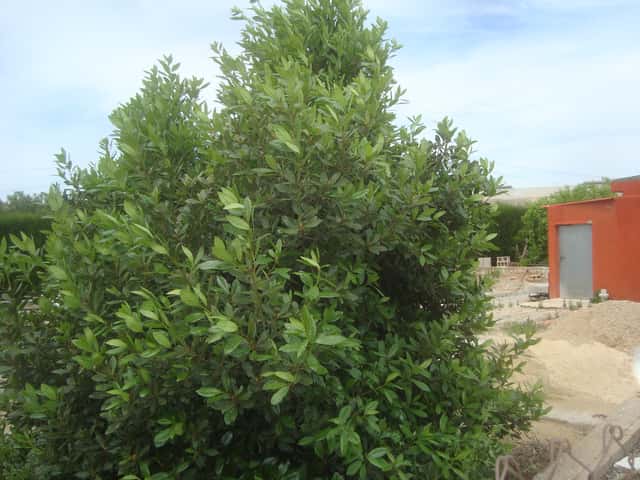
Bay Laurel (Laurus nobilis) is a slow-growing, evergreen tree or large shrub native to the Mediterranean region. Prized for its aromatic, leathery leaves, it has been cultivated for millennia for culinary, medicinal, and ornamental purposes. In the wild it can reach up to 12 metres, but in gardens and containers it is usually kept much smaller through regular pruning and topiary.
How Big Does Bay Laurel Grow?
TLDR: Bay Laurel can reach up to 12.0m tall with Slow growth rate.
Max height
12.0m
Spread
3.0m
Growth rate
Slow
Foliage
Evergreen
Warning: Toxic Plant
This plant can be toxic if ingested. Keep out of reach of:
Plant Uses
Ornamental
Great for decoration
Edible
Can be consumed
Medicinal
Medicinal properties
Aromatic
Pleasant fragrance
Medicinal Uses
- Leaf infusion for digestive complaints and flatulence
- Essential oil used for its antifungal and anti-inflammatory properties
- Traditional topical application as an antiseptic
Culinary Uses
- Dried or fresh leaves in stews, soups, casseroles, and braised dishes
- Cornerstone of Mediterranean, French (bouquet garni), and European cuisines
- Flavours rice, beans, marinades, stocks, and slow-cooked meats
Is your plant showing symptoms?
Click on the symptom to discover possible causes:
What Diseases Commonly Affect Bay Laurel?
TLDR: Bay Laurel is susceptible to 8 known diseases. Monitor regularly for early detection.
Scale Insects
Scale insects are small sap-sucking pests that appear as brown, shell-like bumps on plant stems and leaves. There are over 25 species, divided into armored (hard) and unarmored (soft) scales. They feed by piercing plant tissue and extracting sap, which weakens the plant and can lead to yellowing, stunted growth, and even death if left untreated. They also excrete honeydew, which attracts ants and promotes sooty mold growth.
Whiteflies
Whiteflies are small, soft-bodied, winged insects closely related to aphids and mealybugs. They are moth-like in appearance, about 1/16 inch long, triangular in shape, and gray-white in color. These sap-sucking pests feed on plant tissue, causing yellowing, stunted growth, and wilting. They also excrete honeydew, which attracts ants and promotes sooty mold growth. Whiteflies can transmit serious plant viruses.
Aphids
Aphids are small, soft-bodied, pear-shaped insects (1/16 to 1/8 inch long) that feed by sucking nutrient-rich sap from plants. They reproduce rapidly and can quickly weaken plants, causing distorted growth and transmitting plant viruses. Aphids come in various colors including green, black, red, yellow, brown, and gray. They secrete honeydew, a sticky substance that attracts ants and encourages sooty mold growth.
Root Rot
Root rot is a serious fungal disease that affects the root system of plants, causing them to decay and die. It is primarily caused by overwatering, poor drainage, or soil-borne fungi such as Pythium, Phytophthora, Rhizoctonia, and Fusarium. The disease thrives in waterlogged conditions where roots are deprived of oxygen, making them susceptible to fungal infection.
Meaning & Symbolism
In ancient Greece, bay laurel was sacred to Apollo and crowned victors at the Pythian Games, symbolising glory, wisdom, and immortality. The Romans adopted the wreath as a symbol of military triumph and imperial power — the origin of the word "laureate."
Fun Facts
The word "laureate" (as in Nobel Laureate or Poet Laureate) comes directly from Laurus nobilis — the laurel wreath given to honoured individuals.
Bay Laurel is dioecious: male and female flowers grow on separate trees, so both are needed to produce berries.
Bay leaves contain 1,8-cineole (eucalyptol), a compound with proven antimicrobial and anti-inflammatory properties.
Frequently asked questions
Is Bay Laurel toxic to pets?
How often should I water my Bay Laurel?
Can Bay Laurel grow indoors?
Compare with similar plants
| Attribute | Difficulty | Light | Watering | Pet Safe |
|---|---|---|---|---|
| Azalea | Medium | Partial shade | 3d | ⚠️ |
| Wild Lettuce | Medium | Direct sun | 7d | ⚠️ |
| Cape Primrose | Medium | Partial shade | 7d | ✓ |
| Honey Locust | Medium | Direct sun | 14d | ✓ |