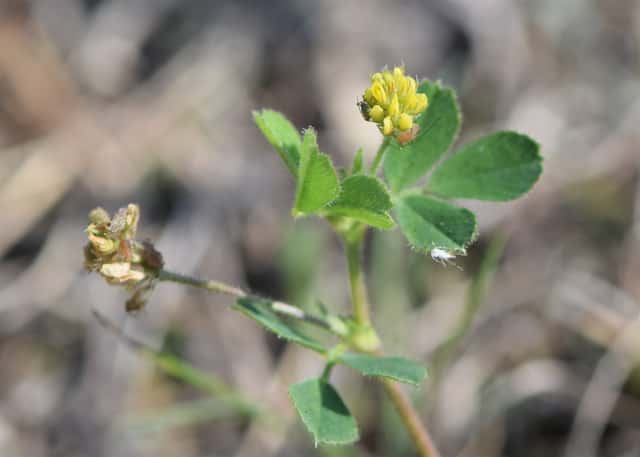
Fabaceae
Black Medick – Complete Guide to Medicago lupulina
Medicago lupulina
A low-maintenance, hardy plant suited to sunny, open positions. Thrives in well-draining soil and tolerates drought once established. Water moderately and avoid waterlogging. No regular fertilizing needed due to its nitrogen-fixing root nodules.
Every 10 days
Direct sun
-20° - 35°C
30% - 50%
Categories
What is Black Medick?
Black Medick (Medicago lupulina) is a easy-care plant from the Fabaceae family. Black Medick (Medicago lupulina) is an annual or short-lived perennial herb in the legume family (Fabaceae), native to Eurasia and Africa and naturalized worldwide in temperate regions. It produces small, bright yellow flowers arranged in tight globose clusters, followed by distinctive small black s...
Black Medick grows up to 80cm, spread of 40cm, watering every 10 days, -20°C – 35°C, 30–50% humidity. It is not suitable for indoor environments and safe for pets.
Unlike many tropical plants, Black Medick tolerates watering mistakes. Best for beginners. Unlike many popular species, Black Medick is safe to keep around pets.
How to Care for Black Medick?
TLDR: Black Medick needs Direct sun, watering every 10 days, and temperatures between -20-35°C with 30-50% humidity.
How Often Should You Water Black Medick?
Water when the top inch of soil feels dry — approximately every 8–12 days. Increase frequency during prolonged drought but never allow the roots to sit in standing water. Excellent drought tolerance once established.
How Much Light Does Black Medick Need?
Requires a minimum of 6–8 hours of direct sunlight per day. Cannot grow in full shade. Best suited to open, unshaded positions such as sunny borders, wildflower meadows, or lawn edges.
What Is the Best Soil for Black Medick?
Prefers loamy, well-draining soil with pH 6.0–7.5. Tolerates sandy and clay soils. Avoid compacted or highly acidic soils. Adding organic matter improves moisture retention without compromising drainage.
What Pot Should You Use for Black Medick?
Use terracotta or clay pots with generous drainage holes if growing in containers. Wide, shallow pots (30+ cm diameter) work best to accommodate the plant's spreading habit.
What Is Black Medick and Where Does It Come From?
Black Medick (Medicago lupulina) is an annual or short-lived perennial herb in the legume family (Fabaceae), native to Eurasia and Africa and naturalized worldwide in temperate regions. It produces small, bright yellow flowers arranged in tight globose clusters, followed by distinctive small black seed pods that give the plant its common name. A prolific nitrogen-fixer, it enriches the soil wherever it grows and provides valuable nectar for bees, butterflies, and other pollinators. It thrives in open, sunny habitats including lawns, roadsides, meadows, and disturbed ground.
How to Propagate Black Medick?
Direct Seeding
Light scarification improves germination rates. Sow into loose, well-prepared soil for best results.
- 1 Pre-soak seeds in warm water for 12 hours to improve germination
- 2 Sow directly into prepared soil in spring or autumn
- 3 Cover lightly with 0.5 cm of soil
- 4 Keep moist until germination occurs
- 5 Thin seedlings to 15-20 cm apart once established
Materials needed:
How Big Does Black Medick Grow?
TLDR: Black Medick can reach up to 80cm tall with Medium growth rate.
Max height
80cm
Spread
40cm
Growth rate
Medium
Foliage
Semi-evergreen
Plant Uses
Ground Cover
Soil coverage
Medicinal
Medicinal properties
Edible
Can be consumed
Medicinal Uses
- Plant extracts show antibacterial properties against several microorganisms
- Saponins present in the plant have demonstrated antifungal potential
- Used in folk medicine for its soothing and lenitive properties
Culinary Uses
- Young leaves can be eaten cooked as a potherb
- Seeds can be parched or ground after boiling for 9 minutes to neutralize trypsin inhibitors
Is your plant showing symptoms?
Click on the symptom to discover possible causes:
What Diseases Commonly Affect Black Medick?
TLDR: Black Medick is susceptible to 4 known diseases. Monitor regularly for early detection.
Powdery Mildew
Powdery mildew is a common fungal disease caused by various fungi species including Erysiphe, Podosphaera, Oïdium, and Leveillula. It affects over 10,000 plant species worldwide. The disease thrives in warm, dry climates with high humidity and appears as a distinctive white powdery coating on plant surfaces.
Aphids
Aphids are small, soft-bodied, pear-shaped insects (1/16 to 1/8 inch long) that feed by sucking nutrient-rich sap from plants. They reproduce rapidly and can quickly weaken plants, causing distorted growth and transmitting plant viruses. Aphids come in various colors including green, black, red, yellow, brown, and gray. They secrete honeydew, a sticky substance that attracts ants and encourages sooty mold growth.
Spider Mites
Spider mites are tiny arachnids (less than 1/20 inch long) related to spiders and ticks that feed on plant sap. They thrive in hot, dry conditions and can cause significant damage to ornamental and vegetable plants. During severe infestations, crop losses can reach 14% or higher as these pests disrupt vital plant processes including photosynthesis, carbon dioxide absorption, and transpiration.
Root Rot
Root rot is a serious fungal disease that affects the root system of plants, causing them to decay and die. It is primarily caused by overwatering, poor drainage, or soil-borne fungi such as Pythium, Phytophthora, Rhizoctonia, and Fusarium. The disease thrives in waterlogged conditions where roots are deprived of oxygen, making them susceptible to fungal infection.
Meaning & Symbolism
Symbolizes resourcefulness, renewal, and ecological harmony. As a natural soil improver, it represents the quiet, unassuming work of nature that sustains ecosystems.
Fun Facts
Black Medick fixes atmospheric nitrogen through root nodule bacteria, naturally fertilizing surrounding soil
Its tiny black seed pods are what give it the name 'black medick' — they turn from green to jet black at maturity
It can flower continuously from April to August, making it one of the longest-blooming plants in a wildflower meadow
Frequently asked questions
How often should I water Black Medick?
Is Black Medick toxic to pets?
Can Black Medick grow in pots?
Does Black Medick attract bees?
Is Black Medick a weed?
Compare with similar plants
| Attribute | Difficulty | Light | Watering | Pet Safe |
|---|---|---|---|---|
| Field Maple | Easy | Bright indirect | 14d | ✓ |
| Silver Birch | Easy | Direct sun | 14d | ✓ |
| Cushion Bush | Easy | Direct sun | 14d | ✓ |
| Peruvian peppertree | Easy | Direct sun | 14d | ⚠️ |





