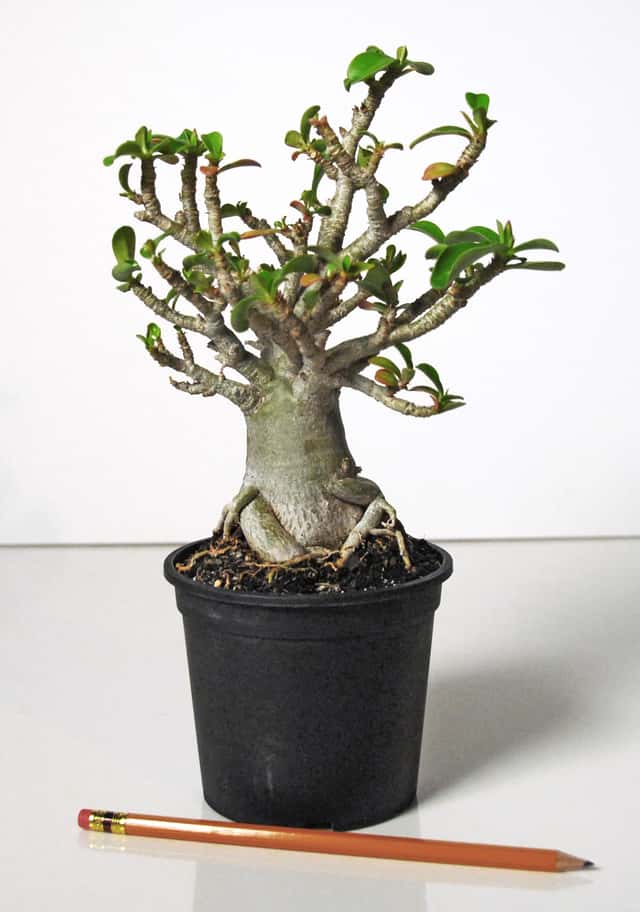
Apocynaceae
Impala Lily (Adenium multiflorum): Complete Care Guide
Adenium multiflorum
Low-maintenance plant that thrives in full sun, sandy well-draining soil, and infrequent watering. Reduce watering significantly during winter dormancy when the plant drops its leaves. All parts are highly toxic — always wear gloves when handling.
Every 10 days
Direct sun
10° - 32°C
30% - 50%
Categories
What is Impala Lily?
Impala Lily (Adenium multiflorum) is a medium-care plant from the Apocynaceae family. The Impala Lily (Adenium multiflorum) is a striking succulent shrub native to southern Africa, celebrated for its spectacular winter blooms of white and crimson bicolor flowers that appear on bare branches. It develops a thick basal stem called a caudex that stores water and gives the plant a dramat...
Impala Lily grows up to 3.0m, spread of 150cm, watering every 10 days, 10°C – 32°C, 30–50% humidity. It is suitable for indoor environments and not safe for pets.
Without precautions, ingestion can cause irritation in pets. Keep out of reach of cats and dogs. Without adequate drainage, root rot can develop within 20 days.
How to Care for Impala Lily?
TLDR: Impala Lily needs Direct sun, watering every 10 days, and temperatures between 10-32°C with 30-50% humidity.
How Often Should You Water Impala Lily?
Water every 10 days using the soak-and-dry method: water thoroughly and wait until the soil is completely dry before watering again. During winter dormancy, reduce to once a month or less.
How Much Light Does Impala Lily Need?
Requires full direct sun, at least 6 hours per day. Indoors, place near a south or west-facing window. The caudex is sensitive to sudden intense sunlight after being in shade.
What Is the Best Soil for Impala Lily?
Use a porous, sandy mix: cactus potting soil with coarse sand and perlite. Ideal pH is 6.0–7.0. Containers must have drainage holes.
What Pot Should You Use for Impala Lily?
Terracotta or ceramic pot with drainage holes. Avoid plastic pots that retain excess moisture.
Care Schedule
Fertilize
Every 14 days
Repot
Every 730 days
What Is Impala Lily and Where Does It Come From?
The Impala Lily (Adenium multiflorum) is a striking succulent shrub native to southern Africa, celebrated for its spectacular winter blooms of white and crimson bicolor flowers that appear on bare branches. It develops a thick basal stem called a caudex that stores water and gives the plant a dramatic bonsai-like appearance over time.
How to Propagate Impala Lily?
Stem Cutting
Always wear gloves as the sap is toxic. Rooting is most successful when temperatures are above 25°C (77°F).
- 1 Cut a healthy stem of at least 4 inches with sterilized tools
- 2 Let the cut end dry for 24-48 hours to callous
- 3 Apply rooting hormone to the base
- 4 Plant in sandy, slightly moist substrate in a warm bright location
- 5 Avoid overwatering until roots establish
Materials needed:
Seeds
Fresh seeds have the highest germination rates. Keep substrate lightly moist but never waterlogged.
- 1 Sow in well-draining moist substrate
- 2 Cover lightly with fine sand
- 3 Maintain temperature between 28-32°C
- 4 Germination occurs within 7-14 days
Materials needed:
How Big Does Impala Lily Grow?
TLDR: Impala Lily can reach up to 3.0m tall with Slow growth rate.
Max height
3.0m
Spread
1.5m
Growth rate
Slow
Foliage
Deciduous
Warning: Toxic Plant
This plant can be toxic if ingested. Keep out of reach of:
Plant Uses
Ornamental
Great for decoration
Is your plant showing symptoms?
Click on the symptom to discover possible causes:
What Diseases Commonly Affect Impala Lily?
TLDR: Impala Lily is susceptible to 8 known diseases. Monitor regularly for early detection.
Root Rot
Root rot is a serious fungal disease that affects the root system of plants, causing them to decay and die. It is primarily caused by overwatering, poor drainage, or soil-borne fungi such as Pythium, Phytophthora, Rhizoctonia, and Fusarium. The disease thrives in waterlogged conditions where roots are deprived of oxygen, making them susceptible to fungal infection.
Anthracnose
Anthracnose is a fungal disease caused by fungi in the genus Colletotrichum that affects many plants, including vegetables, fruits, and trees. The disease thrives in cool, wet conditions, causing dark, sunken lesions on leaves, stems, flowers, and fruits.
Powdery Mildew
Powdery mildew is a common fungal disease caused by various fungi species including Erysiphe, Podosphaera, Oïdium, and Leveillula. It affects over 10,000 plant species worldwide. The disease thrives in warm, dry climates with high humidity and appears as a distinctive white powdery coating on plant surfaces.
Spider Mites
Spider mites are tiny arachnids (less than 1/20 inch long) related to spiders and ticks that feed on plant sap. They thrive in hot, dry conditions and can cause significant damage to ornamental and vegetable plants. During severe infestations, crop losses can reach 14% or higher as these pests disrupt vital plant processes including photosynthesis, carbon dioxide absorption, and transpiration.
Fun Facts
Unlike most succulents, the Impala Lily blooms in winter, producing vibrant flowers when most plants are dormant.
The thick caudex can be shaped into a unique bonsai over 5-10 years of cultivation.
African hunters historically used Adenium multiflorum sap to poison arrow tips due to its potent cardiac glycosides.
Each flower displays a unique gradient pattern: white to pale pink centers with vivid crimson crinkled borders.
Frequently asked questions
How often should I water my Impala Lily?
Is the Impala Lily toxic?
Why is my Impala Lily dropping its leaves?
Can I grow an Impala Lily indoors?
When does the Impala Lily bloom?
Compare with similar plants
| Attribute | Difficulty | Light | Watering | Pet Safe |
|---|---|---|---|---|
| Azalea | Medium | Partial shade | 3d | ⚠️ |
| Wild Lettuce | Medium | Direct sun | 7d | ⚠️ |
| Cape Primrose | Medium | Partial shade | 7d | ✓ |
| Honey Locust | Medium | Direct sun | 14d | ✓ |