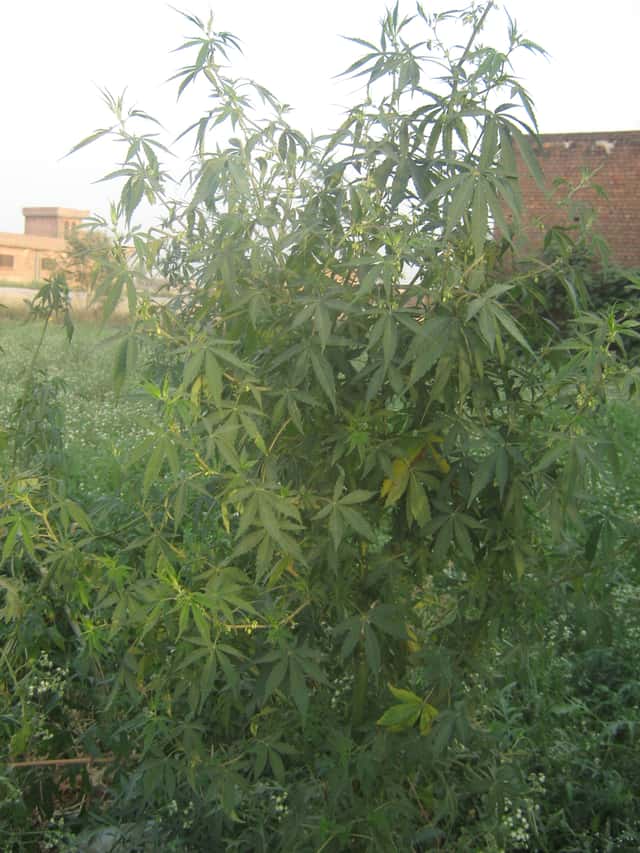
Cannabaceae
Indica Cannabis (Cannabis indica)
Cannabis indica
Requires intense direct sunlight, well-draining slightly acidic soil (pH 6–7), and low to moderate humidity. Water only when the top of the substrate dries out. Good air circulation is essential to prevent fungal diseases.
Every 3 days
Direct sun
15° - 30°C
30% - 50%
Categories
What is Indica Cannabis?
Indica Cannabis (Cannabis indica) is a medium-care plant from the Cannabaceae family. Cannabis indica is a broad-leaf annual subspecies native to the Hindu Kush mountain range of Afghanistan and Pakistan. It is distinguished by its compact stature, wide dark-green leaflets, and dense resin production. Adapted to cold, dry high-altitude climates, it completes its flowering cycle faste...
Indica Cannabis grows up to 1.5m, spread of 90cm, watering every 3 days, 15°C – 30°C, 30–50% humidity. It is suitable for indoor environments and not safe for pets.
Without precautions, ingestion can cause irritation in pets. Keep out of reach of cats and dogs. Without adequate drainage, root rot can develop within 7 days.
How to Care for Indica Cannabis?
TLDR: Indica Cannabis needs Direct sun, watering every 3 days, and temperatures between 15-30°C with 30-50% humidity.
How Often Should You Water Indica Cannabis?
Water when the top centimeter of substrate is dry. Avoid waterlogging — roots are susceptible to rot. Typical frequency: every 2–4 days depending on temperature, pot size, and airflow.
How Much Light Does Indica Cannabis Need?
Requires full direct sunlight — minimum 6–8 hours/day outdoors. Indoors, high-intensity artificial lighting (LED or HPS) is needed to simulate natural sunlight.
What Is the Best Soil for Indica Cannabis?
Use a well-draining substrate rich in organic matter: a mix of perlite, coco coir, vermiculite, and compost. Ideal pH: 6.0–7.0.
What Pot Should You Use for Indica Cannabis?
Terracotta or fabric pot for optimal drainage and root aeration.
Care Schedule
Fertilize
Every 14 days
Misting
Every 3 days
Rotate
Every 7 days
Repot
Every 365 days
What Is Indica Cannabis and Where Does It Come From?
Cannabis indica is a broad-leaf annual subspecies native to the Hindu Kush mountain range of Afghanistan and Pakistan. It is distinguished by its compact stature, wide dark-green leaflets, and dense resin production. Adapted to cold, dry high-altitude climates, it completes its flowering cycle faster than Cannabis sativa. It has been used for millennia in South Asian cultural and medicinal traditions. Cultivation, possession, and use are regulated in most jurisdictions worldwide and illegal in many countries — laws vary significantly by location. This entry is strictly a botanical reference, not a cultivation guide.
How to Propagate Indica Cannabis?
Seed germination
Use fresh seeds for best germination rates. Avoid direct light in the first days after emergence.
- 1 Soak seed in water for 12–24 hours
- 2 Place in moist paper towel until tap root emerges
- 3 Transfer to light substrate at 1 cm depth
- 4 Maintain at 22–26°C with moderate humidity until seedling emerges
Materials needed:
Stem cutting (cloning)
Clones preserve the genetic traits of the mother plant. Replace substrate if mold appears.
- 1 Cut a healthy stem 10–15 cm with 2–3 nodes
- 2 Remove lower leaves
- 3 Apply rooting hormone to the base
- 4 Insert in moist, aerated substrate or rockwool
- 5 Keep under indirect light at high humidity for 2–3 weeks
Materials needed:
How Big Does Indica Cannabis Grow?
TLDR: Indica Cannabis can reach up to 1.5m tall with Fast growth rate.
Max height
1.5m
Spread
90cm
Growth rate
Fast
Foliage
Deciduous
Warning: Toxic Plant
This plant can be toxic if ingested. Keep out of reach of:
Plant Uses
Medicinal
Medicinal properties
Medicinal Uses
- Traditional medicinal use (chronic pain, anxiety, insomnia) — regulated by law
- CBD/THC extract production in legalized contexts
Is your plant showing symptoms?
Click on the symptom to discover possible causes:
What Diseases Commonly Affect Indica Cannabis?
TLDR: Indica Cannabis is susceptible to 9 known diseases. Monitor regularly for early detection.
Powdery Mildew
Powdery mildew is a common fungal disease caused by various fungi species including Erysiphe, Podosphaera, Oïdium, and Leveillula. It affects over 10,000 plant species worldwide. The disease thrives in warm, dry climates with high humidity and appears as a distinctive white powdery coating on plant surfaces.
Gray Mold (Botrytis Blight)
Gray mold, caused by the fungus Botrytis cinerea, is one of the most common fungal diseases in plants. It affects over 200 plant species, including ornamentals, vegetables, fruits, and houseplants. The disease thrives in cool, humid conditions with poor air circulation, causing grayish spots and soft rot on infected tissues.
Gray Mold (Botrytis Blight)
Gray mold, caused by the fungus Botrytis cinerea, is a widespread necrotrophic pathogen affecting over 1,400 plant species. It thrives in cool, humid conditions and attacks weakened or aging plant tissues, causing soft rot and characteristic gray fuzzy growth.
Fusarium Wilt
Fusarium wilt is a serious fungal disease caused by the soil-borne fungus Fusarium oxysporum. The fungus invades roots and blocks the water-conducting vessels (xylem) of the plant, causing progressive wilting and eventual death. Host-specific forms of the pathogen exist that attack different plant species.
Meaning & Symbolism
Deeply rooted in Hindu spiritual tradition, where cannabis (bhang) has been used in religious rituals for thousands of years. In modern culture, indica has become a symbol of relaxation and countercultural identity. Cultivation and possession are regulated in most countries, with laws varying significantly by jurisdiction. This is a botanical reference only.
Fun Facts
Native to the Hindu Kush mountains at altitudes up to 3,500 m, Cannabis indica evolved to thrive in short summers and harsh winters.
Over 100 cannabinoids have been identified in the Cannabis species, making it one of the most biochemically complex plants known.
Indica strains typically finish flowering 2–4 weeks earlier than sativa strains, completing in just 7–9 weeks.
The dense resin produced by female flowers is the basis of hashish, a concentrate with millennia of history in the Hindu Kush region.
Frequently asked questions
Is Cannabis indica legal?
What is the difference between Cannabis indica and Cannabis sativa?
How do you water Cannabis indica?
How much light does Cannabis indica need?
Is Cannabis indica toxic to pets?
Compare with similar plants
| Attribute | Difficulty | Light | Watering | Pet Safe |
|---|---|---|---|---|
| Dark Fieldcap | Medium | Low light | 2d | ⚠️ |
| Azalea | Medium | Partial shade | 3d | ⚠️ |
| Bougainvillea | Medium | Direct sun | 7d | ⚠️ |
| Wild Lettuce | Medium | Direct sun | 7d | ⚠️ |



