Crassulaceae
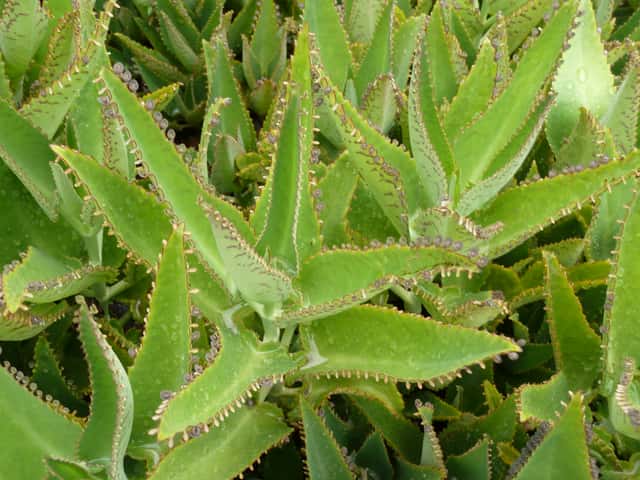
Mother of Thousands — Kalanchoe daigremontiana
Kalanchoe daigremontiana
Easy to care for succulent that thrives in bright light and infrequent watering. Allow soil to dry completely between waterings. Avoid overwatering — root rot is the main risk. Keep away from pets and children as it is mildly toxic.
Every 14 days
Bright indirect
10° - 35°C
20% - 40%
Categories
What is Mother of Thousands?
Mother of Thousands (Kalanchoe daigremontiana) is a easy-care plant from the Crassulaceae family. Kalanchoe daigremontiana, known as Mother of Thousands, is a fascinating succulent native to Madagascar. It is famous for producing tiny plantlets along the margins of its fleshy, lance-shaped leaves — each one capable of falling off and rooting on its own. A resilient, low-maintenance plant that th...
Mother of Thousands grows up to 90cm, spread of 60cm, watering every 14 days, 10°C – 35°C, 20–40% humidity. It is suitable for indoor environments and not safe for pets.
Unlike many tropical plants, Mother of Thousands tolerates watering mistakes. Best for beginners. Without precautions, ingestion can cause irritation in pets. Keep out of reach of cats and dogs. Without adequate drainage, root rot can develop within 28 days.
How to Care for Mother of Thousands?
TLDR: Mother of Thousands needs Bright indirect, watering every 14 days, and temperatures between 10-35°C with 20-40% humidity.
How Often Should You Water Mother of Thousands?
Water every 10-14 days, allowing the soil to dry out completely between waterings. Reduce watering further in winter. Never let it sit in standing water.
How Much Light Does Mother of Thousands Need?
Provide at least 6 hours of bright, indirect light daily. Direct morning sun is ideal. Avoid harsh afternoon sun which can scorch leaves. A south or east-facing windowsill is perfect.
What Is the Best Soil for Mother of Thousands?
Use a well-draining succulent or cactus mix. You can add perlite or coarse sand to regular potting mix to improve drainage. Good drainage is essential to prevent root rot.
What Pot Should You Use for Mother of Thousands?
Terracotta or unglazed ceramic pot with drainage holes. Terracotta helps wick away excess moisture, reducing root rot risk.
What Is Mother of Thousands and Where Does It Come From?
Kalanchoe daigremontiana, known as Mother of Thousands, is a fascinating succulent native to Madagascar. It is famous for producing tiny plantlets along the margins of its fleshy, lance-shaped leaves — each one capable of falling off and rooting on its own. A resilient, low-maintenance plant that thrives with neglect, it is mildly toxic and can become invasive outdoors in warm climates.
How to Propagate Mother of Thousands?
Plantlet propagation
Do not bury plantlets — simply lay them on soil. Avoid overwatering during rooting.
- 1 Collect plantlets that have fallen or gently detach from leaf margins
- 2 Allow plantlets to dry for 1-2 days to callous the ends
- 3 Place on the surface of moist, well-draining succulent soil
- 4 Mist lightly and place in bright indirect light
- 5 Roots will form within 2-3 weeks
Materials needed:
Stem cutting
Use rooting hormone to improve success rate. Keep in bright indirect light.
- 1 Cut a healthy stem with clean scissors
- 2 Allow the cut end to callous for 2-3 days
- 3 Plant in moist succulent soil
- 4 Water sparingly until established
Materials needed:
How Big Does Mother of Thousands Grow?
TLDR: Mother of Thousands can reach up to 90cm tall with Fast growth rate.
Max height
90cm
Spread
60cm
Growth rate
Fast
Foliage
Evergreen
Warning: Toxic Plant
This plant can be toxic if ingested. Keep out of reach of:
Plant Uses
Ornamental
Great for decoration
Is your plant showing symptoms?
Click on the symptom to discover possible causes:
What Diseases Commonly Affect Mother of Thousands?
TLDR: Mother of Thousands is susceptible to 10 known diseases. Monitor regularly for early detection.
Root Rot
Root rot is a serious fungal disease that affects the root system of plants, causing them to decay and die. It is primarily caused by overwatering, poor drainage, or soil-borne fungi such as Pythium, Phytophthora, Rhizoctonia, and Fusarium. The disease thrives in waterlogged conditions where roots are deprived of oxygen, making them susceptible to fungal infection.
Overwatering
Overwatering occurs when plants receive too much water, depriving roots of oxygen and causing root rot. This environmental stress is one of the most common causes of houseplant death, as waterlogged soil prevents roots from breathing and functioning properly.
Powdery Mildew
Powdery mildew is a common fungal disease caused by various fungi species including Erysiphe, Podosphaera, Oïdium, and Leveillula. It affects over 10,000 plant species worldwide. The disease thrives in warm, dry climates with high humidity and appears as a distinctive white powdery coating on plant surfaces.
Leaf Spot
Leaf spot is a common fungal disease caused by various pathogens including Alternaria, Ascochyta, Colletotrichum, Septoria, and Venturia. It primarily affects leaves, causing discolored spots that can lead to premature leaf drop if left untreated.
Meaning & Symbolism
Symbol of resilience and prolific life. Its countless plantlets symbolize abundance, fertility, and the unstoppable force of nature.
Fun Facts
Each leaf can produce dozens of tiny plantlets along its margins, giving the plant its dramatic name
Kalanchoe daigremontiana is considered invasive in parts of Australia, Hawaii, and other tropical regions
All parts of the plant contain cardiac glycosides and are toxic to pets and humans if ingested
In its native Madagascar, the plant can grow in rocky, arid terrain with very little water
Frequently asked questions
How often should I water Mother of Thousands?
Is Mother of Thousands toxic to pets?
Why is my Mother of Thousands dropping plantlets everywhere?
Can Mother of Thousands grow outdoors?
Why are my Mother of Thousands leaves turning yellow?
Compare with similar plants
| Attribute | Difficulty | Light | Watering | Pet Safe |
|---|---|---|---|---|
| Field Maple | Easy | Bright indirect | 14d | ✓ |
| Silver Birch | Easy | Direct sun | 14d | ✓ |
| Cushion Bush | Easy | Direct sun | 14d | ✓ |
| Peruvian peppertree | Easy | Direct sun | 14d | ⚠️ |





