Berberidaceae
Oregon Grape: Ground Cover Plant
Berberis aquifolium
An extremely adaptable and robust plant for semi-shaded to shaded locations. Once established, it is very drought-resistant and low-maintenance. Annual pruning after flowering maintains a compact growth habit. It thrives in almost any well-drained garden soil without the need for regular fertilization.
Every 10 days
Partial shade
-25° - 35°C
30% - 70%
Categories
What is Oregon Grape?
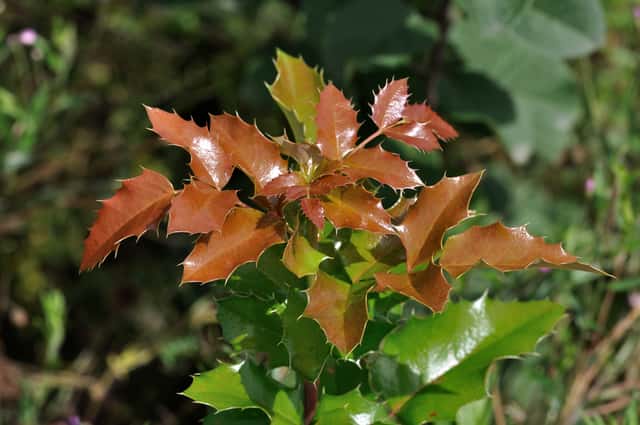
Oregon Grape (Berberis aquifolium) is a easy-care plant from the Berberidaceae family. The Oregon grape (Berberis aquifolium) is a robust, evergreen shrub native to western North America, reaching heights of 1 to 1.5 meters. Its glossy, spiny-toothed pinnate leaves resemble holly leaves and often take on an attractive purplish-red hue in winter. In early spring (March–May), it produce...
Oregon Grape grows up to 1.5m, spread of 150cm, watering every 10 days, -25°C – 35°C, 30–70% humidity. It is not suitable for indoor environments and safe for pets.
Unlike many tropical plants, Oregon Grape tolerates watering mistakes. Best for beginners. Unlike many popular species, Oregon Grape is safe to keep around pets.
How to Care for Oregon Grape?
TLDR: Oregon Grape needs Partial shade, watering every 10 days, and temperatures between -25-35°C with 30-70% humidity.
How Often Should You Water Oregon Grape?
Water newly planted Mahonias regularly and deeply for the first two years until the soil has fully absorbed the moisture, then allow it to dry out well. Well-established specimens are remarkably drought-resistant and can survive normal summers without additional irrigation. During prolonged dry spells or if planted in full sun, water thoroughly every 10–14 days.
How Much Light Does Oregon Grape Need?
Prefers semi-shaded to shaded locations, such as under light tree canopies or on north-facing walls. It also tolerates direct morning light and short periods of sun. Full midday sun in winter can lead to leaf burn, especially when the ground is frozen and the plant cannot take up water. Wind-protected sites are preferred.
What Is the Best Soil for Oregon Grape?
Thrives in almost any normal, well-drained garden soil—from sandy and lean to humus-rich and loamy. Prefers slightly acidic to neutral soils (pH 5.5–7.5). Waterlogging must be avoided at all costs. A mulch layer of mature compost improves soil moisture and provides small amounts of nutrients, which is particularly beneficial on poor sandy soils.
What Pot Should You Use for Oregon Grape?
For container gardening, large-volume, frost-proof pots with a minimum diameter of 40 cm and good drainage holes are suitable. Recommended substrate: humus-rich, slightly acidic potting soil mixed with 20–30% coarse sand or perlite for better drainage. In winter, protect containers with fleece during heavy frosts or move them to a frost-free, bright location.
Care Schedule
Fertilize
Every 365 days
What Is Oregon Grape and Where Does It Come From?
The Oregon grape (Berberis aquifolium) is a robust, evergreen shrub native to western North America, reaching heights of 1 to 1.5 meters. Its glossy, spiny-toothed pinnate leaves resemble holly leaves and often take on an attractive purplish-red hue in winter. In early spring (March–May), it produces bright yellow, lightly fragrant flower panicles that serve as a valuable food source for early insects. These are followed in summer by blue-black, glaucous berries that are rich in vitamin C and can be processed into jelly or juice. Thanks to its tolerance for shade, drought, and urban conditions, it is one of the easiest evergreen shrubs to maintain in temperate gardens.
How to Propagate Oregon Grape?
Cuttings
- Do not keep cuttings too dry or too wet – waterlogging prevents rooting.
- 1 Take Cuttings
In late summer, cut semi-hardwood shoots 10–15 cm long with a sharp knife directly below a leaf node.
- 2 Preparation
Remove lower leaves and dip the cut surface into rooting hormone powder.
- 3 Planting
Insert into a mixture of seed-starting soil and coarse sand or perlite (1:1), pressing it 5 cm deep.
- 4 Care
Keep evenly moist and protect from direct sun. A mini-greenhouse or plastic bag increases humidity and promotes rooting.
Materials needed:
Dividing Suckers
- Best method for quick success – suckers are already rooted and establish themselves rapidly.
- 1 Locate Suckers
In spring, expose suckers at the edge of the mother plant.
- 2 Separation
Using a spade or sharp knife, generously cut off the rooted suckers.
- 3 Planting
Plant directly in the desired location or in a nursery pot and water well.
Materials needed:
Sowing
- Direct sowing outdoors in the fall is the simplest and most successful method.
- 1 Collect Berries
Harvest ripe berries in the fall and wash off the pulp under running water.
- 2 Stratification
Seeds require a cold period (stratification). The easiest way is to sow them directly outdoors in the fall.
- 3 Germination
Germination occurs the following spring as temperatures rise. Cover the seedbed with bird protection.
Materials needed:
How Big Does Oregon Grape Grow?
TLDR: Oregon Grape can reach up to 1.5m tall with Slow growth rate.
Max height
1.5m
Spread
1.5m
Growth rate
Slow
Foliage
Evergreen
Warning: Toxic Plant
This plant can be toxic if ingested. Keep out of reach of:
Plant Uses
Ornamental
Great for decoration
Medicinal
Medicinal properties
Edible
Can be consumed
Ground Cover
Soil coverage
Medicinal Uses
- Folk medicine use of the root bark for digestive issues and liver stimulation
- Skin treatment: Extracts containing berberine are used topically for psoriasis and eczema
- Antimicrobial effect: Berberine has been shown to inhibit the growth of various bacteria and fungi
- Traditional use as a bitter tonic and to strengthen the immune system
- Phytotherapeutic use for urinary tract infections due to antimicrobial properties
Culinary Uses
- Blue-black berries for making jellies, jams, and fruit spreads
- Berries as an ingredient for fruit juices and smoothies (very tart, rich in vitamin C)
- Production of fruit wine and liqueurs from the berries
- Use as a dye: Berries provide an intense blue to violet pigment
- Flowers as an edible garnish for salads and desserts in spring
Is your plant showing symptoms?
Click on the symptom to discover possible causes:
What Diseases Commonly Affect Oregon Grape?
TLDR: Oregon Grape is susceptible to 6 known diseases. Monitor regularly for early detection.
Rust
Rust is a common fungal disease caused by fungi in the order Pucciniales that affects a wide variety of plants. The disease gets its name from the characteristic orange, yellow, or reddish-brown pustules that appear on leaves, resembling metal rust. This obligate fungal parasite requires living plants to survive and can cause significant economic losses in agricultural crops.
Powdery Mildew
Powdery mildew is a common fungal disease caused by various fungi species including Erysiphe, Podosphaera, Oïdium, and Leveillula. It affects over 10,000 plant species worldwide. The disease thrives in warm, dry climates with high humidity and appears as a distinctive white powdery coating on plant surfaces.
Aphids
Aphids are small, soft-bodied, pear-shaped insects (1/16 to 1/8 inch long) that feed by sucking nutrient-rich sap from plants. They reproduce rapidly and can quickly weaken plants, causing distorted growth and transmitting plant viruses. Aphids come in various colors including green, black, red, yellow, brown, and gray. They secrete honeydew, a sticky substance that attracts ants and encourages sooty mold growth.
Scale Insects
Scale insects are small sap-sucking pests that appear as brown, shell-like bumps on plant stems and leaves. There are over 25 species, divided into armored (hard) and unarmored (soft) scales. They feed by piercing plant tissue and extracting sap, which weakens the plant and can lead to yellowing, stunted growth, and even death if left untreated. They also excrete honeydew, which attracts ants and promotes sooty mold growth.
Meaning & Symbolism
In symbolism, the Mahonia stands for protection and resilience, as its prickly leaves form a natural defense. Its ability to thrive and bloom brightly even in shaded and inhospitable locations makes it a symbol of hidden strength and endurance.
Compare with similar plants
| Attribute | Difficulty | Light | Watering | Pet Safe |
|---|---|---|---|---|
| Small Scabious | Easy | Direct sun | 7d | ✓ |
| Field Maple | Easy | Bright indirect | 14d | ✓ |
| Silver Birch | Easy | Direct sun | 14d | ✓ |
| Red valerian | Easy | Direct sun | 10d | ✓ |



