Rosaceae
Almond: Edible Plant
Prunus dulcis
Plant in full sun with well-draining, sandy-loam soil. Water deeply and regularly through spring and summer, especially while fruit is developing, then reduce watering in the dormant winter months. Prune annually in winter to shape and encourage fruiting wood, and fertilize in early spring.
Every 7 days
Direct sun
-10° - 40°C
30% - 50%
Categories
What is Almond?
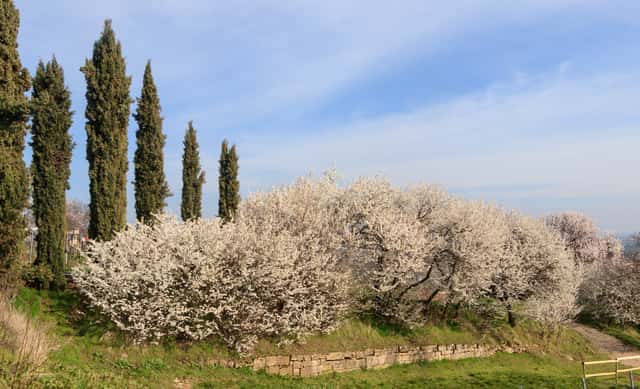
Almond (Prunus dulcis) is a medium-care plant from the Rosaceae family. Prunus dulcis, commonly known as the almond, is a deciduous tree native to the Middle East and South Asia, now widely cultivated across Mediterranean climates for its edible seed. It bursts into pale pink-and-white blossom in late winter before its narrow leaves emerge, one of the earliest trees to...
Almond grows up to 8.0m, spread of 600cm, watering every 7 days, -10°C – 40°C, 30–50% humidity. It is not suitable for indoor environments and not safe for pets.
Without precautions, ingestion can cause irritation in pets. Keep out of reach of cats and dogs.
How to Care for Almond?
TLDR: Almond needs Direct sun, watering every 7 days, and temperatures between -10-40°C with 30-50% humidity.
How Often Should You Water Almond?
Water deeply once a week during the growing season, letting the topsoil dry between waterings; cut back once leaves drop in autumn.
How Much Light Does Almond Need?
Needs full, direct sun -- at least 6 hours a day -- to flower and set fruit properly.
What Is the Best Soil for Almond?
Prefers loose, well-draining sandy-loam soil; tolerates poor and calcareous soils but dislikes waterlogging and high salinity.
What Pot Should You Use for Almond?
Not typically container-grown to full size; young trees or bonsai specimens do best in a wide, well-draining terracotta pot.
Care Schedule
Fertilize
Every 180 days
What Is Almond and Where Does It Come From?
Prunus dulcis, commonly known as the almond, is a deciduous tree native to the Middle East and South Asia, now widely cultivated across Mediterranean climates for its edible seed. It bursts into pale pink-and-white blossom in late winter before its narrow leaves emerge, one of the earliest trees to flower each year. Grown as an orchard or ornamental tree, it needs a hot, dry summer and a cold winter dormancy to fruit well. Two forms exist: the sweet almond (var. dulcis), prized for its edible kernel, and the bitter almond (var. amara), whose seeds contain amygdalin and are toxic unless processed.
How to Propagate Almond?
Grafting onto rootstock
Commercial almonds are almost always propagated by grafting to ensure true-to-type fruit and disease resistance.
- 1 Select a healthy scion from a productive almond tree
- 2 Graft onto a compatible rootstock (e.g. peach or plum)
- 3 Seal the graft union and protect from drying out
- 4 Keep grafted tree in a sheltered spot until union heals
Materials needed:
Seed germination
Seed-grown trees may not produce fruit true to the parent and take longer to bear.
- 1 Remove the hull from a fresh almond seed
- 2 Cold-stratify the seed in moist sand for 8-12 weeks
- 3 Plant the stratified seed about 5cm deep in well-draining soil
- 4 Keep soil moist until germination
Materials needed:
How Big Does Almond Grow?
TLDR: Almond can reach up to 8.0m tall with Medium growth rate.
Max height
8.0m
Spread
6.0m
Growth rate
Medium
Foliage
Deciduous
Warning: Toxic Plant
This plant can be toxic if ingested. Keep out of reach of:
Plant Uses
Edible
Can be consumed
Ornamental
Great for decoration
Medicinal
Medicinal properties
Medicinal Uses
- Almond oil used as an emollient and carrier oil in skincare
- Traditionally used to soothe dry skin and mild inflammation
- Seed extract studied for cholesterol-lowering properties
Culinary Uses
- Raw or roasted snack nut
- Almond milk and almond flour
- Marzipan and confectionery
- Pressed for almond oil
Is your plant showing symptoms?
Click on the symptom to discover possible causes:
What Diseases Commonly Affect Almond?
TLDR: Almond is susceptible to 11 known diseases. Monitor regularly for early detection.
Powdery Mildew
Powdery mildew is a common fungal disease caused by various fungi species including Erysiphe, Podosphaera, Oïdium, and Leveillula. It affects over 10,000 plant species worldwide. The disease thrives in warm, dry climates with high humidity and appears as a distinctive white powdery coating on plant surfaces.
Root Rot
Root rot is a serious fungal disease that affects the root system of plants, causing them to decay and die. It is primarily caused by overwatering, poor drainage, or soil-borne fungi such as Pythium, Phytophthora, Rhizoctonia, and Fusarium. The disease thrives in waterlogged conditions where roots are deprived of oxygen, making them susceptible to fungal infection.
Aphids
Aphids are small, soft-bodied, pear-shaped insects (1/16 to 1/8 inch long) that feed by sucking nutrient-rich sap from plants. They reproduce rapidly and can quickly weaken plants, causing distorted growth and transmitting plant viruses. Aphids come in various colors including green, black, red, yellow, brown, and gray. They secrete honeydew, a sticky substance that attracts ants and encourages sooty mold growth.
Spider Mites
Spider mites are tiny arachnids (less than 1/20 inch long) related to spiders and ticks that feed on plant sap. They thrive in hot, dry conditions and can cause significant damage to ornamental and vegetable plants. During severe infestations, crop losses can reach 14% or higher as these pests disrupt vital plant processes including photosynthesis, carbon dioxide absorption, and transpiration.
Meaning & Symbolism
In many cultures the almond blossom represents hope, watchfulness and new beginnings, being one of the first trees to bloom after winter.
Compare with similar plants
| Attribute | Difficulty | Light | Watering | Pet Safe |
|---|---|---|---|---|
| Dark Fieldcap | Medium | Low light | 2d | ⚠️ |
| Azalea | Medium | Partial shade | 3d | ⚠️ |
| Bougainvillea | Medium | Direct sun | 7d | ⚠️ |
| Wild Lettuce | Medium | Direct sun | 7d | ⚠️ |
Choose & Compare
Sources & References
- How to Plant, Grow, and Care for Almond Trees - Gardener's Path
- Almond Tree (Prunus dulcis): All You Need To Know - Gardenia.net
- Almond Plant Care & Growing Basics - PlantIn
- Prunus dulcis - Wikipedia (ES)
- Cuidados Del Almendro - Sembrar100
- Almond Tree Pests and Diseases - Wikifarmer
- 12 Common Almond Tree Pests and Diseases - MorningChores



