Pithophoraceae
Marimo Moss Ball: Best for Low Light
Aegagropila linnaei
The Marimo is a hardy and very slow-growing aquatic alga, ideal for unheated aquariums or cold-water tanks. It requires clean, cool water, low to moderate indirect light, and regular rotation to maintain its spherical shape and uniform coloration.
Every 14 days
Low light
10° - 24°C
100% - 100%
Categories
What is Marimo Moss Ball?
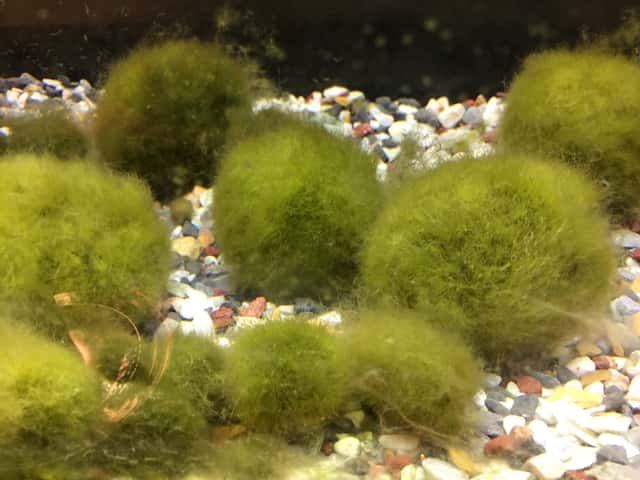
Marimo Moss Ball (Aegagropila linnaei) is a easy-care plant from the Pithophoraceae family. Aegagropila linnaei, known as the Marimo moss ball, is not a true moss but a rare form of filamentous green algae that grows into spherical colonies. Native to cold, alkaline lakes in Japan, Iceland, and Estonia, its round shape develops naturally due to wave action and periodic rotation on the lake...
Marimo Moss Ball grows up to 30cm, spread of 30cm, watering every 14 days, 10°C – 24°C, 100–100% humidity. It is suitable for indoor environments and safe for pets.
Unlike many tropical plants, Marimo Moss Ball tolerates watering mistakes. Best for beginners. Unlike many popular species, Marimo Moss Ball is safe to keep around pets. Without adequate drainage, root rot can develop within 28 days.
How to Care for Marimo Moss Ball?
TLDR: Marimo Moss Ball needs Low light, watering every 14 days, and temperatures between 10-24°C with 100-100% humidity.
How Often Should You Water Marimo Moss Ball?
Change 25-50% of the water every 1-2 weeks using cool, dechlorinated water; avoid prolonged stagnation, which promotes bad odors and mold.
How Much Light Does Marimo Moss Ball Need?
Avoid direct sunlight, which can bleach and brown the surface; it prefers indirect ambient light or low to medium intensity aquarium lighting that is not positioned too closely.
What Is the Best Soil for Marimo Moss Ball?
Does not require a substrate: it grows completely submerged in water. A base of gravel or fine sand serves only a decorative purpose.
What Pot Should You Use for Marimo Moss Ball?
Glass container, bowl, or open aquarium (without an airtight lid) to allow for gas exchange; avoid sealed containers.
Care Schedule
Rotate
Every 7 days
What Is Marimo Moss Ball and Where Does It Come From?
Aegagropila linnaei, known as the Marimo moss ball, is not a true moss but a rare form of filamentous green algae that grows into spherical colonies. Native to cold, alkaline lakes in Japan, Iceland, and Estonia, its round shape develops naturally due to wave action and periodic rotation on the lake bed. At Lake Akan in Japan, it is protected as a special natural monument.
How to Propagate Marimo Moss Ball?
Division
- Only divide large, healthy balls.
- Regular rotation is essential for the new spheres to remain round.
- 1 Divide the ball
Gently squeeze out excess water and split the moss ball into two or more portions using your hands.
- 2 Reshape
Roll each portion between your palms to restore a spherical shape.
- 3 Secure the shape
If necessary, wrap fishing line around the new sphere until the filaments compact on their own.
Materials needed:
How Big Does Marimo Moss Ball Grow?
TLDR: Marimo Moss Ball can reach up to 30cm tall with Slow growth rate.
Max height
30cm
Spread
30cm
Growth rate
Slow
Foliage
Evergreen
Plant Uses
Ornamental
Great for decoration
Is your plant showing symptoms?
Click on the symptom to discover possible causes:
What Diseases Commonly Affect Marimo Moss Ball?
TLDR: Marimo Moss Ball is susceptible to 4 known diseases. Monitor regularly for early detection.
Sunburn (Sun Scorch)
Sunburn or sun scorch is an environmental condition that occurs when plants are exposed to intense, direct sunlight beyond their tolerance level. This causes the breakdown of chlorophyll in the leaves, resulting in bleached, dried, and damaged foliage. The damage can happen rapidly, sometimes within just a few hours of exposure.
Excessive Light Exposure
Excessive light can be harmful, particularly to shade-tolerant plants. The surplus light energy is converted into heat, which can damage plant tissues. Symptoms include yellow or brown spots on the foliage, general leaf yellowing, crispy brown edges or tips, and wilting. In severe cases, excessive light leads to sunburn or sunscald.
White Mold
White mold (Sclerotinia sclerotiorum) is a devastating fungal disease affecting over 400 plant species worldwide. The fungus produces black, seed-like structures (sclerotia) that can survive in soil for 5 or more years. The disease is favored by cool, moist weather (50-68°F/10-20°C), especially during flowering.
Bacterial Soft Rot
Bacterial soft rot is a destructive plant disease caused primarily by bacteria from the genera Pectobacterium (formerly Erwinia) and Dickeya. These bacteria produce enzymes that break down plant cell walls, causing rapid and foul-smelling tissue decomposition. It mainly affects succulent tissues such as tubers, fruits, stems, and bulbs, being especially problematic in warm and humid conditions.
Meaning & Symbolism
In Japan, the Marimo is considered a lucky charm and a symbol of eternal love, linked to the legend of Lake Akan; it is often given as a token of affection.
Compare with similar plants
| Attribute | Difficulty | Light | Watering | Pet Safe |
|---|---|---|---|---|
| Field Maple | Easy | Bright indirect | 14d | ✓ |
| Silver Birch | Easy | Direct sun | 14d | ✓ |
| Common Blanketflower | Easy | Direct sun | 10d | ✓ |
| Cushion Bush | Easy | Direct sun | 14d | ✓ |
Choose & Compare
Sources & References
- Marimo Moss Ball Care Guide – Aquarium Co-Op
- Marimo Moss Ball Problems and Issues Guide – OurHouseplants
- Common Diseases Affecting Marimo Moss Balls – Cafe Planta
- pH, Water and Temperature Conditions for Optimal Marimo Growth – MossBall.com
- Is That A Marimo In Your Pants – Tofugu (folklore)
- Aegagropila linnaei – Acquariofilia Consapevole (IT)





