Acanthaceae
Wild Petunia (Ruellia): Care Guide
Ruellia
Grow Ruellia in full sun to partial shade, ideally with at least 6 hours of direct light daily for the best bloom production. Water regularly to keep the soil lightly moist, allowing the top layer to dry between waterings; established plants tolerate short dry spells. It thrives in fertile, well-draining soil and is largely pest- and disease-resistant, though watch for aphids, spider mites, and root rot from overwatering.
Every 7 days
Direct sun
10° - 35°C
40% - 70%
Categories
What is Wild Petunia?
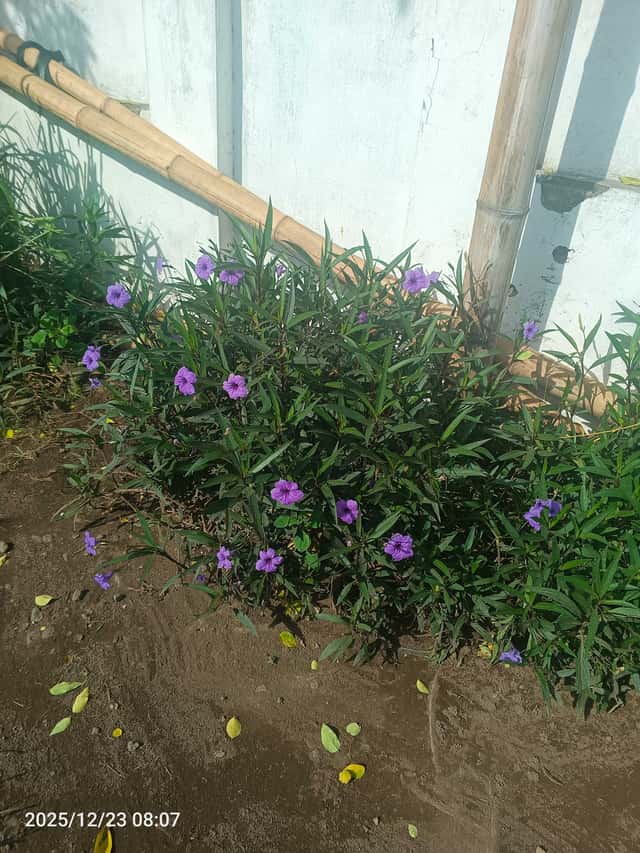
Wild Petunia (Ruellia) is a easy-care plant from the Acanthaceae family. Ruellia, commonly known as wild petunia or Mexican petunia, is a fast-growing herbaceous perennial in the Acanthaceae family, native to Mexico and Central and South America. It forms upright, multi-stemmed clumps with slender, dark-green leaves and trumpet-shaped flowers that last only a day but blo...
Wild Petunia grows up to 1.2m, spread of 90cm, watering every 7 days, 10°C – 35°C, 40–70% humidity. It is suitable for indoor environments and safe for pets.
Unlike many tropical plants, Wild Petunia tolerates watering mistakes. Best for beginners. Unlike many popular species, Wild Petunia is safe to keep around pets. Without adequate drainage, root rot can develop within 14 days.
How to Care for Wild Petunia?
TLDR: Wild Petunia needs Direct sun, watering every 7 days, and temperatures between 10-35°C with 40-70% humidity.
How Often Should You Water Wild Petunia?
Water when the top inch of soil feels dry, roughly once a week; cut back in winter.
How Much Light Does Wild Petunia Need?
Full sun is best (6+ hours daily); tolerates partial shade with reduced flowering.
What Is the Best Soil for Wild Petunia?
Plant in fertile, well-draining soil; adapts to sandy or clay soils.
What Pot Should You Use for Wild Petunia?
Terracotta or ceramic containers with drainage holes; also well suited to garden beds and borders.
Care Schedule
Fertilize
Every 60 days
What Is Wild Petunia and Where Does It Come From?
Ruellia, commonly known as wild petunia or Mexican petunia, is a fast-growing herbaceous perennial in the Acanthaceae family, native to Mexico and Central and South America. It forms upright, multi-stemmed clumps with slender, dark-green leaves and trumpet-shaped flowers that last only a day but bloom continuously from spring through fall. Once established it is highly drought-tolerant and low-maintenance, making it a popular choice for borders, beds, and mass plantings in warm climates.
How to Propagate Wild Petunia?
Stem cutting
Use clean, sharp scissors; change the water every 2-3 days if rooting in water.
- 1 Cut a healthy 4-6 in (10-15 cm) stem with at least two nodes
- 2 Remove the lower leaves
- 3 Place in water or light, moist potting mix until roots form
Materials needed:
Clump division
Divide in early spring for the best establishment.
- 1 Carefully dig up the clump
- 2 Divide the rhizome into sections, each with roots and shoots
- 3 Replant each section in its final spot
Materials needed:
Seed sowing
Seed pods burst open when ripe and scatter seeds several feet away; collect pods before they split.
- 1 Sow in light potting mix in early spring
- 2 Keep moist until germination
- 3 Transplant seedlings once true leaves appear
Materials needed:
How Big Does Wild Petunia Grow?
TLDR: Wild Petunia can reach up to 1.2m tall with Fast growth rate.
Max height
1.2m
Spread
90cm
Growth rate
Fast
Foliage
Evergreen
Plant Uses
Ornamental
Great for decoration
Ground Cover
Soil coverage
Is your plant showing symptoms?
Click on the symptom to discover possible causes:
What Diseases Commonly Affect Wild Petunia?
TLDR: Wild Petunia is susceptible to 9 known diseases. Monitor regularly for early detection.
Aphids
Aphids are small, soft-bodied, pear-shaped insects (1/16 to 1/8 inch long) that feed by sucking nutrient-rich sap from plants. They reproduce rapidly and can quickly weaken plants, causing distorted growth and transmitting plant viruses. Aphids come in various colors including green, black, red, yellow, brown, and gray. They secrete honeydew, a sticky substance that attracts ants and encourages sooty mold growth.
Spider Mites
Spider mites are tiny arachnids (less than 1/20 inch long) related to spiders and ticks that feed on plant sap. They thrive in hot, dry conditions and can cause significant damage to ornamental and vegetable plants. During severe infestations, crop losses can reach 14% or higher as these pests disrupt vital plant processes including photosynthesis, carbon dioxide absorption, and transpiration.
Whiteflies
Whiteflies are small, soft-bodied, winged insects closely related to aphids and mealybugs. They are moth-like in appearance, about 1/16 inch long, triangular in shape, and gray-white in color. These sap-sucking pests feed on plant tissue, causing yellowing, stunted growth, and wilting. They also excrete honeydew, which attracts ants and promotes sooty mold growth. Whiteflies can transmit serious plant viruses.
Mealybugs
Mealybugs are small, soft-bodied insects covered with a white, waxy, cottony material. They are common pests of houseplants and outdoor plants in mild climates. These sap-sucking insects feed on plant tissue, causing damage, stunted growth, and can lead to plant death if left untreated. They produce sticky honeydew which attracts sooty mold.
Fun Facts
Each Ruellia flower lasts only a single day, but new blooms open continuously for months.
Despite its common name, it is not related to true petunias — it belongs to the Acanthaceae family.
It grows and spreads so vigorously that in some regions it is considered invasive.
Frequently asked questions
Is wild petunia toxic to cats and dogs?
How often should I water Ruellia?
Does Ruellia need full sun?
How do you propagate wild petunia?
Compare with similar plants
| Attribute | Difficulty | Light | Watering | Pet Safe |
|---|---|---|---|---|
| Field Maple | Easy | Bright indirect | 14d | ✓ |
| Silver Birch | Easy | Direct sun | 14d | ✓ |
| Common Blanketflower | Easy | Direct sun | 10d | ✓ |
| Cushion Bush | Easy | Direct sun | 14d | ✓ |
Choose & Compare
Sources & References
- How to Grow and Care for Mexican Petunias (Ruellia Simplex) - Gardeners Path
- Ruellia Simplex: Guia de Cuidados y Floracion Abundante
- Mexican petunia (Ruellia simplex) Care Guide - ForwardPlant
- Common Ruellia Plant Diseases: How to Identify and Treat - Live to Plant
- Petunia-mexicana - Ruellia simplex - PictureThis





