Myrtaceae
Weeping Bottlebrush (Melaleuca viminalis) Care Guide
Melaleuca viminalis
Give this tough Australian native full sun, well-draining soil, and deep but infrequent watering. It tolerates drought once mature but resents soggy roots, so avoid overwatering. Light pruning after each flowering flush keeps its cascading form neat and encourages fresh blooms.
Every 7 days
Bright indirect
-5° - 40°C
30% - 70%
Categories
What is Weeping Bottlebrush?
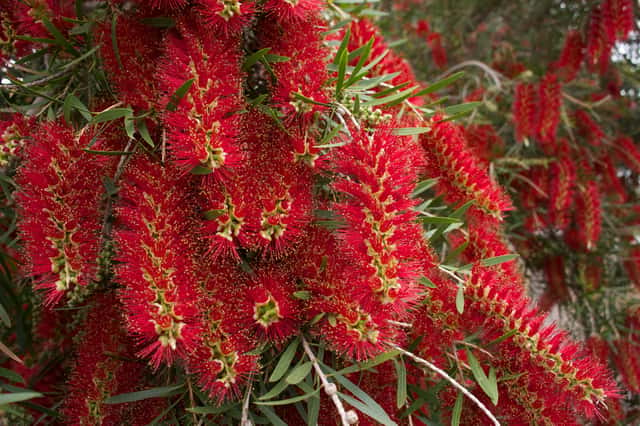
Weeping Bottlebrush (Melaleuca viminalis) is a easy-care plant from the Myrtaceae family. The Weeping Bottlebrush (Melaleuca viminalis) is a fast-growing evergreen shrub or small tree native to eastern Australia, prized for its graceful, pendulous branches and vivid crimson-red bottlebrush-shaped flower spikes that bloom from spring through summer. Its narrow, leathery leaves create a so...
Weeping Bottlebrush grows up to 9.0m, spread of 600cm, watering every 7 days, -5°C – 40°C, 30–70% humidity. It is not suitable for indoor environments and safe for pets.
Unlike many tropical plants, Weeping Bottlebrush tolerates watering mistakes. Best for beginners. Unlike many popular species, Weeping Bottlebrush is safe to keep around pets.
How to Care for Weeping Bottlebrush?
TLDR: Weeping Bottlebrush needs Bright indirect, watering every 7 days, and temperatures between -5-40°C with 30-70% humidity.
How Often Should You Water Weeping Bottlebrush?
Water deeply once a week during the growing season, letting the top few inches of soil dry out between waterings. Established plants tolerate short dry spells, but consistently wet soil invites root rot.
How Much Light Does Weeping Bottlebrush Need?
Plant in full sun for the best flowering display, at least 6 hours of direct light daily. It tolerates partial shade but will bloom less profusely.
What Is the Best Soil for Weeping Bottlebrush?
Use well-draining soil, sandy, loamy, or clay amended with organic matter, with a slightly acidic to neutral pH. Good drainage is essential to prevent root rot.
What Pot Should You Use for Weeping Bottlebrush?
Best grown in the ground; if potted, use a large, well-draining terracotta container that allows excess moisture to escape quickly.
Care Schedule
Fertilize
Every 60 days
What Is Weeping Bottlebrush and Where Does It Come From?
The Weeping Bottlebrush (Melaleuca viminalis) is a fast-growing evergreen shrub or small tree native to eastern Australia, prized for its graceful, pendulous branches and vivid crimson-red bottlebrush-shaped flower spikes that bloom from spring through summer. Its narrow, leathery leaves create a soft, weeping canopy that attracts hummingbirds, bees, and butterflies. Hardy and low-maintenance once established, it thrives in warm climates as a specimen tree, hedge, or screen planting.
How to Propagate Weeping Bottlebrush?
Stem Cutting
Use a sharp, sterilized blade and keep the growing medium moist but not waterlogged; bottom heat can speed up rooting.
- 1 Take a 6-inch semi-hardwood cutting from a healthy, non-flowering stem in summer.
- 2 Strip the leaves from the lower half of the cutting and dip the cut end in rooting hormone.
- 3 Insert the cutting into a well-draining potting mix and keep it consistently moist.
- 4 Place in bright, indirect light and cover with a plastic bag to maintain humidity until roots form.
Materials needed:
Seed Propagation
Seeds need light to germinate, so do not bury them; a warm spot around 21-24C speeds germination.
- 1 Collect dried seed capsules from spent flower spikes and extract the tiny seeds.
- 2 Sow seeds on the surface of a moist, well-draining seed-starting mix.
- 3 Keep in a warm, bright spot and maintain even moisture until germination.
- 4 Transplant seedlings once they develop several true leaves.
Materials needed:
How Big Does Weeping Bottlebrush Grow?
TLDR: Weeping Bottlebrush can reach up to 9.0m tall with Fast growth rate.
Max height
9.0m
Spread
6.0m
Growth rate
Fast
Foliage
Evergreen
Plant Uses
Ornamental
Great for decoration
Is your plant showing symptoms?
Click on the symptom to discover possible causes:
What Diseases Commonly Affect Weeping Bottlebrush?
TLDR: Weeping Bottlebrush is susceptible to 7 known diseases. Monitor regularly for early detection.
Root Rot
Root rot is a serious fungal disease that affects the root system of plants, causing them to decay and die. It is primarily caused by overwatering, poor drainage, or soil-borne fungi such as Pythium, Phytophthora, Rhizoctonia, and Fusarium. The disease thrives in waterlogged conditions where roots are deprived of oxygen, making them susceptible to fungal infection.
Canker
Canker is a disease caused by various fungi and bacteria that create necrotic, sunken areas on bark of branches, stems, and trunks. Pathogens enter through wounds and natural openings, especially when plants are stressed. Canker can gradually weaken or kill branches by disrupting water and nutrient flow.
Powdery Mildew
Powdery mildew is a common fungal disease caused by various fungi species including Erysiphe, Podosphaera, Oïdium, and Leveillula. It affects over 10,000 plant species worldwide. The disease thrives in warm, dry climates with high humidity and appears as a distinctive white powdery coating on plant surfaces.
Leaf Spot
Leaf spot is a common fungal disease caused by various pathogens including Alternaria, Ascochyta, Colletotrichum, Septoria, and Venturia. It primarily affects leaves, causing discolored spots that can lead to premature leaf drop if left untreated.
Meaning & Symbolism
Its cascading, crimson bottlebrush blooms symbolize resilience and vibrant renewal, echoing the untamed beauty of the Australian outback.
Fun Facts
Its bright red flower spikes are actually clusters of stamens, not petals; the true flowers are tiny and hidden.
Weeping Bottlebrush is a favorite nectar source for hummingbirds, bees, and butterflies across warm climates.
Despite belonging to the tea tree genus Melaleuca, this species is grown purely for ornamental beauty rather than its oils.
In its native Australia, it commonly grows along creek banks, which is why it is sometimes called the Creek Bottlebrush.
Frequently asked questions
How often should I water a Weeping Bottlebrush?
Is Weeping Bottlebrush toxic to cats and dogs?
How much sun does a Weeping Bottlebrush need?
Why are the leaves of my bottlebrush turning yellow?
When should I prune my Weeping Bottlebrush?
Compare with similar plants
| Attribute | Difficulty | Light | Watering | Pet Safe |
|---|---|---|---|---|
| Field Maple | Easy | Bright indirect | 14d | ✓ |
| Silver Birch | Easy | Direct sun | 14d | ✓ |
| Common Blanketflower | Easy | Direct sun | 10d | ✓ |
| Cushion Bush | Easy | Direct sun | 14d | ✓ |





