Crassulaceae
Mexican Hens and Chicks: Ground Cover Plant
Echeveria colorata
Echeveria colorata is an easy-care succulent that thrives on neglect. It needs bright direct sunlight, infrequent watering using the soak-and-dry method, and excellent drainage. Avoid getting water on the leaves to prevent rot. Feed lightly during the growing season and repot every two years.
Every 14 days
Direct sun
-3.9° - 35°C
10% - 40%
Categories
What is Mexican Hens and Chicks?
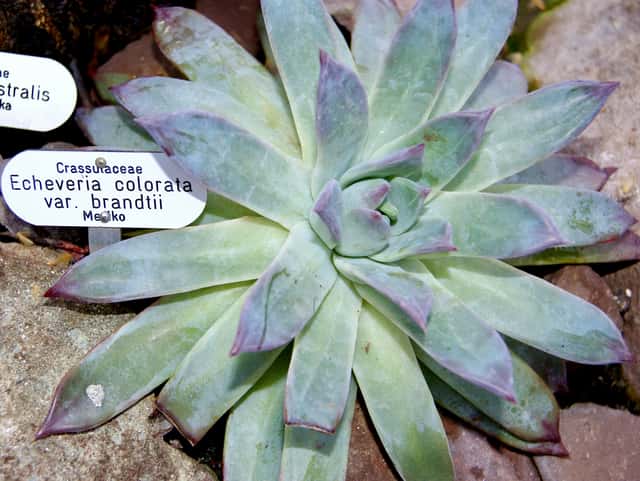
Mexican Hens and Chicks (Echeveria colorata) is a easy-care plant from the Crassulaceae family. Echeveria colorata is a stunning rosette-forming succulent native to the mountains of Mexico (Jalisco). Its pale lavender-grey leaves are tipped with vibrant pink to red margins, creating a jewel-like appearance. In spring and summer it sends up tall arching stems bearing coral-pink to orange bell-s...
Mexican Hens and Chicks grows up to 20cm, spread of 40cm, watering every 14 days, -3.9°C – 35°C, 10–40% humidity. It is suitable for indoor environments and safe for pets.
Unlike many tropical plants, Mexican Hens and Chicks tolerates watering mistakes. Best for beginners. Unlike many popular species, Mexican Hens and Chicks is safe to keep around pets. Without adequate drainage, root rot can develop within 28 days.
How to Care for Mexican Hens and Chicks?
TLDR: Mexican Hens and Chicks needs Direct sun, watering every 14 days, and temperatures between -3.9-35°C with 10-40% humidity.
How Often Should You Water Mexican Hens and Chicks?
Water deeply every 14 days in spring and summer, allowing the soil to dry completely between waterings. Reduce to once a month in winter. Always water at the base — never overhead — to keep the rosette dry and prevent rot.
How Much Light Does Mexican Hens and Chicks Need?
Place in a south- or east-facing window with at least 4–6 hours of direct sun daily. Outdoors, full sun is ideal. If grown indoors with insufficient light, the rosette will etiolate (stretch) and lose its compact form.
What Is the Best Soil for Mexican Hens and Chicks?
Use a fast-draining cactus and succulent mix, ideally amended with 50% perlite or coarse grit. Never use standard potting soil alone — standing moisture around the roots causes root rot quickly in this species.
What Pot Should You Use for Mexican Hens and Chicks?
Terracotta pots are ideal: their porous walls wick away excess moisture and help the roots dry evenly between waterings. Ensure the pot has at least one drainage hole.
Care Schedule
Fertilize
Every 56 days
Rotate
Every 30 days
Repot
Every 730 days
What Is Mexican Hens and Chicks and Where Does It Come From?
Echeveria colorata is a stunning rosette-forming succulent native to the mountains of Mexico (Jalisco). Its pale lavender-grey leaves are tipped with vibrant pink to red margins, creating a jewel-like appearance. In spring and summer it sends up tall arching stems bearing coral-pink to orange bell-shaped flowers beloved by hummingbirds. Like most Echeverias, it produces offsets around the base, forming a charming colony — the origin of its common name "Hens and Chicks".
How Big Does Mexican Hens and Chicks Grow?
TLDR: Mexican Hens and Chicks can reach up to 20cm tall with Slow growth rate.
Max height
20cm
Spread
40cm
Growth rate
Slow
Foliage
Evergreen
Plant Uses
Ornamental
Great for decoration
Ground Cover
Soil coverage
Is your plant showing symptoms?
Click on the symptom to discover possible causes:
What Diseases Commonly Affect Mexican Hens and Chicks?
TLDR: Mexican Hens and Chicks is susceptible to 9 known diseases. Monitor regularly for early detection.
Root Rot
Root rot is a serious fungal disease that affects the root system of plants, causing them to decay and die. It is primarily caused by overwatering, poor drainage, or soil-borne fungi such as Pythium, Phytophthora, Rhizoctonia, and Fusarium. The disease thrives in waterlogged conditions where roots are deprived of oxygen, making them susceptible to fungal infection.
Powdery Mildew
Powdery mildew is a common fungal disease caused by various fungi species including Erysiphe, Podosphaera, Oïdium, and Leveillula. It affects over 10,000 plant species worldwide. The disease thrives in warm, dry climates with high humidity and appears as a distinctive white powdery coating on plant surfaces.
Leaf Spot
Leaf spot is a common fungal disease caused by various pathogens including Alternaria, Ascochyta, Colletotrichum, Septoria, and Venturia. It primarily affects leaves, causing discolored spots that can lead to premature leaf drop if left untreated.
Edema
Edema (also spelled oedema) is a non-infectious physiological disorder caused by an imbalance between water uptake and transpiration. When roots absorb water faster than leaves can release it through transpiration, cells in the leaf tissue swell and burst, forming characteristic wart-like blisters. This is purely a cosmetic issue and does not threaten plant health.
Meaning & Symbolism
In the language of succulents, Echeveria colorata symbolises endurance and quiet beauty — thriving in harsh, rocky environments with minimal resources while producing extraordinary blooms.
Compare with similar plants
| Attribute | Difficulty | Light | Watering | Pet Safe |
|---|---|---|---|---|
| Field Maple | Easy | Bright indirect | 14d | ✓ |
| Silver Birch | Easy | Direct sun | 14d | ✓ |
| Cushion Bush | Easy | Direct sun | 14d | ✓ |
| Peruvian peppertree | Easy | Direct sun | 14d | ⚠️ |
Choose & Compare
Sources & References
- Echeveria Colorata - A Complete Succulent Care Guide - Sublime Succulents
- Echeveria colorata Plant Care & Growing Basics - PlantIn
- Echeveria Colorata Care Guide - Succulents Network
- All About Growing Echeveria - The Succulent Eclectic
- Echeveria Care Guide - Gardening Know How
- Common Echeveria Diseases - Cafe Planta
- Are Echeveria Poisonous? - Plant Addicts
- Toxic and Non-toxic Plants: Blue Echeveria - ASPCA