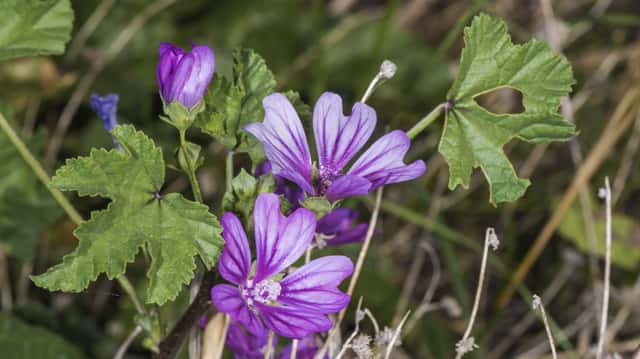
Malvaceae
High Mallow: Growing Guide, Medicinal & Culinary Uses
Malva sylvestris
An easy-care plant suited to outdoor gardens. Thrives in full sun, requires moderate watering, and tolerates a wide range of soils including poor and alkaline conditions. Fast-growing, reaching up to 120 cm tall, with minimal maintenance needs.
Every 5 days
Direct sun
-10° - 35°C
30% - 70%
Categories
What is High mallow?
High mallow (Malva sylvestris) is a easy-care plant from the Malvaceae family. Malva sylvestris, commonly known as high mallow or common mallow, is a biennial or short-lived perennial herb native to Europe, North Africa, and Western Asia. A member of the Malvaceae family, it is easily recognised by its distinctive pinkish-purple flowers with dark veining, blooming from late sp...
High mallow grows up to 1.2m, spread of 60cm, watering every 5 days, -10°C – 35°C, 30–70% humidity. It is not suitable for indoor environments and safe for pets.
Unlike many tropical plants, High mallow tolerates watering mistakes. Best for beginners. Unlike many popular species, High mallow is safe to keep around pets.
How to Care for High mallow?
TLDR: High mallow needs Direct sun, watering every 5 days, and temperatures between -10-35°C with 30-70% humidity.
How Often Should You Water High mallow?
Water every 5 days on average, allowing the top layer of soil to dry slightly between waterings. High mallow is drought-tolerant once established — avoid waterlogging, which promotes root rot.
How Much Light Does High mallow Need?
Prefers full sun (6-8 hours of direct sunlight daily). Tolerates partial shade but produces fewer flowers and becomes more leggy without adequate light.
What Is the Best Soil for High mallow?
Thrives in loamy, well-drained soil with a pH of 6.0–8.0. Tolerates poor, sandy, and slightly clay soils. Improve heavy clay soils with grit or sand for adequate drainage.
What Pot Should You Use for High mallow?
If container-grown, use a large terracotta or ceramic pot (minimum 30 cm diameter) with good drainage holes. Prefers in-ground planting in gardens.
Care Schedule
Fertilize
Every 14 days
Misting
Every 3 days
Rotate
Every 7 days
Repot
Every 365 days
What Is High mallow and Where Does It Come From?
Malva sylvestris, commonly known as high mallow or common mallow, is a biennial or short-lived perennial herb native to Europe, North Africa, and Western Asia. A member of the Malvaceae family, it is easily recognised by its distinctive pinkish-purple flowers with dark veining, blooming from late spring through autumn. The plant has a rich history of culinary and medicinal use across Mediterranean and European cultures, prized for its emollient and anti-inflammatory properties.
How Big Does High mallow Grow?
TLDR: High mallow can reach up to 1.2m tall with Fast growth rate.
Max height
1.2m
Spread
60cm
Growth rate
Fast
Foliage
Deciduous
Plant Uses
Medicinal
Medicinal properties
Edible
Can be consumed
Ornamental
Great for decoration
Medicinal Uses
- Leaf and flower infusion to relieve coughs, bronchitis, and sore throats
- Poultice of fresh leaves to soothe skin inflammation, minor wounds, and insect stings
- Gargle with mallow tea for mouth ulcers and pharyngitis
Culinary Uses
- Young leaves eaten raw in salads or cooked as a vegetable similar to spinach
- Fresh flowers used as edible decoration in salads, desserts, and drinks
- Seed discs called cheeses eaten raw as a snack — nutty and mild-flavoured
Is your plant showing symptoms?
Click on the symptom to discover possible causes:
What Diseases Commonly Affect High mallow?
TLDR: High mallow is susceptible to 6 known diseases. Monitor regularly for early detection.
Rust Fungi
Rust fungi (Pucciniales) are fungal diseases that form rust-colored, usually orange to brown pustules with powdery spore dust on leaves, stems, or fruits. Typical symptoms include small spots that develop into cushions or rings; leaves turn yellow, curl, and drop prematurely. The fungi spread primarily in damp weather and dense foliage. Many ornamental and crop plants are affected, frequently including roses, mallows (hollyhocks), pears (pear rust), and currants. Some rust fungi require two host plants for their life cycle, such as pear and certain juniper species.
Powdery Mildew
Powdery mildew is a common fungal disease caused by various fungi species including Erysiphe, Podosphaera, Oïdium, and Leveillula. It affects over 10,000 plant species worldwide. The disease thrives in warm, dry climates with high humidity and appears as a distinctive white powdery coating on plant surfaces.
Aphids
Aphids are small, soft-bodied, pear-shaped insects (1/16 to 1/8 inch long) that feed by sucking nutrient-rich sap from plants. They reproduce rapidly and can quickly weaken plants, causing distorted growth and transmitting plant viruses. Aphids come in various colors including green, black, red, yellow, brown, and gray. They secrete honeydew, a sticky substance that attracts ants and encourages sooty mold growth.
Leaf Spot
Leaf spot is a common fungal disease caused by various pathogens including Alternaria, Ascochyta, Colletotrichum, Septoria, and Venturia. It primarily affects leaves, causing discolored spots that can lead to premature leaf drop if left untreated.
Meaning & Symbolism
In European folk tradition, high mallow symbolises protection, healing, and gentleness. Its delicate flowers have long been associated with tenderness and the nurturing power of nature.
Fun Facts
Malva sylvestris is one of the oldest known medicinal plants, referenced by Hippocrates, Pliny the Elder, and Charlemagne, who ordered it cultivated in royal gardens.
The round disc-shaped seed pods are called cheeses in English due to their resemblance to a wheel of cheese — they are edible and enjoyed by children.
High mallow was used as an emergency food during famines in ancient Greece and in WWII Europe.
Frequently asked questions
Is high mallow toxic to pets?
When does high mallow bloom?
Can I grow high mallow in a pot?
Compare with similar plants
| Attribute | Difficulty | Light | Watering | Pet Safe |
|---|---|---|---|---|
| Field Maple | Easy | Bright indirect | 14d | ✓ |
| Silver Birch | Easy | Direct sun | 14d | ✓ |
| Cushion Bush | Easy | Direct sun | 14d | ✓ |
| Peruvian peppertree | Easy | Direct sun | 14d | ⚠️ |





