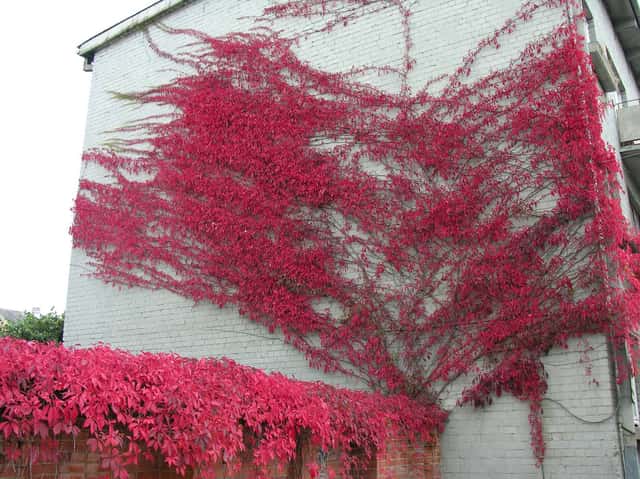
Vitaceae
Woodbine / Virginia Creeper (Parthenocissus) – Care Guide
Parthenocissus
Low-maintenance and very adaptable. Water regularly during the first growing season to establish roots; thereafter, plants are quite drought-tolerant. Plant in well-drained soil and fertilize once in spring. Annual pruning keeps vigorous growth in check. Tolerates full sun to full shade.
Every 10 days
Partial shade
-29° - 35°C
40% - 70%
Categories
What is Woodbine?
Woodbine (Parthenocissus) is a easy-care plant from the Vitaceae family. Parthenocissus is a genus of vigorous, deciduous climbing vines in the family Vitaceae, best known for Virginia Creeper (P. quinquefolia) and Boston Ivy (P. tricuspidata). These fast-growing vines are celebrated for their spectacular autumn foliage that transforms from deep green to brilliant shades...
Woodbine grows up to 30.0m, spread of 900cm, watering every 10 days, -29°C – 35°C, 40–70% humidity. It is not suitable for indoor environments and not safe for pets.
Unlike many tropical plants, Woodbine tolerates watering mistakes. Best for beginners. Without precautions, ingestion can cause irritation in pets. Keep out of reach of cats and dogs.
How to Care for Woodbine?
TLDR: Woodbine needs Partial shade, watering every 10 days, and temperatures between -29-35°C with 40-70% humidity.
How Often Should You Water Woodbine?
Water every 7-14 days during the growing season. Once established, Parthenocissus is drought-tolerant and may not need supplemental watering except during prolonged dry spells.
How Much Light Does Woodbine Need?
Grows well in full sun to full shade. Best autumn colour and most vigorous growth occur in at least half a day of direct sun. Will tolerate heavy shade but may show reduced fall colour.
What Is the Best Soil for Woodbine?
Thrives in almost any well-drained soil with a pH of 5.0–7.5. Tolerates clay, sandy, and compacted soils. Amend with organic matter at planting for best establishment.
Care Schedule
Fertilize
Every 90 days
Misting
Every 3 days
Rotate
Every 7 days
Repot
Every 365 days
What Is Woodbine and Where Does It Come From?
Parthenocissus is a genus of vigorous, deciduous climbing vines in the family Vitaceae, best known for Virginia Creeper (P. quinquefolia) and Boston Ivy (P. tricuspidata). These fast-growing vines are celebrated for their spectacular autumn foliage that transforms from deep green to brilliant shades of red, crimson, and burgundy. They are widely planted to cover walls, fences, and structures, and are among the most effective ornamental climbers for large-scale coverage.
How Big Does Woodbine Grow?
TLDR: Woodbine can reach up to 30.0m tall with Fast growth rate.
Max height
30.0m
Spread
9.0m
Growth rate
Fast
Foliage
Deciduous
Warning: Toxic Plant
This plant can be toxic if ingested. Keep out of reach of:
Plant Uses
Ornamental
Great for decoration
Ground Cover
Soil coverage
Is your plant showing symptoms?
Click on the symptom to discover possible causes:
What Diseases Commonly Affect Woodbine?
TLDR: Woodbine is susceptible to 10 known diseases. Monitor regularly for early detection.
Downy Mildew
Downy mildew is a fungal-like disease caused by oomycetes (water molds) that thrives in cool, wet conditions. It affects a wide range of plants, causing yellowing leaves with fuzzy white-gray growth underneath, leading to defoliation and reduced yields if left untreated.
Powdery Mildew
Leaf Spot
Leaf spot is a common fungal disease caused by various pathogens including Alternaria, Ascochyta, Colletotrichum, Septoria, and Venturia. It primarily affects leaves, causing discolored spots that can lead to premature leaf drop if left untreated.
Cercospora Leaf Spot
Cercospora leaf spot is a common fungal disease caused by Cercospora species that affects many plant types, particularly beets, roses, and leafy vegetables. The disease thrives in warm, humid conditions and can cause significant defoliation, reducing plant vigor and yield. It spreads rapidly through water splash, wind, and contaminated tools.
Fun Facts
Parthenocissus tendrils have adhesive discs that allow the vine to cling to smooth walls without any additional support
Virginia Creeper can grow 6–10 feet in a single season under ideal conditions
Despite superficial similarity, Virginia Creeper is NOT related to Poison Ivy – it has 5 leaflets rather than 3
The dark blue berries are toxic to humans but are an important food source for over 30 bird species
Compare with similar plants
| Attribute | Difficulty | Light | Watering | Pet Safe |
|---|---|---|---|---|
| Field Maple | Easy | Bright indirect | 14d | ✓ |
| Silver Birch | Easy | Direct sun | 14d | ✓ |
| Cushion Bush | Easy | Direct sun | 14d | ✓ |
| Peruvian peppertree | Easy | Direct sun | 14d | ⚠️ |





