Poaceae
Corn: Edible Plant
Zea mays
Corn requires full sun and fertile soil to thrive. It is essential to maintain constant moisture, especially during the pollination and grain formation stages.
Every 4 days
Direct sun
16° - 35°C
50% - 80%
Categories
What is Corn?
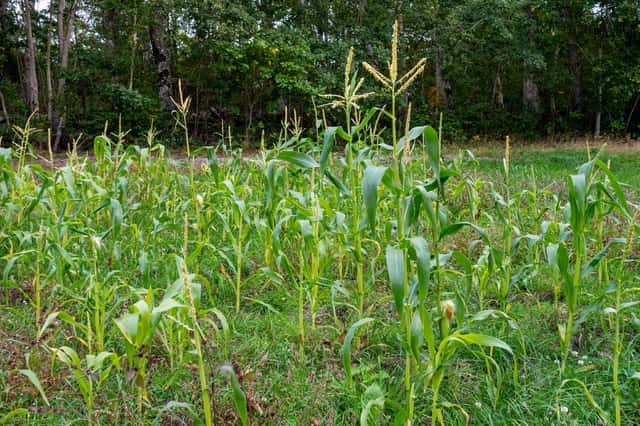
Corn (Zea mays) is a easy-care plant from the Poaceae family. Zea mays, commonly known as corn or maize, is an annual grass native to Mesoamerica. It is one of the world's most important crops, characterized by its rapid growth, sturdy stalks, and the production of ears enclosed in husks. Beyond its economic importance, it is a plant of great cultural and nutr...
Corn grows up to 3.0m, spread of 60cm, watering every 4 days, 16°C – 35°C, 50–80% humidity. It is not suitable for indoor environments and safe for pets.
Unlike many tropical plants, Corn tolerates watering mistakes. Best for beginners. Unlike many popular species, Corn is safe to keep around pets.
How to Care for Corn?
TLDR: Corn needs Direct sun, watering every 4 days, and temperatures between 16-35°C with 50-80% humidity.
How Often Should You Water Corn?
Water at the base of the plant to prevent fungal growth on the leaves and ensure deep watering during the summer.
How Much Light Does Corn Need?
Place in a location with full direct sun exposure; shade drastically reduces grain production and plant vigor.
What Is the Best Soil for Corn?
Use soil rich in nitrogen and organic matter, ensuring it is deep enough for the prop roots.
What Pot Should You Use for Corn?
Ideally planted directly in the ground, but can be grown in large pots of at least 30 liters (8 gallons) with good drainage.
Care Schedule
Fertilize
Every 30 days
What Is Corn and Where Does It Come From?
Zea mays, commonly known as corn or maize, is an annual grass native to Mesoamerica. It is one of the world's most important crops, characterized by its rapid growth, sturdy stalks, and the production of ears enclosed in husks. Beyond its economic importance, it is a plant of great cultural and nutritional value for many civilizations.
How to Propagate Corn?
Direct Sowing
- Plant in blocks (squares) rather than a single long row to ensure efficient wind pollination.
- Keep the soil moist but not waterlogged during germination.
- 1 Soil preparation
Till the soil to a depth of 20cm (8 inches) and add nitrogen-rich organic compost.
- 2 Planting
Bury the seeds about 3 to 5 cm (1 to 2 inches) deep.
- 3 Spacing
Maintain a spacing of 20-30 cm (8-12 inches) between plants to allow for root development and air circulation.
Materials needed:
How Big Does Corn Grow?
TLDR: Corn can reach up to 3.0m tall with Fast growth rate.
Max height
3.0m
Spread
60cm
Growth rate
Fast
Foliage
Deciduous
Plant Uses
Edible
Can be consumed
Medicinal
Medicinal properties
Ornamental
Great for decoration
Medicinal Uses
- Diuretic (via corn silk tea)
- Aid in the treatment of urinary tract infections
Culinary Uses
- Boiled or roasted kernels
- Pamonha (corn tamales)
- Corn pudding (Curau)
- Popcorn
- Cornmeal
- Corn oil
Is your plant showing symptoms?
Click on the symptom to discover possible causes:
What Diseases Commonly Affect Corn?
TLDR: Corn is susceptible to 19 known diseases. Monitor regularly for early detection.
Rust
Rust is a common fungal disease caused by fungi in the order Pucciniales that affects a wide variety of plants. The disease gets its name from the characteristic orange, yellow, or reddish-brown pustules that appear on leaves, resembling metal rust. This obligate fungal parasite requires living plants to survive and can cause significant economic losses in agricultural crops.
Anthracnose
Anthracnose is a fungal disease caused by fungi in the genus Colletotrichum that affects many plants, including vegetables, fruits, and trees. The disease thrives in cool, wet conditions, causing dark, sunken lesions on leaves, stems, flowers, and fruits.
Cercospora Leaf Spot
Cercospora leaf spot is a common fungal disease caused by Cercospora species that affects many plant types, particularly beets, roses, and leafy vegetables. The disease thrives in warm, humid conditions and can cause significant defoliation, reducing plant vigor and yield. It spreads rapidly through water splash, wind, and contaminated tools.
Pythium Root Rot
Pythium root rot is a serious fungal disease caused by various Pythium species including P. aphanidermatum, P. ultimum, and P. irregulare. These water molds are present in practically all cultivated soils and attack plant roots under wet conditions, causing rapid wet rot that can extend into the stem. The disease is favored by poor drainage, overwatering, and specific temperatures depending on the species.
Meaning & Symbolism
Represents life, abundance, fertility, and essential sustenance for the peoples of the Americas.
Compare with similar plants
| Attribute | Difficulty | Light | Watering | Pet Safe |
|---|---|---|---|---|
| Field Maple | Easy | Bright indirect | 14d | ✓ |
| Silver Birch | Easy | Direct sun | 14d | ✓ |
| Cushion Bush | Easy | Direct sun | 14d | ✓ |
| Peruvian peppertree | Easy | Direct sun | 14d | ⚠️ |