Aspleniaceae
Hen and Chickens Fern (Asplenium bulbiferum)
Asplenium bulbiferum
Easy to grow and ideal for shaded or partially shaded environments. Prefers moist, organic-rich, well-drained soil. Keep humidity high and avoid direct sunlight. Water regularly without waterlogging. Propagates easily from bulbils that form on mature fronds.
Every 7 days
Low light
10° - 26°C
50% - 80%
Categories
What is Hen and Chickens Fern?
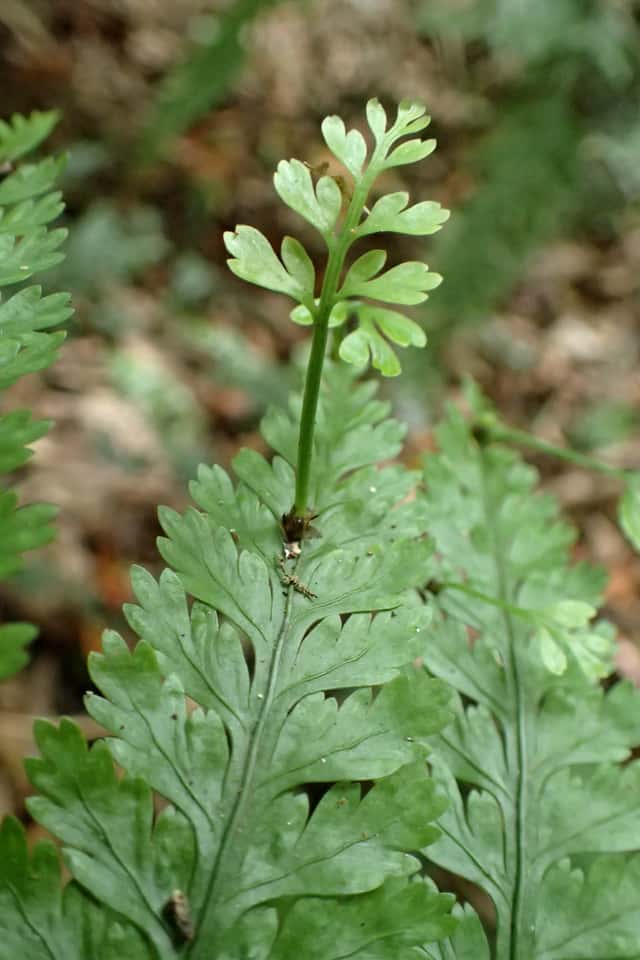
Hen and Chickens Fern (Asplenium bulbiferum) is a easy-care plant from the Aspleniaceae family. The Hen and Chickens Fern (Asplenium bulbiferum) is an elegant fern native to New Zealand and nearby islands, celebrated for its finely divided, bright-green fronds and its remarkable ability to produce tiny plantlets (bulbils) directly on mature fronds. This unique characteristic inspired its whims...
Hen and Chickens Fern grows up to 1.2m, spread of 100cm, watering every 7 days, 10°C – 26°C, 50–80% humidity. It is suitable for indoor environments and safe for pets.
Unlike many tropical plants, Hen and Chickens Fern tolerates watering mistakes. Best for beginners. Unlike many popular species, Hen and Chickens Fern is safe to keep around pets. Without adequate drainage, root rot can develop within 14 days.
How to Care for Hen and Chickens Fern?
TLDR: Hen and Chickens Fern needs Low light, watering every 7 days, and temperatures between 10-26°C with 50-80% humidity.
How Often Should You Water Hen and Chickens Fern?
Water every 7 days or when the top of the soil feels slightly dry. Never allow the soil to dry out completely or become waterlogged. Avoid pouring water into the crown of the plant to prevent crown rot. Room-temperature water is preferred.
How Much Light Does Hen and Chickens Fern Need?
Place in bright indirect light to partial shade. Avoid direct sunlight, especially midday sun, which can scorch the fronds. Tolerates low-light conditions but grows best with some filtered light.
What Is the Best Soil for Hen and Chickens Fern?
Use a peaty, organic-rich, well-draining potting mix. A blend of peat moss, perlite, and orchid bark works well. The ideal pH range is 5.5–6.5 (slightly acidic).
What Pot Should You Use for Hen and Chickens Fern?
Ceramic or terracotta pots with drainage holes are ideal as they allow air exchange. Hanging baskets also work beautifully, showcasing the plant's cascading frond display.
Care Schedule
Fertilize
Every 60 days
Misting
Every 3 days
Repot
Every 730 days
What Is Hen and Chickens Fern and Where Does It Come From?
The Hen and Chickens Fern (Asplenium bulbiferum) is an elegant fern native to New Zealand and nearby islands, celebrated for its finely divided, bright-green fronds and its remarkable ability to produce tiny plantlets (bulbils) directly on mature fronds. This unique characteristic inspired its whimsical common name, as the plantlets resemble chicks clustering around a mother hen. It is widely grown as an indoor houseplant and in shaded garden settings.
How to Propagate Hen and Chickens Fern?
Spore propagation
Propagation from bulbils is far easier and faster. Simply remove the plantlets forming on mature fronds and pot them in moist substrate.
- 1 Collect mature spores from frond undersides
- 2 Sow on sterile, moist growing medium
- 3 Cover with clear plastic to maintain humidity
- 4 Keep in a warm, shaded location and await germination
Materials needed:
Clump division
Divide only healthy, mature plants. Keep divisions moist during the first few weeks after planting.
- 1 Remove the plant from its pot in early spring
- 2 Divide the root clump into sections, each with roots
- 3 Plant each section in fresh potting mix
- 4 Water well and keep in a shaded location
Materials needed:
How Big Does Hen and Chickens Fern Grow?
TLDR: Hen and Chickens Fern can reach up to 1.2m tall with Medium growth rate.
Max height
1.2m
Spread
1.0m
Growth rate
Medium
Foliage
Evergreen
Plant Uses
Ornamental
Great for decoration
Edible
Can be consumed
Medicinal
Medicinal properties
Medicinal Uses
- Used in traditional Māori medicine (rongoā) to treat various ailments
Culinary Uses
- Young fronds (pikopiko) are edible and used in Māori cuisine, eaten raw or cooked as a traditional vegetable
Is your plant showing symptoms?
Click on the symptom to discover possible causes:
What Diseases Commonly Affect Hen and Chickens Fern?
TLDR: Hen and Chickens Fern is susceptible to 10 known diseases. Monitor regularly for early detection.
Root Rot
Root rot is a serious fungal disease that affects the root system of plants, causing them to decay and die. It is primarily caused by overwatering, poor drainage, or soil-borne fungi such as Pythium, Phytophthora, Rhizoctonia, and Fusarium. The disease thrives in waterlogged conditions where roots are deprived of oxygen, making them susceptible to fungal infection.
Crown Rot
Crown rot is a serious fungal disease that attacks the crown (base) of the plant where the stem meets the soil. It is caused by various fungal pathogens including Phytophthora, Fusarium, and Rhizoctonia. The disease thrives in waterlogged conditions and can quickly spread to kill the entire plant if not addressed promptly.
Overwatering
Overwatering occurs when plants receive too much water, depriving roots of oxygen and causing root rot. This environmental stress is one of the most common causes of houseplant death, as waterlogged soil prevents roots from breathing and functioning properly.
Slugs and Snails
Slugs and snails are mollusks that feed on plant tissue, causing irregular holes in leaves and damage to young seedlings. They are most active at night and in moist conditions, leaving characteristic silvery slime trails. These pests can quickly devastate gardens, especially during wet seasons.
Meaning & Symbolism
In Māori culture of New Zealand, the young fronds (pikopiko) are a traditional food source and the plant is used in rongoā (traditional Māori medicine), symbolising resilience and a deep connection to the forest.
Fun Facts
Produces tiny plantlets called bulbils directly on its own fronds — a unique trait among ferns
The young fronds, known as pikopiko, are a traditional Māori food in New Zealand
Can reach up to 120 cm tall under ideal growing conditions
Native to the temperate rainforests of New Zealand, where it grows in rich, shaded soils
Frequently asked questions
How often should I water the Hen and Chickens Fern?
Is the Hen and Chickens Fern toxic to cats and dogs?
How do I propagate the Hen and Chickens Fern?
What light does the Hen and Chickens Fern need?
How often does it need repotting?
Compare with similar plants
| Attribute | Difficulty | Light | Watering | Pet Safe |
|---|---|---|---|---|
| Field Maple | Easy | Bright indirect | 14d | ✓ |
| Silver Birch | Easy | Direct sun | 14d | ✓ |
| Cushion Bush | Easy | Direct sun | 14d | ✓ |
| Peruvian peppertree | Easy | Direct sun | 14d | ⚠️ |





