Primulaceae
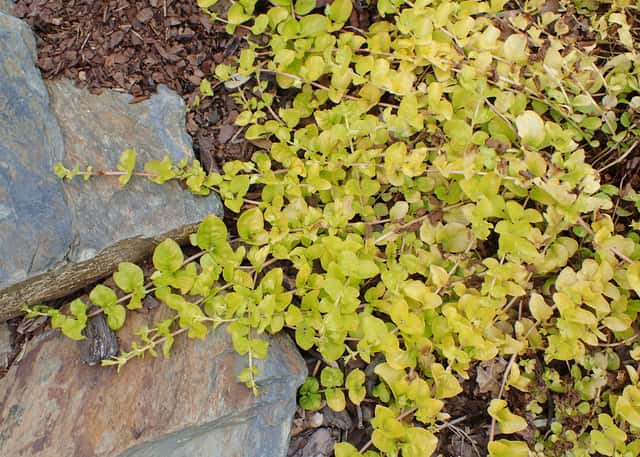
Golden Creeping Jenny (Lysimachia nummularia 'Aurea')
Lysimachia nummularia 'Aurea'
An easy-care, fast-growing perennial ground cover. Thrives in moist soil with full sun to partial shade. The golden color is most vivid in full sun. Can spread aggressively — regular pruning keeps it contained. Extremely cold-hardy down to -15°C.
Every 3 days
Partial shade
-15° - 30°C
40% - 80%
Categories
What is Golden Creeping Jenny?
Golden Creeping Jenny (Lysimachia nummularia 'Aurea') is a easy-care plant from the Primulaceae family. Lysimachia nummularia 'Aurea' is a golden-foliaged cultivar of the European Creeping Jenny, forming dense, low-growing mats of bright yellow-green to golden foliage. It is widely used as a ground cover, in bog gardens, along water features, and in hanging baskets.
Golden Creeping Jenny grows up to 10cm, spread of 100cm, watering every 3 days, -15°C – 30°C, 40–80% humidity. It is suitable for indoor environments and safe for pets.
Unlike many tropical plants, Golden Creeping Jenny tolerates watering mistakes. Best for beginners. Unlike many popular species, Golden Creeping Jenny is safe to keep around pets. Without adequate drainage, root rot can develop within 7 days.
How to Care for Golden Creeping Jenny?
TLDR: Golden Creeping Jenny needs Partial shade, watering every 3 days, and temperatures between -15-30°C with 40-80% humidity.
How Often Should You Water Golden Creeping Jenny?
Water every 2-3 days to maintain consistently moist soil. Container plants may need daily watering during hot summer months. Avoid prolonged waterlogging to prevent root rot, but never let the soil dry out completely.
How Much Light Does Golden Creeping Jenny Need?
Grows well in full sun to partial shade. Full sun produces the most vibrant golden foliage color. In heavy shade, leaves revert to lime-green. Avoid harsh midday sun in very hot climates, which can scorch leaves.
What Is the Best Soil for Golden Creeping Jenny?
Prefers humus-rich, moist, well-draining loamy soil. Tolerates clay and sandy soils. pH range of 5.5–7.5 is ideal. Excellent for rain gardens, pond edges, and consistently damp areas.
What Pot Should You Use for Golden Creeping Jenny?
Shallow, wide containers showcase the trailing habit beautifully. Hanging baskets allow stems to cascade gracefully. Always ensure drainage holes to prevent waterlogging.
Care Schedule
Fertilize
Every 365 days
What Is Golden Creeping Jenny and Where Does It Come From?
Lysimachia nummularia 'Aurea' is a golden-foliaged cultivar of the European Creeping Jenny, forming dense, low-growing mats of bright yellow-green to golden foliage. It is widely used as a ground cover, in bog gardens, along water features, and in hanging baskets.
How to Propagate Golden Creeping Jenny?
Stem Cutting
This plant roots effortlessly — stems root naturally wherever they touch soil. Use clean, sharp scissors.
- 1 Cut a healthy stem 5-10 cm long with 2-3 pairs of leaves
- 2 Remove leaves from the lower third of the stem
- 3 Place the cutting in clean water or moist potting mix
- 4 Keep in bright indirect light; change water every 3 days if water propagating
- 5 Transplant when roots reach 2-3 cm
Materials needed:
Division
Division is the easiest propagation method and can be done whenever the plant needs thinning.
- 1 Lift the plant from the ground or pot carefully
- 2 Separate rooted sections by hand into smaller clumps
- 3 Replant each section in a new location with moist soil
- 4 Water thoroughly after replanting
Materials needed:
How Big Does Golden Creeping Jenny Grow?
TLDR: Golden Creeping Jenny can reach up to 10cm tall with Fast growth rate.
Max height
10cm
Spread
1.0m
Growth rate
Fast
Foliage
Evergreen
Plant Uses
Ornamental
Great for decoration
Ground Cover
Soil coverage
Is your plant showing symptoms?
Click on the symptom to discover possible causes:
What Diseases Commonly Affect Golden Creeping Jenny?
TLDR: Golden Creeping Jenny is susceptible to 5 known diseases. Monitor regularly for early detection.
Rust
Rust is a common fungal disease caused by fungi in the order Pucciniales that affects a wide variety of plants. The disease gets its name from the characteristic orange, yellow, or reddish-brown pustules that appear on leaves, resembling metal rust. This obligate fungal parasite requires living plants to survive and can cause significant economic losses in agricultural crops.
Leaf Spot
Leaf spot is a common fungal disease caused by various pathogens including Alternaria, Ascochyta, Colletotrichum, Septoria, and Venturia. It primarily affects leaves, causing discolored spots that can lead to premature leaf drop if left untreated.
Root Rot
Root rot is a serious fungal disease that affects the root system of plants, causing them to decay and die. It is primarily caused by overwatering, poor drainage, or soil-borne fungi such as Pythium, Phytophthora, Rhizoctonia, and Fusarium. The disease thrives in waterlogged conditions where roots are deprived of oxygen, making them susceptible to fungal infection.
Aphids
Aphids are small, soft-bodied, pear-shaped insects (1/16 to 1/8 inch long) that feed by sucking nutrient-rich sap from plants. They reproduce rapidly and can quickly weaken plants, causing distorted growth and transmitting plant viruses. Aphids come in various colors including green, black, red, yellow, brown, and gray. They secrete honeydew, a sticky substance that attracts ants and encourages sooty mold growth.
Fun Facts
Native to Europe, Lysimachia nummularia has naturalized across much of North America
The 'Aurea' cultivar was selected for its golden foliage, which intensifies in brighter light
Stems root naturally wherever they touch moist soil, making propagation almost effortless
The cup-shaped yellow flowers attract bees and other pollinators throughout summer
Frequently asked questions
How often should I water Golden Creeping Jenny?
Is Golden Creeping Jenny toxic to pets?
How do I prevent Golden Creeping Jenny from spreading too much?
Will it survive winter?
Can I grow Golden Creeping Jenny in an aquarium?
Compare with similar plants
| Attribute | Difficulty | Light | Watering | Pet Safe |
|---|---|---|---|---|
| Field Maple | Easy | Bright indirect | 14d | ✓ |
| Silver Birch | Easy | Direct sun | 14d | ✓ |
| Cushion Bush | Easy | Direct sun | 14d | ✓ |
| Peruvian peppertree | Easy | Direct sun | 14d | ⚠️ |





