Iridaceae
Montbretia — Complete Plant Care Guide
Crocosmia × crocosmiiflora
Montbretia is a low-maintenance, vigorous perennial that thrives with minimal care. Plant corms in a sunny, well-drained spot in autumn or early spring. Water regularly during the growing season, reduce watering after flowering, and allow to go dormant in winter. Divide clumps every 3–4 years to maintain vigour.
Every 7 days
Bright indirect
-10° - 35°C
30% - 50%
Categories
What is Montbretia?
Montbretia (Crocosmia × crocosmiiflora) is a easy-care plant from the Iridaceae family. Montbretia (Crocosmia × crocosmiiflora) is a hybrid perennial corm-forming plant in the family Iridaceae, created by crossing Crocosmia aurea and Crocosmia pottsii by French horticulturist Victor Lemoine in 1880. It produces arching stems bearing funnel-shaped flowers in vivid shades of orange to re...
Montbretia grows up to 1.2m, spread of 60cm, watering every 7 days, -10°C – 35°C, 30–50% humidity. It is not suitable for indoor environments and safe for pets.
Unlike many tropical plants, Montbretia tolerates watering mistakes. Best for beginners. Unlike many popular species, Montbretia is safe to keep around pets.
How to Care for Montbretia?
TLDR: Montbretia needs Bright indirect, watering every 7 days, and temperatures between -10-35°C with 30-50% humidity.
How Often Should You Water Montbretia?
Water once a week during the active growing season (spring through summer), ensuring the soil is moist but never waterlogged. After flowering ends in early autumn, gradually reduce watering. During winter dormancy, watering is rarely needed unless conditions are exceptionally dry.
How Much Light Does Montbretia Need?
Montbretia thrives in full sun to partial shade, requiring at least 6 hours of direct sunlight daily for best flowering. In very hot climates, light afternoon shade can help prolong bloom time and prevent leaf scorch.
What Is the Best Soil for Montbretia?
Plant in well-draining, moderately fertile soil enriched with compost. Avoid heavy clay or waterlogged conditions, which cause corm rot. A soil pH of 6.0–7.0 is ideal.
What Pot Should You Use for Montbretia?
Garden bed or terracotta pot with drainage holes
What Is Montbretia and Where Does It Come From?
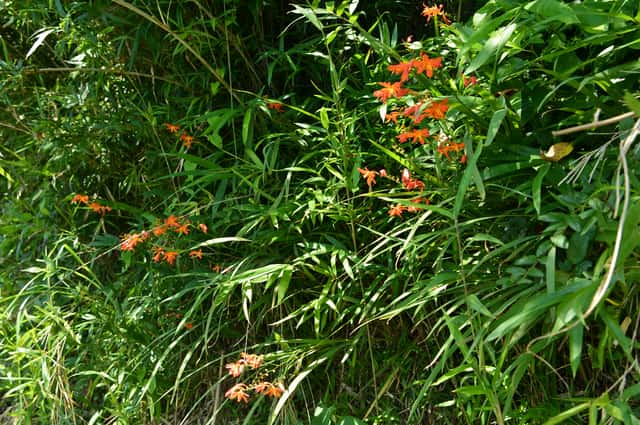
Montbretia (Crocosmia × crocosmiiflora) is a hybrid perennial corm-forming plant in the family Iridaceae, created by crossing Crocosmia aurea and Crocosmia pottsii by French horticulturist Victor Lemoine in 1880. It produces arching stems bearing funnel-shaped flowers in vivid shades of orange to red from mid-summer through early autumn. The foliage consists of bright green, sword-like leaves that emerge in spring and die back in winter. Widely grown in temperate gardens, it can naturalise readily and spread vigorously in mild, moist climates.
How Big Does Montbretia Grow?
TLDR: Montbretia can reach up to 1.2m tall with Fast growth rate.
Max height
1.2m
Spread
60cm
Growth rate
Fast
Foliage
Deciduous
Plant Uses
Ornamental
Great for decoration
Is your plant showing symptoms?
Click on the symptom to discover possible causes:
What Diseases Commonly Affect Montbretia?
TLDR: Montbretia is susceptible to 5 known diseases. Monitor regularly for early detection.
Spider Mites
Spider mites are tiny arachnids (less than 1/20 inch long) related to spiders and ticks that feed on plant sap. They thrive in hot, dry conditions and can cause significant damage to ornamental and vegetable plants. During severe infestations, crop losses can reach 14% or higher as these pests disrupt vital plant processes including photosynthesis, carbon dioxide absorption, and transpiration.
Thrips
Thrips are tiny cigar-shaped insects (1/25-inch long) that damage plants by sucking plant juices and scraping at fruits, flowers, and leaves. With over 6,000 species and rapid reproduction (lifecycle as short as 14 days), they can quickly infest plants and transmit viruses like tomato spotted wilt virus.
Rust
Rust is a common fungal disease caused by fungi in the order Pucciniales that affects a wide variety of plants. The disease gets its name from the characteristic orange, yellow, or reddish-brown pustules that appear on leaves, resembling metal rust. This obligate fungal parasite requires living plants to survive and can cause significant economic losses in agricultural crops.
Root Rot
Root rot is a serious fungal disease that affects the root system of plants, causing them to decay and die. It is primarily caused by overwatering, poor drainage, or soil-borne fungi such as Pythium, Phytophthora, Rhizoctonia, and Fusarium. The disease thrives in waterlogged conditions where roots are deprived of oxygen, making them susceptible to fungal infection.
Meaning & Symbolism
Montbretia symbolizes passion, fiery enthusiasm, and vibrant energy. Its flame-coloured blooms are associated with warmth, boldness, and joyful intensity.
Fun Facts
Montbretia was created in 1880 by French horticulturist Victor Lemoine by crossing two South African species.
Its tubular flowers are magnets for hummingbirds, butterflies, and bees.
It has naturalised extensively in the British Isles, parts of New Zealand, and Madeira, where it can be considered invasive.
The name "crocosmia" comes from the Greek for "saffron smell" — dried flowers release a saffron-like scent when dipped in water.
Frequently asked questions
Is Montbretia toxic to pets?
How do I stop Montbretia from spreading too much?
When does Montbretia flower?
Compare with similar plants
| Attribute | Difficulty | Light | Watering | Pet Safe |
|---|---|---|---|---|
| Field Maple | Easy | Bright indirect | 14d | ✓ |
| Silver Birch | Easy | Direct sun | 14d | ✓ |
| Cushion Bush | Easy | Direct sun | 14d | ✓ |
| Peruvian peppertree | Easy | Direct sun | 14d | ⚠️ |
Choose & Compare
Sources & References
- Montbretia (Crocosmia × Crocosmiiflora) Care Guide - Plantiary
- How to Plant, Grow and Care for Crocosmia Flowers - Planet Natural
- Crocosmia Plant Diseases: Fixing Problems With Crocosmia - Gardening Know How
- How To Grow Crocosmias - BBC Gardeners World Magazine
- Crocosmia - NC Extension Gardener Plant Toolbox