Rosaceae
Wild Strawberry - Fragaria vesca
Fragaria vesca
Easy to grow in full sun to partial shade with well-draining, fertile soil. Water regularly to keep soil moist but never waterlogged. Spreads via runners and is very low-maintenance once established.
Every 3 days
Bright indirect
-15° - 30°C
40% - 70%
Categories
What is Wild Strawberry?
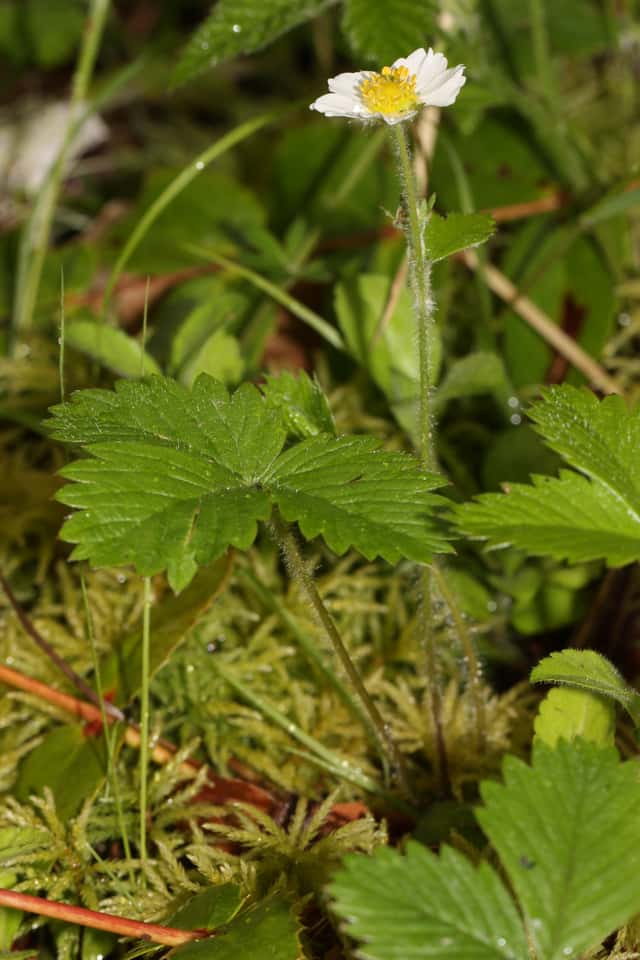
Wild Strawberry (Fragaria vesca) is a easy-care plant from the Rosaceae family. Fragaria vesca, commonly known as Wild Strawberry or Woodland Strawberry, is a delicate perennial native to Eurasia and North America. It produces small, intensely aromatic red fruits that are prized for their exceptional flavour — far superior in taste to cultivated varieties. Its white five-petall...
Wild Strawberry grows up to 23cm, spread of 30cm, watering every 3 days, -15°C – 30°C, 40–70% humidity. It is not suitable for indoor environments and safe for pets.
Unlike many tropical plants, Wild Strawberry tolerates watering mistakes. Best for beginners. Unlike many popular species, Wild Strawberry is safe to keep around pets.
How to Care for Wild Strawberry?
TLDR: Wild Strawberry needs Bright indirect, watering every 3 days, and temperatures between -15-30°C with 40-70% humidity.
How Often Should You Water Wild Strawberry?
Water every 2–4 days during the growing season, keeping the soil consistently moist. Water at the base to avoid wetting foliage, which can encourage fungal diseases. Reduce watering in cooler months.
How Much Light Does Wild Strawberry Need?
Prefers full sun for best fruit production, but tolerates partial shade. In hot climates, provide afternoon shade to prevent leaf scorch. At least 6 hours of sunlight per day is ideal.
What Is the Best Soil for Wild Strawberry?
Plant in fertile, well-draining soil with a pH of 5.4–6.8. Enrich with organic matter such as compost. Avoid heavy clay or waterlogged conditions to prevent root rot.
What Pot Should You Use for Wild Strawberry?
Terracotta or ceramic pots with drainage holes are ideal for containers. Use a pot at least 20cm wide. Hanging baskets also work well to let runners cascade naturally.
Care Schedule
Fertilize
Every 90 days
What Is Wild Strawberry and Where Does It Come From?
Fragaria vesca, commonly known as Wild Strawberry or Woodland Strawberry, is a delicate perennial native to Eurasia and North America. It produces small, intensely aromatic red fruits that are prized for their exceptional flavour — far superior in taste to cultivated varieties. Its white five-petalled flowers and tri-foliate leaves make it an attractive ground cover in gardens, meadows, and woodland edges.
How to Propagate Wild Strawberry?
Seed propagation
Refrigerate seeds for 2-4 weeks before sowing to improve germination rates. Use a propagator or cover with plastic to retain moisture.
- 1 Sow seeds on moist seed compost without covering deeply
- 2 Maintain temperature of 18-21°C
- 3 Keep compost consistently moist until germination
- 4 Transplant seedlings when large enough to handle
Materials needed:
Runner division
This is the easiest and fastest propagation method. Runners can be rooted directly in their permanent spot.
- 1 Identify healthy runners (stolons) spreading from the mother plant
- 2 Pin the runner tip to moist soil in a pot or beside the plant
- 3 Wait until the new plant has developed roots
- 4 Sever the runner and transplant the new plant
Materials needed:
How Big Does Wild Strawberry Grow?
TLDR: Wild Strawberry can reach up to 23cm tall with Medium growth rate.
Max height
23cm
Spread
30cm
Growth rate
Medium
Foliage
Semi-evergreen
Plant Uses
Edible
Can be consumed
Medicinal
Medicinal properties
Ground Cover
Soil coverage
Ornamental
Great for decoration
Medicinal Uses
- Leaf infusions traditionally used to treat digestive complaints and urinary tract issues
- Rich in vitamin C and antioxidants
- Roots and leaves used in folk medicine as an anti-inflammatory and mild diuretic
Culinary Uses
- Fruits eaten fresh or used in jams, jellies, sauces, and liqueurs
- Leaves used to make herbal teas
- Flowers are edible and used as garnishes
- Historically harvested in large quantities in Turkey for gourmet export markets
Is your plant showing symptoms?
Click on the symptom to discover possible causes:
What Diseases Commonly Affect Wild Strawberry?
TLDR: Wild Strawberry is susceptible to 7 known diseases. Monitor regularly for early detection.
Powdery Mildew
Powdery mildew is a common fungal disease caused by various fungi species including Erysiphe, Podosphaera, Oïdium, and Leveillula. It affects over 10,000 plant species worldwide. The disease thrives in warm, dry climates with high humidity and appears as a distinctive white powdery coating on plant surfaces.
Gray Mold (Botrytis Blight)
Gray mold, caused by the fungus Botrytis cinerea, is a widespread necrotrophic pathogen affecting over 1,400 plant species. It thrives in cool, humid conditions and attacks weakened or aging plant tissues, causing soft rot and characteristic gray fuzzy growth.
Root Rot
Root rot is a serious fungal disease that affects the root system of plants, causing them to decay and die. It is primarily caused by overwatering, poor drainage, or soil-borne fungi such as Pythium, Phytophthora, Rhizoctonia, and Fusarium. The disease thrives in waterlogged conditions where roots are deprived of oxygen, making them susceptible to fungal infection.
Leaf Spot
Leaf spot is a common fungal disease caused by various pathogens including Alternaria, Ascochyta, Colletotrichum, Septoria, and Venturia. It primarily affects leaves, causing discolored spots that can lead to premature leaf drop if left untreated.
Meaning & Symbolism
Symbol of purity, innocence, and the fleeting pleasures of summer. In medieval European tradition, wild strawberries were associated with Venus and righteousness.
Fun Facts
Wild strawberries have been eaten by humans since the Stone Age, with evidence of consumption dating back thousands of years
The fruits of Fragaria vesca are far more intensely flavoured than modern cultivated strawberries, though they are much smaller
Turkey harvests hundreds of tons of wild strawberries annually, mainly for gourmet export markets across Europe
Wild strawberry plants are everbearing, producing flowers and fruits simultaneously from spring through to autumn
Frequently asked questions
How often should I water Wild Strawberry?
Can Wild Strawberry grow in shade?
Is Wild Strawberry toxic to pets?
How does Wild Strawberry spread?
What are the most common diseases affecting Wild Strawberry?
Compare with similar plants
| Attribute | Difficulty | Light | Watering | Pet Safe |
|---|---|---|---|---|
| Field Maple | Easy | Bright indirect | 14d | ✓ |
| Silver Birch | Easy | Direct sun | 14d | ✓ |
| Cushion Bush | Easy | Direct sun | 14d | ✓ |
| Peruvian peppertree | Easy | Direct sun | 14d | ⚠️ |





