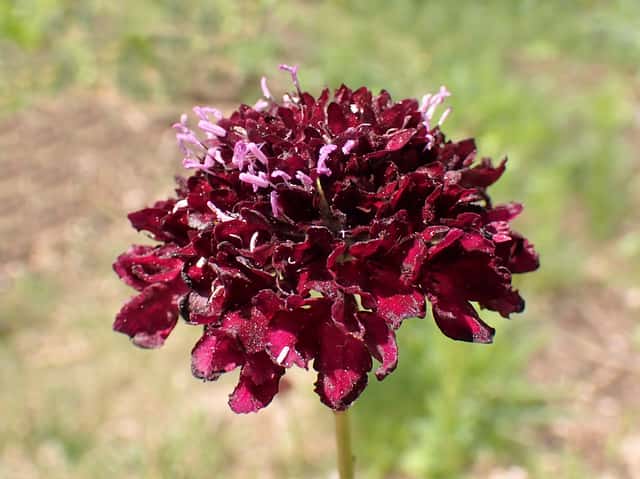
Caprifoliaceae
Mourning Bride: Full Sun Plant
Scabiosa atropurpurea
Grow in full sun and well-drained soil. Consistent deadheading is essential to prolong the flowering period until autumn.
Every 6 days
Direct sun
10° - 25°C
30% - 50%
Categories
What is Mourning Bride?
Mourning Bride (Scabiosa atropurpurea) is a easy-care plant from the Caprifoliaceae family. Scabiosa atropurpurea, popularly known as Mourning Bride, is a charming herbaceous plant that produces globular flowers with prominent stamens resembling a pincushion. Its flowers are rich in nectar, making it a favorite in pollinator gardens to attract butterflies and bees. It features long, slende...
Mourning Bride grows up to 90cm, spread of 30cm, watering every 6 days, 10°C – 25°C, 30–50% humidity. It is not suitable for indoor environments and safe for pets.
Unlike many tropical plants, Mourning Bride tolerates watering mistakes. Best for beginners. Unlike many popular species, Mourning Bride is safe to keep around pets.
How to Care for Mourning Bride?
TLDR: Mourning Bride needs Direct sun, watering every 6 days, and temperatures between 10-25°C with 30-50% humidity.
How Often Should You Water Mourning Bride?
Water regularly during the first year. Once established, it tolerates short periods of drought but flowers best with consistent watering.
How Much Light Does Mourning Bride Need?
This plant requires direct sun to flower vigorously and prevent stems from becoming too weak or flopping.
What Is the Best Soil for Mourning Bride?
Prefers neutral to slightly alkaline soils. If the soil is too acidic, adding a bit of lime can benefit growth.
What Pot Should You Use for Mourning Bride?
It can be grown in large pots with excellent drainage, but it prefers direct planting in the ground in sunny beds.
Care Schedule
Fertilize
Every 21 days
What Is Mourning Bride and Where Does It Come From?
Scabiosa atropurpurea, popularly known as Mourning Bride, is a charming herbaceous plant that produces globular flowers with prominent stamens resembling a pincushion. Its flowers are rich in nectar, making it a favorite in pollinator gardens to attract butterflies and bees. It features long, slender stems, ideal for cut flower arrangements, and very characteristic lobed basal foliage.
How to Propagate Mourning Bride?
Sowing
- For early flowering, start sowing indoors 6 weeks before the last frost.
- Maintain soil temperature around 18-21°C (65-70°F) for best results.
- 1 Soil Preparation
Prepare a light, fertile, and well-draining substrate in trays or directly in the final planting location.
- 2 Sowing
Distribute the seeds and lightly cover them with a thin layer of soil or vermiculite, as they need some light to germinate.
- 3 Initial Moisture
Keep the soil consistently moist, but not waterlogged, until seedlings are established.
Materials needed:
How Big Does Mourning Bride Grow?
TLDR: Mourning Bride can reach up to 90cm tall with Medium growth rate.
Max height
90cm
Spread
30cm
Growth rate
Medium
Foliage
Deciduous
Plant Uses
Ornamental
Great for decoration
Is your plant showing symptoms?
Click on the symptom to discover possible causes:
What Diseases Commonly Affect Mourning Bride?
TLDR: Mourning Bride is susceptible to 7 known diseases. Monitor regularly for early detection.
Powdery Mildew
Powdery mildew is a common fungal disease caused by various fungi species including Erysiphe, Podosphaera, Oïdium, and Leveillula. It affects over 10,000 plant species worldwide. The disease thrives in warm, dry climates with high humidity and appears as a distinctive white powdery coating on plant surfaces.
Aphids
Aphids are small, soft-bodied, pear-shaped insects (1/16 to 1/8 inch long) that feed by sucking nutrient-rich sap from plants. They reproduce rapidly and can quickly weaken plants, causing distorted growth and transmitting plant viruses. Aphids come in various colors including green, black, red, yellow, brown, and gray. They secrete honeydew, a sticky substance that attracts ants and encourages sooty mold growth.
Spider Mites
Spider mites are tiny arachnids (less than 1/20 inch long) related to spiders and ticks that feed on plant sap. They thrive in hot, dry conditions and can cause significant damage to ornamental and vegetable plants. During severe infestations, crop losses can reach 14% or higher as these pests disrupt vital plant processes including photosynthesis, carbon dioxide absorption, and transpiration.
Whiteflies
Whiteflies are small, soft-bodied, winged insects closely related to aphids and mealybugs. They are moth-like in appearance, about 1/16 inch long, triangular in shape, and gray-white in color. These sap-sucking pests feed on plant tissue, causing yellowing, stunted growth, and wilting. They also excrete honeydew, which attracts ants and promotes sooty mold growth. Whiteflies can transmit serious plant viruses.
Meaning & Symbolism
Traditionally associated with widowhood and mourning due to its original dark colors, today it also symbolizes admiration and pure love.
Compare with similar plants
| Attribute | Difficulty | Light | Watering | Pet Safe |
|---|---|---|---|---|
| Small Scabious | Easy | Direct sun | 7d | ✓ |
| Field Maple | Easy | Bright indirect | 14d | ✓ |
| Silver Birch | Easy | Direct sun | 14d | ✓ |
| Red valerian | Easy | Direct sun | 10d | ✓ |



