Rosaceae
Blackberry (Rubus fruticosus): How to Grow, Care For and Harvest
Rubus fruticosus
Plant in full sun in well-drained loamy soil with pH 5.5–6.5. Water weekly (about 1–2 inches), especially during fruiting. Prune out spent canes after harvest each autumn. Fertilise in early spring with a balanced or nitrogen-rich feed. Tie in new canes as they grow.
Every 7 days
Direct sun
-18° - 35°C
50% - 80%
Categories
What is Blackberry?
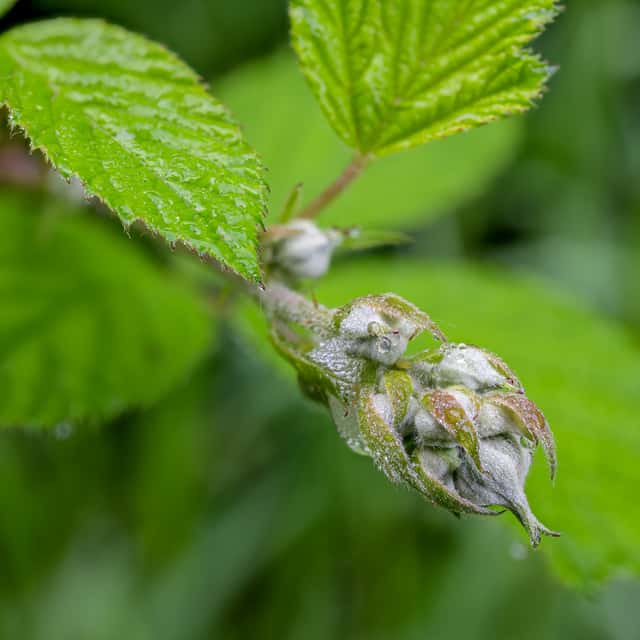
Blackberry (Rubus fruticosus) is a medium-care plant from the Rosaceae family. Rubus fruticosus, commonly known as blackberry or bramble, is a vigorous deciduous shrub native to Europe and widely naturalised across the world. It produces arching, thorny canes (called floricanes) that bear clusters of white to pale-pink flowers in late spring and early summer, followed by the f...
Blackberry grows up to 3.0m, with spread of 300cm, watering every 7 days, -18°C – 35°C, 50–80% humidity. It is not suitable for indoor environments and safe for pets.
Unlike many popular species, Blackberry is safe to keep around pets.
How to Care for Blackberry?
TLDR: Blackberry needs Direct sun, watering every 7 days, and temperatures between -18-35°C with 50-80% humidity.
How Often Should You Water Blackberry?
Water deeply once a week, providing 1–2 inches. Increase frequency during hot, dry spells and while fruits are swelling. Reduce watering after harvest. Avoid waterlogging — blackberries are sensitive to root rot in saturated soil.
How Much Light Does Blackberry Need?
Requires full sun — a minimum of 6–8 hours of direct sunlight daily. Good light is essential for fruit production and disease prevention. Partial shade produces vigorous canes but significantly reduced fruiting.
What Is the Best Soil for Blackberry?
Prefers fertile, well-drained loamy or sandy loam soil rich in organic matter. Soil pH should be 5.5–6.5. Incorporate compost or well-rotted manure at planting. Mulch annually to retain moisture and suppress weeds.
What Pot Should You Use for Blackberry?
Blackberries are best grown in the ground or very large containers (minimum 40–60 litres). If container-growing, choose a tall, wide terracotta or fabric pot to accommodate the spreading root system. Ensure excellent drainage.
Care Schedule
Fertilize
Every 30 days
What Is Blackberry and Where Does It Come From?
Rubus fruticosus, commonly known as blackberry or bramble, is a vigorous deciduous shrub native to Europe and widely naturalised across the world. It produces arching, thorny canes (called floricanes) that bear clusters of white to pale-pink flowers in late spring and early summer, followed by the familiar glossy black, sweet-tart fruit beloved in jams, pies and fresh eating. A true biennial-caned plant, first-year primocanes grow vegetatively while second-year floricanes fruit and then die back, making annual pruning essential. Deeply embedded in European folklore and cottage gardens alike, blackberry is one of nature's most generous edible hedgerow plants.
How to Propagate Blackberry?
Stem Tip Cutting
Take cuttings in mid-summer when new growth is firm but not yet woody. Keep the medium consistently moist but not soggy.
- 1 Select a healthy, non-fruiting shoot tip approximately 10–15 cm long
- 2 Remove lower leaves, leaving 2–3 at the tip
- 3 Dip the cut end in rooting hormone powder
- 4 Insert into a pot of moist, free-draining compost
- 5 Cover loosely with a clear plastic bag to retain humidity
- 6 Keep in indirect light; roots form in 3–4 weeks
- 7 Pot on once roots are established
Materials needed:
Tip Layering
Tip layering is the easiest and most reliable propagation method for blackberries. The new plant retains all characteristics of the parent.
- 1 Bend a long, flexible cane tip to the ground in late summer
- 2 Bury the tip 8–10 cm deep in amended soil
- 3 Secure with a U-shaped wire pin
- 4 Keep the soil moist throughout autumn
- 5 Sever the new plant from the parent the following spring once well-rooted
- 6 Dig up and transplant to its final position
Materials needed:
Root Division (Suckers)
Only divide healthy, disease-free plants. Suckers transplant best before they exceed 30 cm tall.
- 1 Identify vigorous suckers emerging around the parent plant in early spring
- 2 Dig around the sucker carefully to expose roots
- 3 Cut the connecting root with a sharp spade or secateurs
- 4 Lift the sucker with a good root ball
- 5 Replant immediately in its new location at the same depth
- 6 Water thoroughly and mulch
Materials needed:
How Big Does Blackberry Grow?
TLDR: Blackberry can reach up to 3.0m tall with Fast growth rate.
Max height
3.0m
Spread
3.0m
Growth rate
Fast
Foliage
Deciduous
Plant Uses
Edible
Can be consumed
Medicinal
Medicinal properties
Ornamental
Great for decoration
Medicinal Uses
- Rich in tannins with astringent properties; leaf and root-bark tea traditionally used for diarrhoea, dysentery, and sore throats
- Anthocyanins and polyphenols in the fruit have antioxidant, anti-inflammatory, and antimicrobial activity
- Root bark infusion used in traditional European herbalism for mouth ulcers and gum inflammation
Culinary Uses
- Ripe berries eaten fresh, or used in jams, jellies, pies, crumbles, and desserts
- Berries used to make blackberry wine, cordial, and liqueurs
- Unripe berries used in vinegar and savoury sauces
- Young spring shoots peeled and eaten raw in salads
- Dried leaves used as herbal tea
Is your plant showing symptoms?
Click on the symptom to discover possible causes:
What Diseases Commonly Affect Blackberry?
TLDR: Blackberry is susceptible to 9 known diseases. Monitor regularly for early detection.
Anthracnose
Anthracnose is a fungal disease caused by fungi in the genus Colletotrichum that affects many plants, including vegetables, fruits, and trees. The disease thrives in cool, wet conditions, causing dark, sunken lesions on leaves, stems, flowers, and fruits.
Powdery Mildew
Powdery mildew is a common fungal disease caused by various fungi species including Erysiphe, Podosphaera, Oïdium, and Leveillula. It affects over 10,000 plant species worldwide. The disease thrives in warm, dry climates with high humidity and appears as a distinctive white powdery coating on plant surfaces.
Gray Mold (Botrytis Blight)
Gray mold, caused by the fungus Botrytis cinerea, is a widespread necrotrophic pathogen affecting over 1,400 plant species. It thrives in cool, humid conditions and attacks weakened or aging plant tissues, causing soft rot and characteristic gray fuzzy growth.
Phytophthora Root Rot
Disease caused by fungus-like organisms (oomycetes) that live in soil and can survive for years. It affects roots, stem, and crown of plants, being especially severe in waterlogged or poorly drained soils. It is the second most common cause of root rot in trees and shrubs.
Meaning & Symbolism
In British and European folklore, the blackberry symbolises protection, healing, and the wildness of nature. Its thorny canes are thought to form natural barriers against evil. In the Victorian language of flowers it conveys remorse and lowliness, yet the generous fruit represents abundance.
Fun Facts
Blackberry canes are biennial: first-year canes (primocanes) grow, second-year canes (floricanes) fruit and die — the plant effectively renews itself every year
A single established blackberry plant can yield 3–10 kg of fruit in a season
The genus Rubus contains over 375 microspecies in the British Isles alone, all grouped under the aggregate Rubus fruticosus
Blackberry fruit is botanically an aggregate drupe, not a true berry — each small segment is an individual drupelet
Frequently asked questions
How often should I water my blackberry plant?
When do blackberries fruit?
Do I need to prune blackberries?
Are blackberries toxic to pets?
Why are my blackberry leaves turning yellow?
Compare with similar plants
| Attribute | Difficulty | Light | Watering | Pet Safe |
|---|---|---|---|---|
| Azalea | Medium | Partial shade | 3d | ⚠️ |
| Wild Lettuce | Medium | Direct sun | 7d | ⚠️ |
| Cape Primrose | Medium | Partial shade | 7d | ✓ |
| Honey Locust | Medium | Direct sun | 14d | ✓ |