Asteraceae
Threadleaf Coreopsis (Coreopsis verticillata) Care Guide
Coreopsis verticillata
Give threadleaf coreopsis full sun and well-drained soil, water weekly while establishing, then rely on natural rainfall once mature. Deadhead or shear in midsummer to encourage a second flush of blooms.
Every 7 days
Direct sun
15° - 29°C
30% - 50%
Categories
What is Threadleaf Coreopsis?
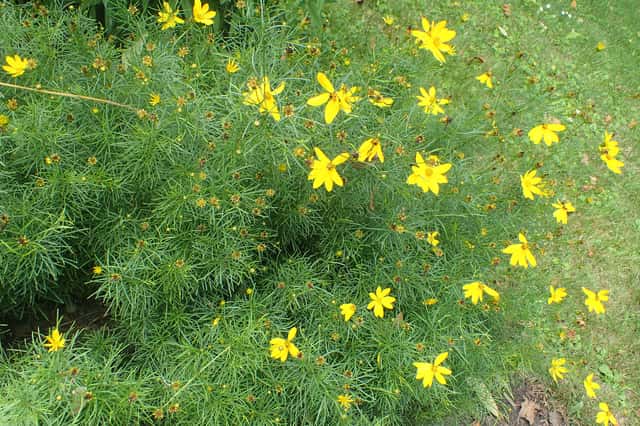
Threadleaf Coreopsis (Coreopsis verticillata) is a easy-care plant from the Asteraceae family. Threadleaf coreopsis is a bushy, drought-tolerant perennial prized for its fine, needle-like foliage arranged in whorls and its abundance of small, star-shaped, butter-yellow flowers. Native to the southeastern United States, it forms dense clumps 60-90 cm tall and wide, blooming profusely from late...
Threadleaf Coreopsis grows up to 90cm, spread of 90cm, watering every 7 days, 15°C – 29°C, 30–50% humidity. It is not suitable for indoor environments and safe for pets.
Unlike many tropical plants, Threadleaf Coreopsis tolerates watering mistakes. Best for beginners. Unlike many popular species, Threadleaf Coreopsis is safe to keep around pets.
How to Care for Threadleaf Coreopsis?
TLDR: Threadleaf Coreopsis needs Direct sun, watering every 7 days, and temperatures between 15-29°C with 30-50% humidity.
How Often Should You Water Threadleaf Coreopsis?
Water new plants weekly to keep soil evenly moist; once established, coreopsis is drought-tolerant and only needs water during prolonged dry spells. Water at the base rather than overhead to reduce fungal issues.
How Much Light Does Threadleaf Coreopsis Need?
Provide at least 6-8 hours of direct sunlight daily; too much shade reduces flowering and can cause floppy, sparse growth.
What Is the Best Soil for Threadleaf Coreopsis?
Plant in well-draining soil with a near-neutral pH (6.0-7.0); amend heavy clay with sand or compost to prevent waterlogged roots.
What Pot Should You Use for Threadleaf Coreopsis?
Not typically grown in pots; if containerized, use a wide, well-draining terracotta or plastic pot with drainage holes to prevent root rot.
What Is Threadleaf Coreopsis and Where Does It Come From?
Threadleaf coreopsis is a bushy, drought-tolerant perennial prized for its fine, needle-like foliage arranged in whorls and its abundance of small, star-shaped, butter-yellow flowers. Native to the southeastern United States, it forms dense clumps 60-90 cm tall and wide, blooming profusely from late spring through fall. It is a low-maintenance garden staple, popular in borders, rock gardens, and pollinator plantings.
How to Propagate Threadleaf Coreopsis?
Seed Sowing
Germination is more reliable with consistent warmth around 20-24 C; avoid letting the seed bed dry out.
- 1 Sow seeds directly outdoors after the last frost or start indoors 6-8 weeks earlier
- 2 Press seeds lightly into moist, well-draining soil without covering, since they need light to germinate
- 3 Keep soil consistently moist until germination
- 4 Thin seedlings to 30-45 cm apart once true leaves appear
Materials needed:
Stem Cuttings
Cover with a clear plastic bag to keep humidity high while roots establish; remove once new growth appears.
- 1 Take a 10-15 cm non-flowering stem cutting below a leaf node
- 2 Strip the lower leaves and dip the cut end in rooting hormone
- 3 Insert into moist, well-draining potting mix
- 4 Keep in bright, indirect light and maintain even moisture until roots form
Materials needed:
Division
Divide on a cool, overcast day to reduce transplant stress.
- 1 Dig up an established clump every 2-3 years to keep plants vigorous
- 2 Gently separate the root ball into sections with a sharp spade or knife, each with roots and shoots
- 3 Replant divisions immediately at the same depth as before
- 4 Water thoroughly after replanting
Materials needed:
How Big Does Threadleaf Coreopsis Grow?
TLDR: Threadleaf Coreopsis can reach up to 90cm tall with Medium growth rate.
Max height
90cm
Spread
90cm
Growth rate
Medium
Foliage
Deciduous
Plant Uses
Ornamental
Great for decoration
Ground Cover
Soil coverage
Is your plant showing symptoms?
Click on the symptom to discover possible causes:
What Diseases Commonly Affect Threadleaf Coreopsis?
TLDR: Threadleaf Coreopsis is susceptible to 10 known diseases. Monitor regularly for early detection.
Gray Mold (Botrytis Blight)
Gray mold, caused by the fungus Botrytis cinerea, is one of the most common fungal diseases in plants. It affects over 200 plant species, including ornamentals, vegetables, fruits, and houseplants. The disease thrives in cool, humid conditions with poor air circulation, causing grayish spots and soft rot on infected tissues.
Rust
Rust is a common fungal disease caused by fungi in the order Pucciniales that affects a wide variety of plants. The disease gets its name from the characteristic orange, yellow, or reddish-brown pustules that appear on leaves, resembling metal rust. This obligate fungal parasite requires living plants to survive and can cause significant economic losses in agricultural crops.
Powdery Mildew
Powdery mildew is a common fungal disease caused by various fungi species including Erysiphe, Podosphaera, Oïdium, and Leveillula. It affects over 10,000 plant species worldwide. The disease thrives in warm, dry climates with high humidity and appears as a distinctive white powdery coating on plant surfaces.
Verticillium Wilt
Verticillium wilt is a soil-borne fungal disease caused primarily by the fungi Verticillium dahliae and V. albo-atrum. These pathogens infect plant roots and grow within the vascular tissues, blocking water and nutrient transport, resulting in wilting and eventual plant death. The disease affects over 350 plant species including vegetables, fruits, ornamental flowers, and trees. The fungi can survive in soil for more than 10 years as resistant structures called microsclerotia.
Meaning & Symbolism
Coreopsis is associated with cheerfulness, optimism, and enduring love in the language of flowers, often given to convey joy and always-cheerful sentiments.
Fun Facts
Its fine, thread-like foliage inspired the common name "threadleaf" coreopsis.
The genus name Coreopsis comes from Greek words meaning "bug-like," referring to the shape of its seeds.
It is a magnet for bees, butterflies, and other pollinators throughout its long summer-to-fall bloom season.
Frequently asked questions
How much sun does threadleaf coreopsis need?
Is Coreopsis verticillata toxic to pets?
How often should I water threadleaf coreopsis?
How do I get more blooms from my coreopsis?
Compare with similar plants
| Attribute | Difficulty | Light | Watering | Pet Safe |
|---|---|---|---|---|
| Field Maple | Easy | Bright indirect | 14d | ✓ |
| Silver Birch | Easy | Direct sun | 14d | ✓ |
| Cushion Bush | Easy | Direct sun | 14d | ✓ |
| Wild Lettuce | Medium | Direct sun | 7d | ⚠️ |





