Arecaceae
Needle Palm (Rhapidophyllum hystrix): Complete Care Guide
Rhapidophyllum hystrix
Needle palm is a low-maintenance, extremely cold-hardy palm that thrives in partial shade with rich, moist, well-drained soil. Water regularly while young; established plants tolerate both periodic drought and wet soils. Virtually pest- and disease-free, its main care challenge is handling the sharp spines at the base of the trunk.
Every 10 days
Bright indirect
-20° - 38°C
40% - 70%
Categories
What is Needle Palm?
Needle Palm (Rhapidophyllum hystrix) is a medium-care plant from the Arecaceae family. The needle palm (Rhapidophyllum hystrix) is a slow-growing, clumping fan palm native to the coastal plains of the southeastern United States. Named for the long, sharp black spines that emerge from its leaf bases, it is the most cold-hardy palm species in the world, capable of surviving temperatures...
Needle Palm grows up to 2.4m, spread of 240cm, watering every 10 days, -20°C – 38°C, 40–70% humidity. It is not suitable for indoor environments and safe for pets.
Unlike many popular species, Needle Palm is safe to keep around pets.
How to Care for Needle Palm?
TLDR: Needle Palm needs Bright indirect, watering every 10 days, and temperatures between -20-38°C with 40-70% humidity.
How Often Should You Water Needle Palm?
Water deeply and regularly during the first year to establish a strong root system. Once established, the needle palm tolerates both short droughts and occasional wet soil, so let the topsoil dry slightly between waterings.
How Much Light Does Needle Palm Need?
Grows best in partial shade but adapts to full sun to deep shade. In hot climates, dappled or afternoon shade helps prevent leaf scorch.
What Is the Best Soil for Needle Palm?
Prefers rich, moist, well-drained soil with a slightly acidic pH (5.5-6.5). Amend sandy or clay soils with organic matter to improve fertility and drainage.
What Pot Should You Use for Needle Palm?
Large, heavy terracotta or concrete containers with excellent drainage holes; the plant slow growth and spiny base make repotting infrequent and challenging.
What Is Needle Palm and Where Does It Come From?
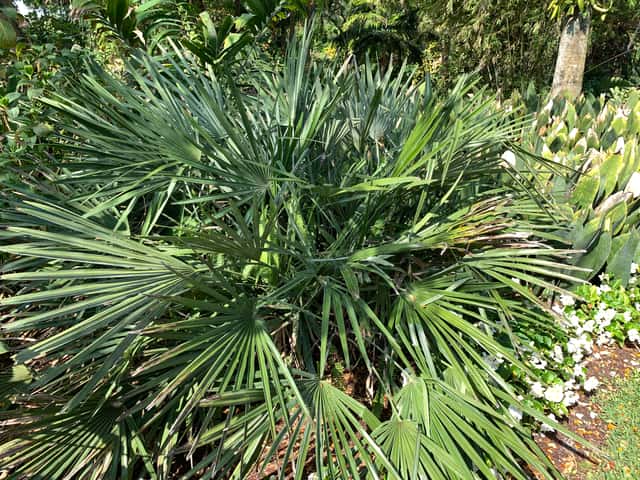
The needle palm (Rhapidophyllum hystrix) is a slow-growing, clumping fan palm native to the coastal plains of the southeastern United States. Named for the long, sharp black spines that emerge from its leaf bases, it is the most cold-hardy palm species in the world, capable of surviving temperatures well below freezing. Its dark green, palmate leaves radiate from a short, often subterranean trunk, forming dense, multi-stemmed clumps ideal as an understory shrub.
How to Propagate Needle Palm?
Seed Propagation
Germination is slow and erratic; be patient and keep soil warm and moist throughout.
- 1 Collect ripe reddish-brown fruits in fall and remove the pulp
- 2 Soak cleaned seeds in warm water for 24-48 hours
- 3 Sow in a well-draining seed mix and keep consistently moist
- 4 Maintain warm temperatures (24-29C) until germination
Materials needed:
Clump Division
Division is difficult due to the dense, spiny growth habit; only attempt on well-established, healthy clumps.
- 1 Choose a mature clump with well-rooted offshoots (suckers)
- 2 Carefully expose the base and separate a sucker with its own roots using a sharp, sterilized tool
- 3 Wear thick gloves to avoid the sharp spines
- 4 Replant the division immediately in moist, rich soil and keep shaded until established
Materials needed:
How Big Does Needle Palm Grow?
TLDR: Needle Palm can reach up to 2.4m tall with Slow growth rate.
Max height
2.4m
Spread
2.4m
Growth rate
Slow
Foliage
Evergreen
Plant Uses
Ornamental
Great for decoration
Is your plant showing symptoms?
Click on the symptom to discover possible causes:
What Diseases Commonly Affect Needle Palm?
TLDR: Needle Palm is susceptible to 2 known diseases. Monitor regularly for early detection.
Scale Insects
Scale insects are small sap-sucking pests that appear as brown, shell-like bumps on plant stems and leaves. There are over 25 species, divided into armored (hard) and unarmored (soft) scales. They feed by piercing plant tissue and extracting sap, which weakens the plant and can lead to yellowing, stunted growth, and even death if left untreated. They also excrete honeydew, which attracts ants and promotes sooty mold growth.
Mealybugs
Mealybugs are small, soft-bodied insects covered with a white, waxy, cottony material. They are common pests of houseplants and outdoor plants in mild climates. These sap-sucking insects feed on plant tissue, causing damage, stunted growth, and can lead to plant death if left untreated. They produce sticky honeydew which attracts sooty mold.
Meaning & Symbolism
Symbolizes resilience and unyielding endurance, thanks to its record-setting cold hardiness and its protective, spine-armored trunk.
Fun Facts
It is considered the most cold-hardy palm species in the world, surviving temperatures well below freezing.
Its long black spines, up to 25 cm (10 in), give it the nickname Porcupine Palm.
Female plants produce fuzzy, foul-smelling reddish-brown fruits that are eaten by black bears in the wild.
It can take a decade or more to develop a visible trunk, since much of its stem grows underground.
Frequently asked questions
Is the needle palm toxic to pets?
How cold-hardy is the needle palm?
How fast does needle palm grow?
Does needle palm need a lot of water?
Compare with similar plants
| Attribute | Difficulty | Light | Watering | Pet Safe |
|---|---|---|---|---|
| Dark Fieldcap | Medium | Low light | 2d | ⚠️ |
| Azalea | Medium | Partial shade | 3d | ⚠️ |
| Bougainvillea | Medium | Direct sun | 7d | ⚠️ |
| Wild Lettuce | Medium | Direct sun | 7d | ⚠️ |



