Asparagaceae
Narrow-leaf Song of India (Dracaena reflexa var. angustifolia) Care Guide
Dracaena reflexa var. angustifolia
Thrives in bright, indirect light and tolerates lower light levels. Water only when the top 2-5 cm of soil is dry, since it is sensitive to overwatering and root rot. Prefers well-draining, organically rich soil and average to above-average humidity. Avoid fluoridated tap water, which can cause leaf-tip burn.
Every 10 days
Partial shade
15° - 27°C
40% - 60%
Categories
What is Narrow-leaf Song of India?
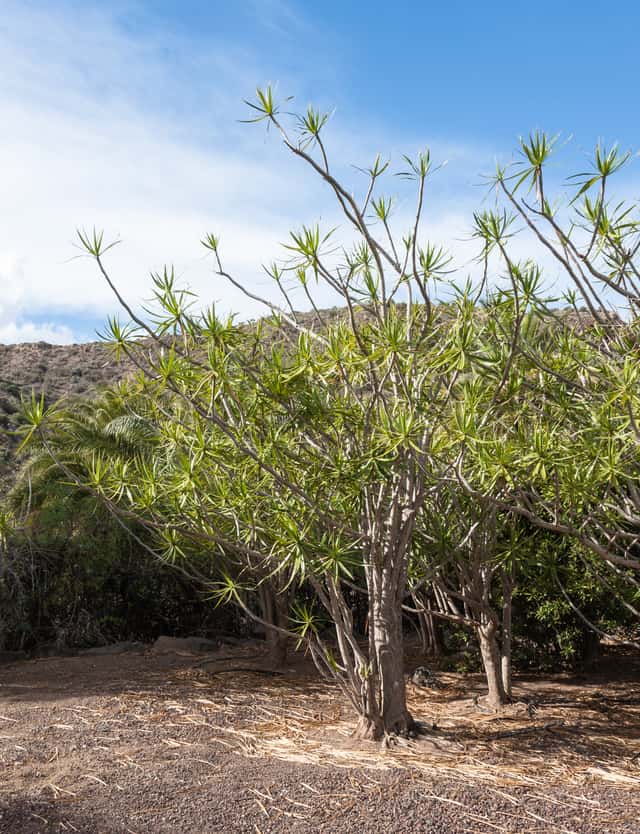
Narrow-leaf Song of India (Dracaena reflexa var. angustifolia) is a easy-care plant from the Asparagaceae family. Dracaena reflexa var. angustifolia is a narrow-leaved variety of the Song of India, a tropical evergreen shrub native to Madagascar and nearby Indian Ocean islands. It features slender, sword-shaped leaves with a glossy dark-green color, arranged in dense spirals along upright, cane-like stems. Grow...
Narrow-leaf Song of India grows up to 2.0m, spread of 90cm, watering every 10 days, 15°C – 27°C, 40–60% humidity. It is suitable for indoor environments and not safe for pets.
Unlike many tropical plants, Narrow-leaf Song of India tolerates watering mistakes. Best for beginners. Without precautions, ingestion can cause irritation in pets. Keep out of reach of cats and dogs. Without adequate drainage, root rot can develop within 20 days.
How to Care for Narrow-leaf Song of India?
TLDR: Narrow-leaf Song of India needs Partial shade, watering every 10 days, and temperatures between 15-27°C with 40-60% humidity.
How Often Should You Water Narrow-leaf Song of India?
Let the top 2-5 cm of soil dry out between waterings. Use distilled, filtered, or rainwater when possible, since this plant is sensitive to fluoride, which causes brown leaf tips. Reduce watering in winter.
How Much Light Does Narrow-leaf Song of India Need?
Place in bright, indirect light for the best leaf coloration; it also tolerates medium to low light, but growth becomes leggier and less vibrant. Avoid direct midday sun, which scorches the leaves.
What Is the Best Soil for Narrow-leaf Song of India?
Use a well-draining, aerated potting mix with added perlite, sand, or coco coir. A loamy, organically rich substrate with a slightly acidic to neutral pH (5.5-7.0) works best.
What Pot Should You Use for Narrow-leaf Song of India?
A terracotta or unglazed ceramic pot with drainage holes helps excess moisture evaporate, reducing the risk of root rot.
Care Schedule
Fertilize
Every 35 days
What Is Narrow-leaf Song of India and Where Does It Come From?
Dracaena reflexa var. angustifolia is a narrow-leaved variety of the Song of India, a tropical evergreen shrub native to Madagascar and nearby Indian Ocean islands. It features slender, sword-shaped leaves with a glossy dark-green color, arranged in dense spirals along upright, cane-like stems. Grown both as a striking houseplant and as an outdoor landscape shrub in warm climates, it is prized for its architectural form, low maintenance, and air-purifying qualities.
How to Propagate Narrow-leaf Song of India?
Stem cutting
Use distilled or filtered water for water propagation, and change it weekly to prevent rot. Pruned parent stems typically resprout with two or more new shoots.
- 1 Cut a healthy stem section 10-15 cm long with at least one leaf node using clean, sharp shears
- 2 Let the cut end callus over for a few hours to a day in a dry spot
- 3 Insert the cut end into moist, well-draining potting mix or place it in water
- 4 Keep in bright, indirect light and maintain consistent moisture until roots form
- 5 Transplant rooted cuttings into a well-draining potting mix once roots are 3-5 cm long
Materials needed:
How Big Does Narrow-leaf Song of India Grow?
TLDR: Narrow-leaf Song of India can reach up to 2.0m tall with Slow growth rate.
Max height
2.0m
Spread
90cm
Growth rate
Slow
Foliage
Evergreen
Warning: Toxic Plant
This plant can be toxic if ingested. Keep out of reach of:
Plant Uses
Ornamental
Great for decoration
Air Purifying
Improves air quality
Is your plant showing symptoms?
Click on the symptom to discover possible causes:
What Diseases Commonly Affect Narrow-leaf Song of India?
TLDR: Narrow-leaf Song of India is susceptible to 9 known diseases. Monitor regularly for early detection.
Root Rot
Root rot is a serious fungal disease that affects the root system of plants, causing them to decay and die. It is primarily caused by overwatering, poor drainage, or soil-borne fungi such as Pythium, Phytophthora, Rhizoctonia, and Fusarium. The disease thrives in waterlogged conditions where roots are deprived of oxygen, making them susceptible to fungal infection.
Leaf Spot
Leaf spot is a common fungal disease caused by various pathogens including Alternaria, Ascochyta, Colletotrichum, Septoria, and Venturia. It primarily affects leaves, causing discolored spots that can lead to premature leaf drop if left untreated.
Grey Mould
Powdery Mildew
Powdery mildew is a common fungal disease caused by various fungi species including Erysiphe, Podosphaera, Oïdium, and Leveillula. It affects over 10,000 plant species worldwide. The disease thrives in warm, dry climates with high humidity and appears as a distinctive white powdery coating on plant surfaces.
Meaning & Symbolism
In many cultures, Dracaena plants are associated with good fortune, protection, and resilience, often kept indoors as symbols of positive energy.
Fun Facts
Despite its common name, Song of India is native to Madagascar and nearby Indian Ocean islands, not India.
It was one of the species tested in NASA's Clean Air Study for removing indoor air pollutants like formaldehyde.
The narrow-leaved angustifolia variety has slimmer foliage than the broader-leaved typical form of Dracaena reflexa.
Cutting back a leggy stem encourages it to branch into two or more new shoots.
Frequently asked questions
Is Dracaena reflexa var. angustifolia toxic to cats and dogs?
How often should I water this plant?
Why are the leaf tips turning brown?
Does it need bright light to thrive?
How do I propagate it?
Compare with similar plants
| Attribute | Difficulty | Light | Watering | Pet Safe |
|---|---|---|---|---|
| Field Maple | Easy | Bright indirect | 14d | ✓ |
| Silver Birch | Easy | Direct sun | 14d | ✓ |
| Common Blanketflower | Easy | Direct sun | 10d | ✓ |
| Cushion Bush | Easy | Direct sun | 14d | ✓ |
Choose & Compare
Sources & References
- Dracaena reflexa var. angustifolia - NC State Extension Gardener Plant Toolbox
- Malaysian Dracaena - ASPCA Toxic and Non-Toxic Plants
- How to Grow and Care for Dracaena Reflexa Var Angustifolia - Biology Insights
- Dracaena reflexa Variegata (Song of India) - Gardenia.net
- NASA Clean Air Study - Wikipedia





