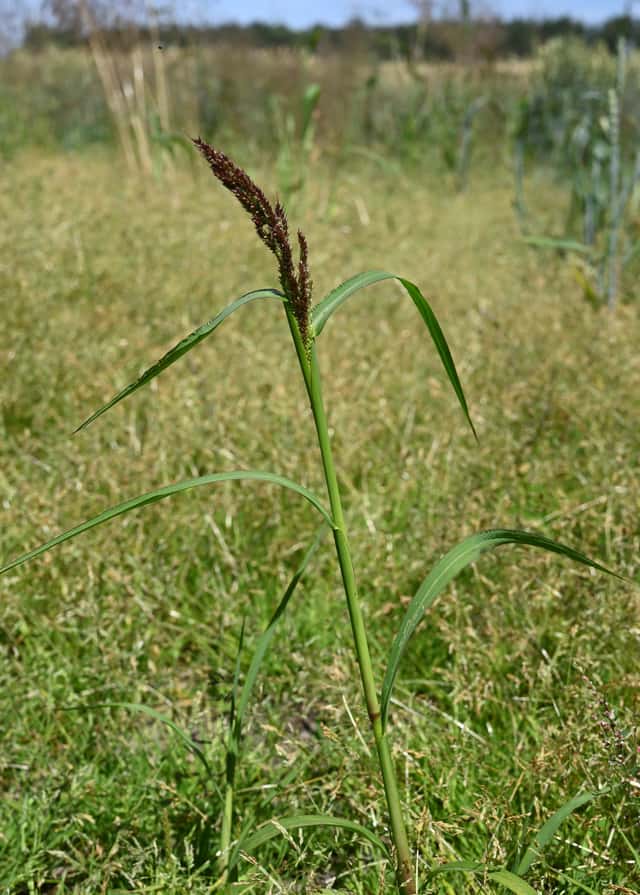
Poaceae
Barnyardgrass: Everything About Echinochloa crus-galli
Echinochloa crus-galli
An extremely adaptable annual grass requiring full sun and moist soil. Thrives across a wide range of soil types from sandy to clay, tolerating saline and alkaline conditions. Considered an invasive weed in most agricultural contexts but has legitimate uses as fodder and traditional food.
Every 5 days
Direct sun
5° - 38°C
40% - 90%
Categories
What is Barnyardgrass?
Barnyardgrass (Echinochloa crus-galli) is a easy-care plant from the Poaceae family. Barnyardgrass (Echinochloa crus-galli) is a fast-growing annual grass native to tropical Asia. Now found worldwide, it is considered one of the most problematic agricultural weeds, particularly in rice and maize fields. Plants grow up to 150 cm tall with long, flat leaves that are often purplish at...
Barnyardgrass grows up to 1.5m, spread of 70cm, watering every 5 days, 5°C – 38°C, 40–90% humidity. It is not suitable for indoor environments and safe for pets.
Unlike many tropical plants, Barnyardgrass tolerates watering mistakes. Best for beginners. Unlike many popular species, Barnyardgrass is safe to keep around pets.
How to Care for Barnyardgrass?
TLDR: Barnyardgrass needs Direct sun, watering every 5 days, and temperatures between 5-38°C with 40-90% humidity.
How Often Should You Water Barnyardgrass?
Water regularly to keep soil evenly moist, especially during warm periods. Tolerates temporary waterlogging but avoid prolonged drought. In intentional cultivation, water every 4–6 days.
How Much Light Does Barnyardgrass Need?
Requires full direct sunlight for optimal growth. Cannot grow in shade. Plant in a location receiving at least 6–8 hours of direct sun daily.
What Is the Best Soil for Barnyardgrass?
Adapts to sandy, loamy, and clay soils. Prefers moist, nitrogen-rich soils. Tolerates saline and alkaline conditions. Ideal pH between 4.8 and 8.2.
Care Schedule
Fertilize
Every 14 days
Misting
Every 3 days
Rotate
Every 7 days
Repot
Every 365 days
What Is Barnyardgrass and Where Does It Come From?
Barnyardgrass (Echinochloa crus-galli) is a fast-growing annual grass native to tropical Asia. Now found worldwide, it is considered one of the most problematic agricultural weeds, particularly in rice and maize fields. Plants grow up to 150 cm tall with long, flat leaves that are often purplish at the base. Dense seed heads produce up to 40,000 seeds per plant, ensuring rapid spread. Despite its weed status, the seeds are edible and the plant has traditional medicinal uses.
How Big Does Barnyardgrass Grow?
TLDR: Barnyardgrass can reach up to 1.5m tall with Fast growth rate.
Max height
1.5m
Spread
70cm
Growth rate
Fast
Foliage
Deciduous
Plant Uses
Edible
Can be consumed
Medicinal
Medicinal properties
Ground Cover
Soil coverage
Medicinal Uses
- Traditional use for digestive disorders
- Used as a tonic and styptic in Asian traditional medicine
Culinary Uses
- Seeds used as a rice substitute during food scarcity
- Young shoots consumed as vegetables in some Asian cultures
- Used in rice pudding preparations in India
Is your plant showing symptoms?
Click on the symptom to discover possible causes:
What Diseases Commonly Affect Barnyardgrass?
TLDR: Barnyardgrass is susceptible to 5 known diseases. Monitor regularly for early detection.
Leaf Spot
Leaf spot is a common fungal disease caused by various pathogens including Alternaria, Ascochyta, Colletotrichum, Septoria, and Venturia. It primarily affects leaves, causing discolored spots that can lead to premature leaf drop if left untreated.
Anthracnose
Anthracnose is a fungal disease caused by fungi in the genus Colletotrichum that affects many plants, including vegetables, fruits, and trees. The disease thrives in cool, wet conditions, causing dark, sunken lesions on leaves, stems, flowers, and fruits.
Mosaic Virus
Mosaic virus is a group of plant viruses that cause mottled, patchy patterns on leaves and can affect a wide variety of plants. The virus creates characteristic yellow, white, and green mosaic patterns, often accompanied by stunted growth and deformed plant parts. This highly contagious disease spreads rapidly through insect vectors and contaminated tools.
Aphids
Aphids are small, soft-bodied, pear-shaped insects (1/16 to 1/8 inch long) that feed by sucking nutrient-rich sap from plants. They reproduce rapidly and can quickly weaken plants, causing distorted growth and transmitting plant viruses. Aphids come in various colors including green, black, red, yellow, brown, and gray. They secrete honeydew, a sticky substance that attracts ants and encourages sooty mold growth.
Fun Facts
A single barnyardgrass plant can produce up to 40,000 seeds in one growing season.
It is considered one of the ten worst weeds in the world due to its aggressive competition with crops.
Barnyardgrass can remove up to 80% of available soil nitrogen, severely impacting neighboring crops.
Frequently asked questions
Is barnyardgrass toxic to animals or humans?
How can I control barnyardgrass in my garden?
Does barnyardgrass have any ecological value?
Compare with similar plants
| Attribute | Difficulty | Light | Watering | Pet Safe |
|---|---|---|---|---|
| Small Scabious | Easy | Direct sun | 7d | ✓ |
| Field Maple | Easy | Bright indirect | 14d | ✓ |
| Silver Birch | Easy | Direct sun | 14d | ✓ |
| Red valerian | Easy | Direct sun | 10d | ✓ |



