Aspleniaceae
Hart's-tongue Fern — The Evergreen Shade Fern for Woodland Gardens
Asplenium scolopendrium
Hart's-tongue fern thrives in moist, shaded conditions with high humidity and alkaline, well-drained soil. Water regularly to keep soil moist but never waterlogged. Avoid direct sun. Suitable for both indoors and outdoors in shaded spots.
Every 7 days
Low light
-15° - 25°C
60% - 80%
Categories
What is Hart's-tongue Fern?
Hart's-tongue Fern (Asplenium scolopendrium) is a easy-care plant from the Aspleniaceae family. Asplenium scolopendrium, commonly known as the hart's-tongue fern, is an elegant evergreen fern native to moist, shady woodlands and rocky limestone habitats across Europe, Asia, and parts of North America. It produces distinctive undivided, strap-shaped, glossy bright-green fronds unlike most other...
Hart's-tongue Fern grows up to 60cm, spread of 60cm, watering every 7 days, -15°C – 25°C, 60–80% humidity. It is suitable for indoor environments and safe for pets.
Unlike many tropical plants, Hart's-tongue Fern tolerates watering mistakes. Best for beginners. Unlike many popular species, Hart's-tongue Fern is safe to keep around pets. Without adequate drainage, root rot can develop within 14 days.
How to Care for Hart's-tongue Fern?
TLDR: Hart's-tongue Fern needs Low light, watering every 7 days, and temperatures between -15-25°C with 60-80% humidity.
How Often Should You Water Hart's-tongue Fern?
Water every 7 days or when the top 1–2 cm of soil starts to dry. Always water at the base — never wet the fronds — to prevent crown rot. Reduce watering in winter.
How Much Light Does Hart's-tongue Fern Need?
Place in partial to full shade. Avoid more than 3 hours of direct sunlight per day. North- or east-facing spots and woodland settings are ideal.
What Is the Best Soil for Hart's-tongue Fern?
Use moist, humus-rich, well-draining loamy soil with an alkaline to neutral pH (6.5–7.5). Limestone-based soils are ideal as this fern naturally grows on calcareous rock.
What Pot Should You Use for Hart's-tongue Fern?
Terracotta or ceramic pot with drainage holes, or a woodland-style container with added limestone grit for good drainage
Care Schedule
Fertilize
Every 14 days
Misting
Every 3 days
Rotate
Every 7 days
Repot
Every 365 days
What Is Hart's-tongue Fern and Where Does It Come From?
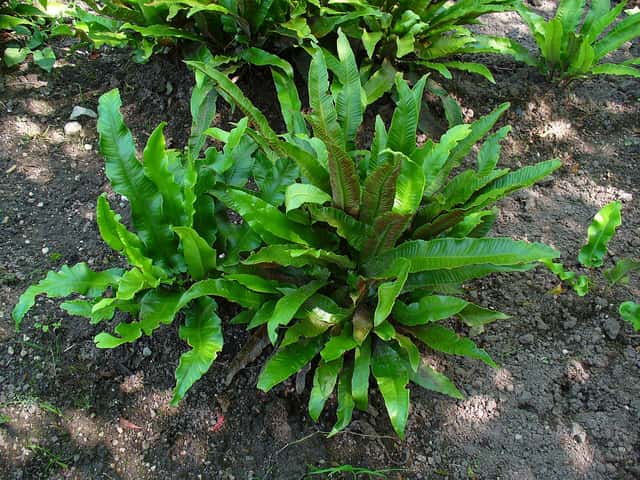
Asplenium scolopendrium, commonly known as the hart's-tongue fern, is an elegant evergreen fern native to moist, shady woodlands and rocky limestone habitats across Europe, Asia, and parts of North America. It produces distinctive undivided, strap-shaped, glossy bright-green fronds unlike most other ferns, giving it a unique tropical appearance in temperate gardens.
How Big Does Hart's-tongue Fern Grow?
TLDR: Hart's-tongue Fern can reach up to 60cm tall with Slow growth rate.
Max height
60cm
Spread
60cm
Growth rate
Slow
Foliage
Evergreen
Plant Uses
Ornamental
Great for decoration
Ground Cover
Soil coverage
Is your plant showing symptoms?
Click on the symptom to discover possible causes:
What Diseases Commonly Affect Hart's-tongue Fern?
TLDR: Hart's-tongue Fern is susceptible to 7 known diseases. Monitor regularly for early detection.
Slugs and Snails
Slugs and snails are mollusks that feed on plant tissue, causing irregular holes in leaves and damage to young seedlings. They are most active at night and in moist conditions, leaving characteristic silvery slime trails. These pests can quickly devastate gardens, especially during wet seasons.
Root Rot
Root rot is a serious fungal disease that affects the root system of plants, causing them to decay and die. It is primarily caused by overwatering, poor drainage, or soil-borne fungi such as Pythium, Phytophthora, Rhizoctonia, and Fusarium. The disease thrives in waterlogged conditions where roots are deprived of oxygen, making them susceptible to fungal infection.
Overwatering
Overwatering occurs when plants receive too much water, depriving roots of oxygen and causing root rot. This environmental stress is one of the most common causes of houseplant death, as waterlogged soil prevents roots from breathing and functioning properly.
Low Humidity Stress
Low humidity stress occurs when indoor air becomes too dry, causing plants to lose moisture faster than they can absorb it through their roots. This is especially common during winter heating periods, near radiators and heating vents, or in air-conditioned spaces. Tropical plants are particularly susceptible to low humidity damage.
Fun Facts
Unlike most ferns, hart's-tongue fern has undivided fronds, making it look almost like a tropical plant in temperate woodlands.
It earned the Royal Horticultural Society Award of Garden Merit for its exceptional garden value.
Deer and rabbit resistant — making it a low-maintenance choice for wildlife gardens.
The parallel rows of brown spore cases (sori) on the underside of mature fronds resemble a centipede — hence the species name "scolopendrium" (from the Greek word for centipede).
Grows naturally on limestone cliffs, castle walls, and old wells across Europe.
Compare with similar plants
| Attribute | Difficulty | Light | Watering | Pet Safe |
|---|---|---|---|---|
| Field Maple | Easy | Bright indirect | 14d | ✓ |
| Silver Birch | Easy | Direct sun | 14d | ✓ |
| Cushion Bush | Easy | Direct sun | 14d | ✓ |
| Peruvian peppertree | Easy | Direct sun | 14d | ⚠️ |