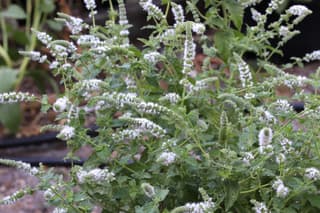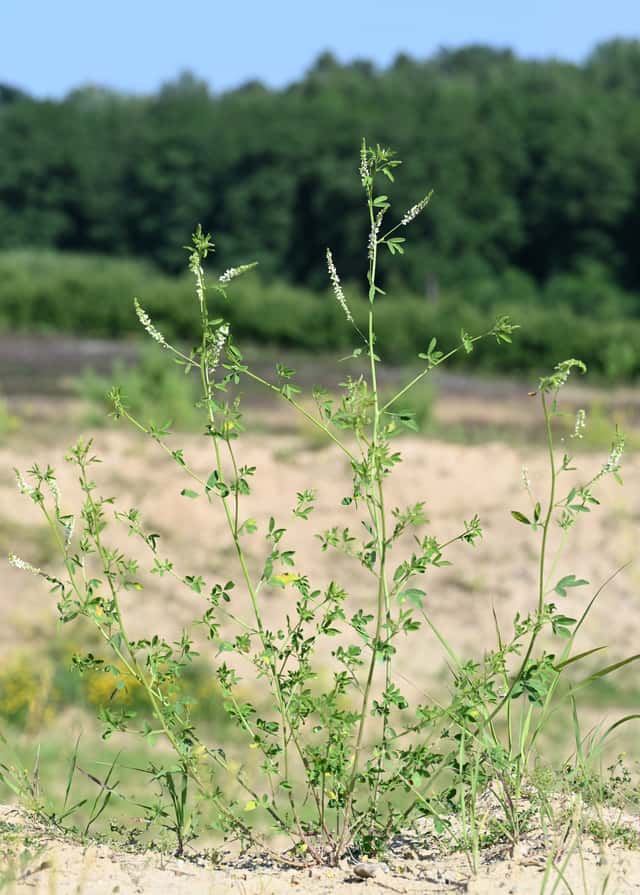
Fabaceae
White sweet clover: Ground Cover Plant
Melilotus albus
White sweet clover is a robust, low-maintenance plant that thrives in a sunny location with well-drained, calcareous soil and minimal irrigation. It is suitable for wild gardens, embankment planting, and as a ground cover in rugged areas, requiring almost no fertilization or pruning.
Every 14 days
Direct sun
-25° - 38°C
20% - 70%
Categories
What is White sweet clover?
White sweet clover (Melilotus albus) is a easy-care plant from the Fabaceae family. White sweet clover (Melilotus albus) is an annual or biennial herbaceous plant in the legume family (Fabaceae), native to Eurasia and now widely distributed throughout the world's temperate regions. The plant can grow up to 2 meters tall and bears long, narrow racemes of small white flowers with a s...
White sweet clover grows up to 2.0m, spread of 60cm, watering every 14 days, -25°C – 38°C, 20–70% humidity. It is not suitable for indoor environments and safe for pets.
Unlike many tropical plants, White sweet clover tolerates watering mistakes. Best for beginners. Unlike many popular species, White sweet clover is safe to keep around pets.
How to Care for White sweet clover?
TLDR: White sweet clover needs Direct sun, watering every 14 days, and temperatures between -25-38°C with 20-70% humidity.
How Often Should You Water White sweet clover?
Water every 2 weeks during dry periods; the deep taproot makes the plant exceptionally drought-tolerant, and overwatering should be avoided.
How Much Light Does White sweet clover Need?
Place white sweet clover in a full-sun location; it does not tolerate shade and requires at least 6 hours of direct sunlight per day.
What Is the Best Soil for White sweet clover?
Plant in well-drained, calcareous, or slightly sandy soil with a pH between 5.0 and 8.5; the plant thrives even in poor, disturbed soils.
What Pot Should You Use for White sweet clover?
Due to its deep taproot and large size, white sweet clover is not suitable for pot or container cultivation; it is best planted directly in the ground.
What Is White sweet clover and Where Does It Come From?
White sweet clover (Melilotus albus) is an annual or biennial herbaceous plant in the legume family (Fabaceae), native to Eurasia and now widely distributed throughout the world's temperate regions. The plant can grow up to 2 meters tall and bears long, narrow racemes of small white flowers with a subtle, sweet scent of coumarin. Thanks to its deep taproot, it is particularly drought-resistant and improves the soil through nitrogen fixation in symbiosis with Rhizobium bacteria.
How to Propagate White sweet clover?
Seed
- 1 Scarify the hard seeds by soaking them in lukewarm water for 24 hours or lightly sanding them.
- 2 Sow the seeds directly into the ground in spring or early fall, at a depth of 0.5–1 cm.
- 3 Keep the soil slightly moist until germination occurs after 1–2 weeks; thereafter, the plant requires little water.
- 4 The seeds remain viable in the soil for decades.
How Big Does White sweet clover Grow?
TLDR: White sweet clover can reach up to 2.0m tall with Fast growth rate.
Max height
2.0m
Spread
60cm
Growth rate
Fast
Foliage
Deciduous
Plant Uses
Ornamental
Great for decoration
Medicinal
Medicinal properties
Aromatic
Pleasant fragrance
Ground Cover
Soil coverage
Edible
Can be consumed
Medicinal Uses
- Traditionally used as an anti-inflammatory and in the treatment of varicose veins and swelling (lymphedema) due to its coumarin compounds.
- Used in folk medicine as a wound-healing herb and for headaches; coumarin has blood-thinning properties (note: never use medicinally without professional guidance).
- The flowers and dried herb are used in herbal preparations to support blood circulation.
Culinary Uses
- Young leaves and flowers are edible in small quantities and are sometimes used as aromatic seasoning in salads or as flavoring in cheeses and beers.
- The dried herb imparts a vanilla-like scent to baked goods and desserts thanks to its coumarin content; use sparingly.
Is your plant showing symptoms?
Click on the symptom to discover possible causes:
What Diseases Commonly Affect White sweet clover?
TLDR: White sweet clover is susceptible to 11 known diseases. Monitor regularly for early detection.
Powdery Mildew
Powdery mildew is a common fungal disease caused by various fungi species including Erysiphe, Podosphaera, Oïdium, and Leveillula. It affects over 10,000 plant species worldwide. The disease thrives in warm, dry climates with high humidity and appears as a distinctive white powdery coating on plant surfaces.
Root Rot
Root rot is a serious fungal disease that affects the root system of plants, causing them to decay and die. It is primarily caused by overwatering, poor drainage, or soil-borne fungi such as Pythium, Phytophthora, Rhizoctonia, and Fusarium. The disease thrives in waterlogged conditions where roots are deprived of oxygen, making them susceptible to fungal infection.
Fusarium Wilt
Fusarium wilt is a serious fungal disease caused by the soil-borne fungus Fusarium oxysporum. The fungus invades roots and blocks the water-conducting vessels (xylem) of the plant, causing progressive wilting and eventual death. Host-specific forms of the pathogen exist that attack different plant species.
Rust
Rust is a common fungal disease caused by fungi in the order Pucciniales that affects a wide variety of plants. The disease gets its name from the characteristic orange, yellow, or reddish-brown pustules that appear on leaves, resembling metal rust. This obligate fungal parasite requires living plants to survive and can cause significant economic losses in agricultural crops.
Meaning & Symbolism
In folk gardening, white sweet clover symbolizes sweet devotion, fertility, and the enrichment of the earth.
Compare with similar plants
| Attribute | Difficulty | Light | Watering | Pet Safe |
|---|---|---|---|---|
| Field Maple | Easy | Bright indirect | 14d | ✓ |
| Silver Birch | Easy | Direct sun | 14d | ✓ |
| Cushion Bush | Easy | Direct sun | 14d | ✓ |
| Peruvian peppertree | Easy | Direct sun | 14d | ⚠️ |