Cupressaceae
New Zealand Cedar: Pet-Safe Plant
Libocedrus bidwillii
Pahautea requires a cool, moist climate, well-drained organic soil with an acidic pH (5.0–6.5), and regular watering to maintain moisture without waterlogging. It grows very slowly and prefers full sun to partial shade. It does not tolerate extreme heat, prolonged drought, or compacted or alkaline soils. It is exclusively an outdoor species, ideal for cool temperate climate gardens.
Every 10 days
Bright indirect
-12° - 25°C
60% - 90%
Categories
What is New Zealand Cedar?
New Zealand Cedar (Libocedrus bidwillii) is a medium-care plant from the Cupressaceae family. Libocedrus bidwillii, known as pahautea or kaikawaka in Māori, is an evergreen conifer endemic to New Zealand. This imposing conifer can reach 25 meters in height in its natural habitat, although in cultivation it usually stays between 8 and 15 meters with a narrow pyramidal crown 3 to 5 meters wide...
New Zealand Cedar grows up to 25.0m, spread of 500cm, watering every 10 days, -12°C – 25°C, 60–90% humidity. It is not suitable for indoor environments and safe for pets.
Unlike many popular species, New Zealand Cedar is safe to keep around pets.
How to Care for New Zealand Cedar?
TLDR: New Zealand Cedar needs Bright indirect, watering every 10 days, and temperatures between -12-25°C with 60-90% humidity.
How Often Should You Water New Zealand Cedar?
Keep the soil consistently moist but well-drained, especially during the first years of establishment. In climates with regular rainfall (over 1,000 mm annually), it rarely needs supplemental watering once established. During dry periods, water deeply every 7–10 days. Avoid waterlogging, which promotes root rot.
How Much Light Does New Zealand Cedar Need?
Prefers full sun or filtered partial shade. In its natural habitat, it grows under the influence of frequent clouds and fog. In warmer or drier regions, it appreciates some protection from direct sun during the central hours of the day to avoid heat stress. It tolerates exposure to cold winds well, but not dry, hot winds.
What Is the Best Soil for New Zealand Cedar?
Thrives in deep, organic, humus-rich soils with excellent drainage. The ideal pH is between 5.0 and 6.5 (slightly acidic). It naturally grows in volcanic and podzolized soils saturated with moisture but not waterlogged. Add organic matter and mulch to replicate the conditions of New Zealand subalpine forests. Avoid alkaline or compacted clay soils.
What Pot Should You Use for New Zealand Cedar?
Not suitable for long-term pot cultivation. Its deep root system and final size make it essential to plant it directly in deep, open ground. In juvenile stages, it can be briefly kept in a large container for transplanting, but it must be transferred to its permanent soil location before 3 years.
Care Schedule
Fertilize
Every 365 days
What Is New Zealand Cedar and Where Does It Come From?
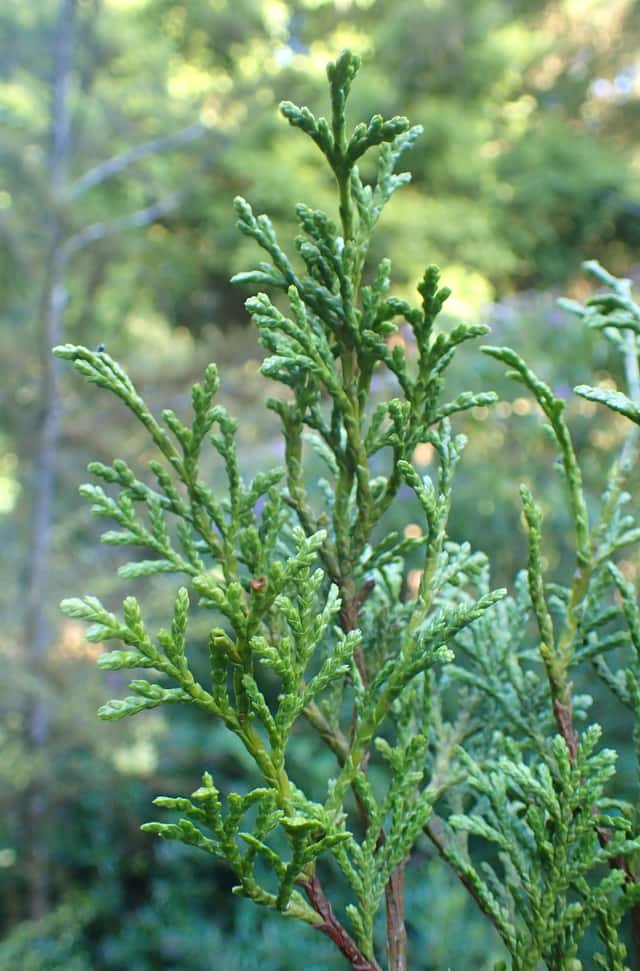
Libocedrus bidwillii, known as pahautea or kaikawaka in Māori, is an evergreen conifer endemic to New Zealand. This imposing conifer can reach 25 meters in height in its natural habitat, although in cultivation it usually stays between 8 and 15 meters with a narrow pyramidal crown 3 to 5 meters wide. Its leaves are small, scale-like, and glossy dark green, arranged in four rows on flattened branchlets. Adapted to the montane and subalpine forests of New Zealand's North and South Islands, at altitudes between 250 and 1,850 meters, it thrives in cool climates with high rainfall and frequent fog. It is one of New Zealand's slowest-growing conifers and can live between 800 and 1,000 years. Its wood, light reddish with a slightly purple hue when cut, was prized by the Māori for its lightness and rot resistance.
How to Propagate New Zealand Cedar?
Seed propagation
- Always use fresh seeds; old seeds lose viability quickly
- Avoid temperatures above 15°C during germination
- 1 Collection and stratification
Collect fresh seeds in autumn. Subject the seeds to cold moist stratification for 2-3 months in the refrigerator (4°C) to break dormancy.
- 2 Sowing
Sow in a fine, well-drained substrate (a mix of sand and coco coir). Cover lightly with fine sand. Keep at a cool temperature (8-12°C).
- 3 Germination and care
Keep in a shaded, cool place with constant moisture. Germination can take 3 to 6 months. Transplant seedlings when they are at least 10 cm tall.
Materials needed:
Semi-hardwood cuttings
- Moderate bottom heat can help with rooting
- Be patient: rooting can take up to 12 months
- 1 Cutting selection
Take 10-15 cm long lateral tip cuttings in late summer. Choose semi-woody shoots from the current year.
- 2 Preparation
Remove leaves from the bottom half and apply rooting hormone powder or gel to the basal cut.
- 3 Planting and maintenance
Insert into a mix of perlite and peat (1:1). Maintain high humidity (propagation chamber or plastic bag). Rooting is extremely slow; be patient.
Materials needed:
How Big Does New Zealand Cedar Grow?
TLDR: New Zealand Cedar can reach up to 25.0m tall with Slow growth rate.
Max height
25.0m
Spread
5.0m
Growth rate
Slow
Foliage
Evergreen
Plant Uses
Ornamental
Great for decoration
Is your plant showing symptoms?
Click on the symptom to discover possible causes:
What Diseases Commonly Affect New Zealand Cedar?
TLDR: New Zealand Cedar is susceptible to 5 known diseases. Monitor regularly for early detection.
Root Rot
Root rot is a serious fungal disease that affects the root system of plants, causing them to decay and die. It is primarily caused by overwatering, poor drainage, or soil-borne fungi such as Pythium, Phytophthora, Rhizoctonia, and Fusarium. The disease thrives in waterlogged conditions where roots are deprived of oxygen, making them susceptible to fungal infection.
Scale Insects
Scale insects are small sap-sucking pests that appear as brown, shell-like bumps on plant stems and leaves. There are over 25 species, divided into armored (hard) and unarmored (soft) scales. They feed by piercing plant tissue and extracting sap, which weakens the plant and can lead to yellowing, stunted growth, and even death if left untreated. They also excrete honeydew, which attracts ants and promotes sooty mold growth.
Aphids
Aphids are small, soft-bodied, pear-shaped insects (1/16 to 1/8 inch long) that feed by sucking nutrient-rich sap from plants. They reproduce rapidly and can quickly weaken plants, causing distorted growth and transmitting plant viruses. Aphids come in various colors including green, black, red, yellow, brown, and gray. They secrete honeydew, a sticky substance that attracts ants and encourages sooty mold growth.
Phytophthora
The Phytophthora genus consists of soil-borne oomycetes (water molds) that act as plant pathogens, primarily affecting trees and woody plants. It typically spreads through the root system, leading to systemic decline and eventual plant collapse.
Meaning & Symbolism
In Māori culture, pahautea (kaikawaka) was a tree of deep practical and symbolic value. Its lightweight, rot-resistant wood made it a prized material for building waka (canoes), structures, and woodwork. It symbolizes durability and resilience: the ability to endure for centuries in the harshest mountain conditions.
Compare with similar plants
| Attribute | Difficulty | Light | Watering | Pet Safe |
|---|---|---|---|---|
| Dark Fieldcap | Medium | Low light | 2d | ⚠️ |
| Azalea | Medium | Partial shade | 3d | ⚠️ |
| Bougainvillea | Medium | Direct sun | 7d | ⚠️ |
| Wild Lettuce | Medium | Direct sun | 7d | ⚠️ |



