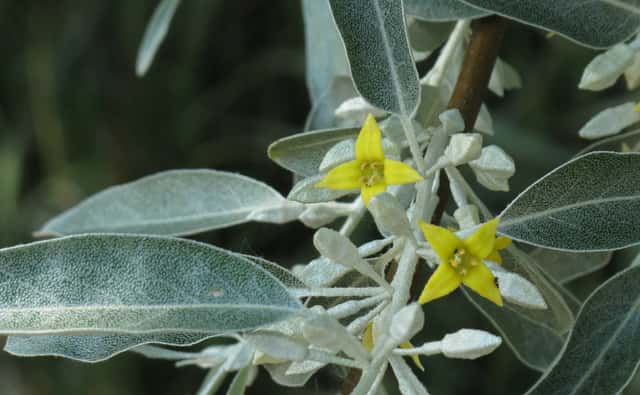
Elaeagnaceae
Russian Olive (Elaeagnus angustifolia): The Complete Hardy Tree Care Guide
Elaeagnus angustifolia
Very low-maintenance and extremely hardy. Thrives in full sun with infrequent watering — deeply drought tolerant once established. Tolerates poor, sandy, alkaline, and salty soils. Annual pruning maintains form. No fertilizer needed as it fixes atmospheric nitrogen.
Every 14 days
Direct sun
-40° - 40°C
25% - 60%
Categories
What is Russian Olive?
Russian Olive (Elaeagnus angustifolia) is a medium-care plant from the Elaeagnaceae family. Elaeagnus angustifolia, commonly known as Russian Olive or Oleaster, is a deciduous tree or large shrub native to Western Asia and Southeast Europe. It is prized for its striking silvery-gray foliage, fragrant creamy-yellow flowers and small edible olive-like fruits. Exceptionally hardy, it tolerate...
Russian Olive grows up to 9.0m, spread of 610cm, watering every 14 days, -40°C – 40°C, 25–60% humidity. It is not suitable for indoor environments and safe for pets.
Unlike many popular species, Russian Olive is safe to keep around pets.
How to Care for Russian Olive?
TLDR: Russian Olive needs Direct sun, watering every 14 days, and temperatures between -40-40°C with 25-60% humidity.
How Often Should You Water Russian Olive?
Water every 2 weeks during warm months, less in winter. Russian Olive is highly drought-tolerant — overwatering and waterlogged soils are the main risk. Always let soil dry out completely between waterings.
How Much Light Does Russian Olive Need?
Requires full sun — at least 6-8 hours of direct sunlight daily. Does not tolerate shade. Best planted in open, exposed positions.
What Is the Best Soil for Russian Olive?
Prefers light, sandy or loamy, well-drained soil. Tolerates alkaline, saline, and nutrient-poor soils. Avoid heavy clay or waterlogged soils. Ideal pH 6.0–8.0.
What Pot Should You Use for Russian Olive?
For container growing, use large pots (minimum 60 cm) with excellent drainage. Terracotta pots are ideal as they allow gas exchange and prevent waterlogging.
What Is Russian Olive and Where Does It Come From?
Elaeagnus angustifolia, commonly known as Russian Olive or Oleaster, is a deciduous tree or large shrub native to Western Asia and Southeast Europe. It is prized for its striking silvery-gray foliage, fragrant creamy-yellow flowers and small edible olive-like fruits. Exceptionally hardy, it tolerates extreme cold, drought, poor soils, and saline conditions. It is widely used in windbreaks, shelterbelts, and ornamental landscaping. Note: it is considered invasive in many regions, particularly across the western United States.
How to Propagate Russian Olive?
Seed Sowing
Cold stratification significantly improves germination rates. Sow in spring after chilling period is complete.
- 1 Collect ripe seeds in autumn and cold-stratify for 2-3 months
- 2 Sow in sandy, well-drained seed compost
- 3 Keep lightly moist in indirect light
- 4 Transplant seedlings once they reach 10-15 cm
Materials needed:
Semi-hardwood Cutting
Semi-hardwood cuttings taken in summer give the best results. Maintain moderate humidity without waterlogging.
- 1 Take semi-hardwood cuttings of 15-20 cm in summer
- 2 Remove lower leaves and apply rooting hormone
- 3 Plant in sandy compost and keep in a sheltered spot
- 4 Water moderately until rooted
Materials needed:
How Big Does Russian Olive Grow?
TLDR: Russian Olive can reach up to 9.0m tall with Fast growth rate.
Max height
9.0m
Spread
6.1m
Growth rate
Fast
Foliage
Deciduous
Plant Uses
Ornamental
Great for decoration
Aromatic
Pleasant fragrance
Edible
Can be consumed
Medicinal Uses
- Leaves and bark have astringent properties used in traditional Central Asian medicine
- Fruits are used in herbal preparations for respiratory conditions
Culinary Uses
- The small reddish fruits are edible and sweet when fully ripe
- In Persian cuisine, fruits are used to make jams and traditional beverages
Is your plant showing symptoms?
Click on the symptom to discover possible causes:
What Diseases Commonly Affect Russian Olive?
TLDR: Russian Olive is susceptible to 8 known diseases. Monitor regularly for early detection.
Canker
Canker is a disease caused by various fungi and bacteria that create necrotic, sunken areas on bark of branches, stems, and trunks. Pathogens enter through wounds and natural openings, especially when plants are stressed. Canker can gradually weaken or kill branches by disrupting water and nutrient flow.
Verticillium Wilt
Verticillium wilt is a soil-borne fungal disease caused primarily by the fungi Verticillium dahliae and V. albo-atrum. These pathogens infect plant roots and grow within the vascular tissues, blocking water and nutrient transport, resulting in wilting and eventual plant death. The disease affects over 350 plant species including vegetables, fruits, ornamental flowers, and trees. The fungi can survive in soil for more than 10 years as resistant structures called microsclerotia.
Cercospora Leaf Spot
Cercospora leaf spot is a common fungal disease caused by Cercospora species that affects many plant types, particularly beets, roses, and leafy vegetables. The disease thrives in warm, humid conditions and can cause significant defoliation, reducing plant vigor and yield. It spreads rapidly through water splash, wind, and contaminated tools.
Septoria Leaf Spot
Septoria leaf spot is a destructive fungal disease caused by Septoria lycopersici, particularly devastating during seasons of moderate temperature and abundant rainfall. The disease starts on lower leaves and progresses upward, causing small circular spots with tan to gray centers and dark brown margins. If left untreated, it can dramatically reduce plant yields and cause complete leaf blight.
Meaning & Symbolism
Healing, Peace, and Fertility
Fun Facts
Russian Olive can fix atmospheric nitrogen, effectively fertilising the soil it grows in
It is one of the few trees that can survive temperatures as low as -40°C
Its fragrant flowers attract birds and pollinators
Considered invasive in parts of the USA, where it has displaced native cottonwood and willow along riverbanks
Frequently asked questions
How often should I water Russian Olive?
Is Russian Olive toxic to pets?
Is Russian Olive invasive?
Does Russian Olive need fertilizer?
How fast does Russian Olive grow?
Compare with similar plants
| Attribute | Difficulty | Light | Watering | Pet Safe |
|---|---|---|---|---|
| Dark Fieldcap | Medium | Low light | 2d | ⚠️ |
| Azalea | Medium | Partial shade | 3d | ⚠️ |
| Bougainvillea | Medium | Direct sun | 7d | ⚠️ |
| Wild Lettuce | Medium | Direct sun | 7d | ⚠️ |



