Polygonaceae
Black Bindweed (Fallopia convolvulus)
Fallopia convolvulus
A tough, low-maintenance annual that tolerates drought and poor soils; prefers full sun and well-draining soil. Grows rapidly during the warm season and self-seeds readily.
Every 10 days
Direct sun
-10° - 35°C
30% - 70%
Categories
What is Black bindweed?
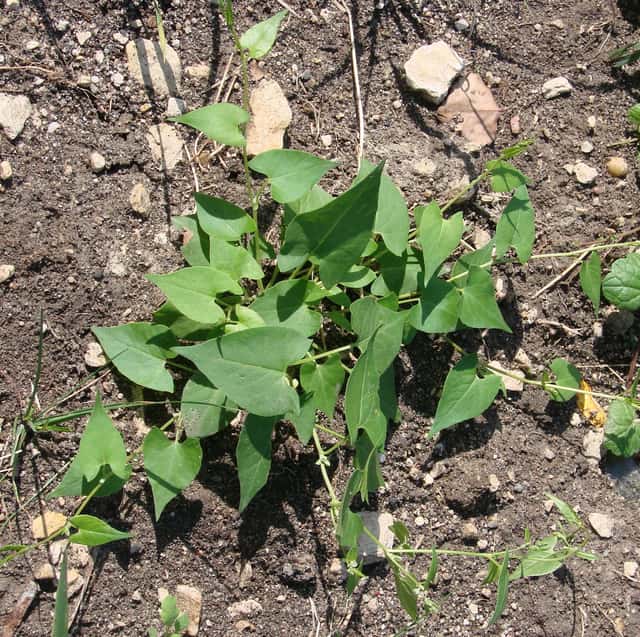
Black bindweed (Fallopia convolvulus) is a easy-care plant from the Polygonaceae family. Black bindweed (Fallopia convolvulus, syn. Polygonum convolvulus) is an annual twining vine in the family Polygonaceae, native to Eurasia and North Africa. It has heart-shaped leaves and slender, twining stems that climb over other plants and structures, producing small greenish-white flowers, somet...
Black bindweed grows up to 2.5m, spread of 150cm, watering every 10 days, -10°C – 35°C, 30–70% humidity. It is not suitable for indoor environments and safe for pets.
Unlike many tropical plants, Black bindweed tolerates watering mistakes. Best for beginners. Unlike many popular species, Black bindweed is safe to keep around pets.
How to Care for Black bindweed?
TLDR: Black bindweed needs Direct sun, watering every 10 days, and temperatures between -10-35°C with 30-70% humidity.
How Often Should You Water Black bindweed?
Water only when the soil is nearly dry; it tolerates dry spells well and should not be kept waterlogged.
How Much Light Does Black bindweed Need?
Prefers abundant direct sunlight; grows weak and leggy in shade.
What Is the Best Soil for Black bindweed?
Adapts to a range of soils but performs best in fertile, well-draining loamy soil with a slightly acidic to neutral pH.
What Is Black bindweed and Where Does It Come From?
Black bindweed (Fallopia convolvulus, syn. Polygonum convolvulus) is an annual twining vine in the family Polygonaceae, native to Eurasia and North Africa. It has heart-shaped leaves and slender, twining stems that climb over other plants and structures, producing small greenish-white flowers, sometimes tinged pink, from late spring through fall. It is a common agricultural weed found in cultivated fields and disturbed ground, but is also grown as a fast-growing ground cover.
How to Propagate Black bindweed?
Direct sowing
Seeds remain viable in soil for several years; avoid planting near beds where spread is unwanted, as it self-seeds aggressively.
- 1 Collect mature, dark achenes in fall
- 2 Sow directly in soil in early spring
- 3 Keep soil lightly moist until germination
- 4 Thin seedlings to allow room for vining growth
Materials needed:
How Big Does Black bindweed Grow?
TLDR: Black bindweed can reach up to 2.5m tall with Fast growth rate.
Max height
2.5m
Spread
1.5m
Growth rate
Fast
Foliage
Deciduous
Plant Uses
Ground Cover
Soil coverage
Edible
Can be consumed
Culinary Uses
- Young leaves are edible cooked, similar to spinach
Is your plant showing symptoms?
Click on the symptom to discover possible causes:
What Diseases Commonly Affect Black bindweed?
TLDR: Black bindweed is susceptible to 3 known diseases. Monitor regularly for early detection.
Aphids
Aphids are small, soft-bodied, pear-shaped insects (1/16 to 1/8 inch long) that feed by sucking nutrient-rich sap from plants. They reproduce rapidly and can quickly weaken plants, causing distorted growth and transmitting plant viruses. Aphids come in various colors including green, black, red, yellow, brown, and gray. They secrete honeydew, a sticky substance that attracts ants and encourages sooty mold growth.
Spider Mites
Spider mites are tiny arachnids (less than 1/20 inch long) related to spiders and ticks that feed on plant sap. They thrive in hot, dry conditions and can cause significant damage to ornamental and vegetable plants. During severe infestations, crop losses can reach 14% or higher as these pests disrupt vital plant processes including photosynthesis, carbon dioxide absorption, and transpiration.
Tomato Spotted Wilt Virus (TSWV)
Tomato Spotted Wilt Virus (TSWV) is one of the most devastating viral diseases affecting over 1,000 plant species across 85 families. It is transmitted by thrips and cannot be cured once a plant is infected. The virus causes severe stunting, bronzing of leaves, necrotic spots, and significant yield losses. Early detection and removal of infected plants is critical to prevent spread.
Fun Facts
Also known by its scientific synonym Polygonum convolvulus
Its shiny black seeds can remain viable in soil for several years
Frequently asked questions
Is black bindweed invasive?
Does it need a lot of water?
Is it toxic to pets?
Compare with similar plants
| Attribute | Difficulty | Light | Watering | Pet Safe |
|---|---|---|---|---|
| Field Maple | Easy | Bright indirect | 14d | ✓ |
| Silver Birch | Easy | Direct sun | 14d | ✓ |
| Cushion Bush | Easy | Direct sun | 14d | ✓ |
| Peruvian peppertree | Easy | Direct sun | 14d | ⚠️ |





