Juglandaceae
English Walnut: Edible Plant
Juglans regia
It requires a sunny location and ample space to grow. It prefers deep, nutrient-rich soil, and while it tolerates drought well, it benefits from watering for a bountiful harvest.
Every 14 days
Direct sun
-25° - 35°C
30% - 80%
Categories
What is English Walnut?
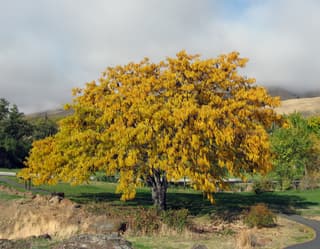
English Walnut (Juglans regia) is a medium-care plant from the Juglandaceae family. The English walnut is a robust, deciduous tree that can grow up to 25-30 meters tall. It is characterized by smooth, gray bark that becomes deeply furrowed on older trees. Its pinnately compound leaves emit an aromatic scent when crushed. Its fruit, the walnut, is an extremely valuable source of nut...
English Walnut grows up to 30.0m, spread of 2000cm, watering every 14 days, -25°C – 35°C, 30–80% humidity. It is not suitable for indoor environments and not safe for pets.
Without precautions, ingestion can cause irritation in pets. Keep out of reach of cats and dogs.
How to Care for English Walnut?
TLDR: English Walnut needs Direct sun, watering every 14 days, and temperatures between -25-35°C with 30-80% humidity.
How Often Should You Water English Walnut?
Water young trees regularly during the first two years after planting, especially during dry spells. Older trees reach groundwater with their taproots.
How Much Light Does English Walnut Need?
It only develops properly in full sun. In shady spots, the tree becomes leggy, and the yield decreases significantly.
What Is the Best Soil for English Walnut?
The most suitable soil is deep, well-draining, humus-rich loam. Avoid areas with standing water.
What Pot Should You Use for English Walnut?
It cannot be kept in a pot long-term due to its deep-reaching taproot; it must be planted in the ground in its permanent location.
Care Schedule
Fertilize
Every 180 days
What Is English Walnut and Where Does It Come From?
The English walnut is a robust, deciduous tree that can grow up to 25-30 meters tall. It is characterized by smooth, gray bark that becomes deeply furrowed on older trees. Its pinnately compound leaves emit an aromatic scent when crushed. Its fruit, the walnut, is an extremely valuable source of nutrients, while its wood is one of the finest raw materials for the furniture industry.
How to Propagate English Walnut?
Propagation from seed
- Only sow full seeds that sink in water.
- Protect against rodents after sowing.
- 1 Seed collection
Collect ripe, healthy walnuts in the fall after they have fallen from the tree.
- 2 Cleaning
Remove the green husk and keep only the seeds with undamaged shells.
- 3 Stratification
Keep the seeds in moist sand in a cool place (between 0-5 degrees Celsius) during the winter to promote germination.
- 4 Sowing
Sow the seeds 5-10 cm deep in their permanent location in early spring.
Materials needed:
Grafting
- Use a sterile and extremely sharp grafting knife.
- Ensure precise contact between the cambium layers.
- 1 Rootstock preparation
Choose a healthy 2-year-old seedling as rootstock.
- 2 Scion collection
Cut scions from the desired variety during the winter dormancy period.
- 3 Grafting process
Perform whip-and-tongue or bark grafting in the spring when the sap begins to flow.
- 4 Securing
Tightly bind the graft site and coat it with grafting wax to prevent drying out.
Materials needed:
How Big Does English Walnut Grow?
TLDR: English Walnut can reach up to 30.0m tall with Medium growth rate.
Max height
30.0m
Spread
20.0m
Growth rate
Medium
Foliage
Deciduous
Warning: Toxic Plant
This plant can be toxic if ingested. Keep out of reach of:
Plant Uses
Ornamental
Great for decoration
Edible
Can be consumed
Medicinal
Medicinal properties
Medicinal Uses
- Leaf decoction for skin inflammation
- Blood-purifying effect
- Antiperspirant properties
- Relief of digestive complaints
Culinary Uses
- Consumed raw or roasted
- Ingredient for pastries and fillings
- Production of walnut oil
- Green walnut liqueur or preserves
Is your plant showing symptoms?
Click on the symptom to discover possible causes:
Meaning & Symbolism
In Hungarian folklore, the walnut tree is a symbol of family unity and abundance; it was often planted upon the birth of a child.
Compare with similar plants
| Attribute | Difficulty | Light | Watering | Pet Safe |
|---|---|---|---|---|
| Azalea | Medium | Partial shade | 3d | ⚠️ |
| Wild Lettuce | Medium | Direct sun | 7d | ⚠️ |
| Cape Primrose | Medium | Partial shade | 7d | ✓ |
| Honey Locust | Medium | Direct sun | 14d | ✓ |